


On June 26, 2026, Bangladesh’s Home Minister, Salahuddin Ahmed said the government was set to amend the law to equip officials of the Department of Narcotics Control (DNC) with modern firearms, to effectively combat drug-related crimes. Salahuddin Ahmed also announced plans to establish advanced drug-testing laboratories in every district across the country.
Later, a June 28, 2026 report noted that DNC, in its 2025 annual report, disclosed that seizures of Yaba and other amphetamine-type stimulant (ATS) tablets rose by 90.58 per cent in 2025, compared to the previous year. The report shows law enforcement agencies seized 43,562,811 ATS tablets in 2025, up from 22,857,751 in 2024. In 2023, the seizure stood at 42,977,219 tablets. The report further stated that cannabis remained the most prevalent drug in the country, accounting for more than 50 to 60 per cent of cases detected by DNC in 2025.
Further, the DNC report identified 25 districts across Bangladesh as the country’s most drug-prone regions: Cox’s Bazar, Chattogram, Cumilla, Brahmanbaria, Narshingdi, Faridpur, Gazipur, Narayanganj, Tangail, Mymensingh, Rajshahi, Natore, Naogaon, Pabna, Sirajganj, Bogura, Joypurhat, Dinajpur, Kurigram, Lalmonirhat, Rangpur, Satkhira, Jashore, Kushtia and Chuadanga. It also listed several vulnerable trafficking points along the western, northern and southeastern borders. In the southeast, Teknaf, Cox’s Bazar, Shahporir Island, St. Martin’s Island, Ukhiya and other coastal and border points remain critical.
In addition, as reported on June 28, 2026, Mohammad Badruddin, Additional Director (Intelligence) at DNC headquarters, observed that the rise in seizures was linked to an increase in the supply of and demand for Yaba. Mohammad Hasan Maruf, DNC Director General, further noted that supply had increased as Myanmar’s rebel groups were using Yaba as a “narco-currency”, adding, “With limited access to conduct operations inside Myanmar territory, we conduct drives whenever we receive information about smuggling.”
Moreover, as reported earlier, on June 18, 2026, Border Guard Bangladesh (BGB) claimed record Yaba seizures, including approximately 2.8 million tablets seized between July 15 and September 15, 2025. The estimated price per Yaba tablet would be approximately BDT 314 per pill, about USD 2.8-2.9 per tablet. A contingent of the Bangladesh Navy, during a special drive in the Hnila Union of Teknaf Sub-District in Cox’s Bazar District, seized approximately 500,000 Yaba tablets valued at around BDT 250 million. This places the estimated price of a single Yaba tablet at about BDT 500, or roughly USD 4.5.
Yaba is an illicit stimulant drug that typically contains methamphetamine and caffeine compressed into a small tablet. It originated in Southeast Asia and is particularly prevalent in countries including Myanmar, Thailand, and Bangladesh.
A July 2, 2026, report noted that Yaba use was increasing in Bangladesh due to its relatively low cost, easy availability, and trafficking from Myanmar. Large quantities of the drug continue to be manufactured in Myanmar, particularly in militia-controlled regions of Shan State, where production sites are difficult to monitor. Large industrial-scale methamphetamine laboratories are concentrated in Shan State and neighbouring regions. This state is recognized as the primary production hub for drugs. A majority proportion of methamphetamine (the core substance for Yaba) and, consequently, most Yaba, is manufactured in illicit laboratories located in the northern areas of Shan State. A UN report, titled Synthetic Drugs in East and Southeast Asia: Latest Developments and Challenges, 2025, noted that the production and trafficking of methamphetamine in Shan State had significantly increased since 2021, though exact quantities were not mentioned in the report.
Another province of Myanmar, the Chin State situated along Myanmar’s northwestern frontier with India and close to Bangladesh, facilitates movements of people, weapons and illicit drugs, according to a June 18, 2026, report. Since Myanmar’s 2021 military coup, the region has become one of the country’s most active conflict zones, characterized by intense fighting between the military junta and a diverse array of resistance organizations. The Chin State has emerged as an important trafficking corridor, with vast quantities of methamphetamine tablets and crystal meth move through Chin’s mountainous terrain toward Bangladesh.
The Arakan Army (AA) has been deeply involved in this entire scenario. Leveraging its connection to other armed ethnic groups involved in the drug trade in Shan State, AA, taps into existing smuggling networks and production centres. Once synthetic drugs reach Rakhine State, AA recruits Rohingyas to smuggle the merchandise into Bangladesh. A September 8, 2025, report noted that AA-linked cross-border suppliers were working with transnational syndicates and hundreds of carriers, across 17 routes.
Explaining the AA-Rohingya-Yaba nexus, on September 14, 2025, Ramu Sector Commander, Colonel Mohiduddin Ahmed stated,
Rohingyas are the main traffickers of Yaba. They move the drugs very fast, which makes it difficult to catch them. Some unscrupulous people in our country, driven by their own interests, are bringing Yaba from Myanmar’s Arakan Army into Bangladesh… Because of strict surveillance along the Ukhiya-Teknaf border, traffickers are becoming active on sea routes. It’s estimated that nearly 80 percent of drugs enter Bangladesh through the coasts of Maheshkhali, Banshkhali, Kutubdia, Anwara, and Kuakata. From these routes, drugs are not only spreading inside Bangladesh but also being smuggled to other countries, which is a grave threat to our youth and economy.
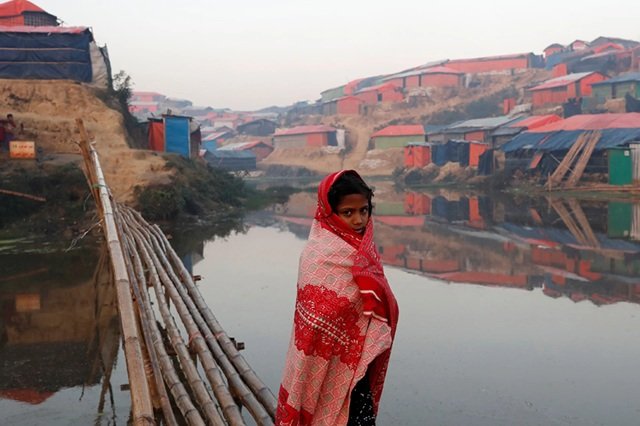
Rohingya refugee camps have been hotbeds of Yaba storage, especially in the Kutupalang and Balukhali areas, both in Cox’s Bazar District, where small huts are used as Yaba storehouses. In 2025, Human Rights Watch documented cases in which Rohingya armed groups recruited children to smuggle Yaba, across checkpoints, noting, “[Children] are in this small area, with no certificates, no future. Ask them about their dreams and they might laugh. [Armed groups are] the way to status and some money.” The involvement of political figures of this area in the Yaba trade is a further concern. As reported on April 22, 2026, Bangladesh authorities have named Abdur Rahman Bodi, widely known as the ‘Yaba Godfather’, an Awami League leader and former Member of Parliament (MP) of Cox’s Bazar’s Ukhia-Teknaf constituency, as a key player in Yaba trafficking. His name appeared on a list of suspected Yaba smugglers prepared by DNC in 2014. However, the agency didn’t pursue the investigation.
A February 27, 2026, report noted that an uninterrupted and massive flow of drugs into Bangladesh had turned more than 8.3 million people into drug addicts, leading to a wide range of socio-economic problems, including a spike in violent crimes. Indeed, large-scale street operations conducted by the Dhaka Metropolitical Police in the month of June, 2026 highlight the close correlation between Yaba trafficking and illegal firearms ownership. In a single month, the Police arrested 555 people, filed 354 drug cases, seized over 233,000 Yaba tablets, along with multiple foreign pistols and locally-made weapons.
The institutional vacuum in Myanmar and the vulnerable nature of the Bangladesh-Myanmar border have created a precarious condition in Bangladesh. The situation is complicated further by the presence of Rohingyas, and their active participation in the narcotics trade. Despite strong and sustained action by DMC, the disorders in Myanmar make it unlikely that this pernicious commerce can be brought to an end in the foreseeable future.










