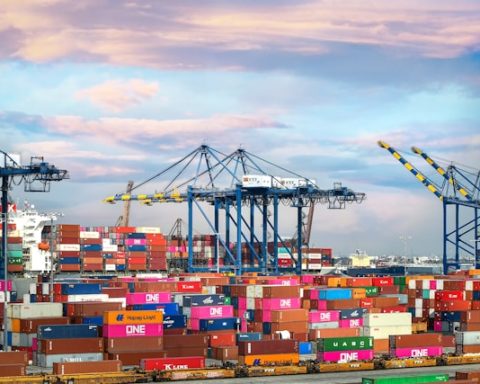
China has formally invited President Donald Trump to visit Beijing for a summit with President Xi Jinping, according to the Financial Times, though the White House has yet to respond. The invitation comes as both countries remain at an impasse over trade negotiations and efforts to curb the flow of fentanyl, the deadly synthetic opioid. Treasury Secretary Scott Bessent is set to meet Chinese Vice Premier He Lifeng in Madrid on Sunday for the fourth round of talks, which some observers hope could lay the groundwork for a potential visit before the Asia-Pacific Economic Cooperation (APEC) forum in South Korea at the end of October.
In recent days, top U.S. cabinet officials, including Secretary of State Marco Rubio and Defense Secretary Pete Hegseth, have engaged in discussions with their Chinese counterparts, fueling speculation about a presidential meeting. However, sources familiar with the situation suggest that the chances of a high-profile Beijing summit are waning due to insufficient progress in negotiations. A lower-profile encounter at the APEC summit appears increasingly likely, as leaders have yet to align on critical issues.
Sarah Beran, a former senior official in the White House’s China policy team, described the recent diplomatic exchanges as “clear preparations for a leader-level meeting,” though she acknowledged continued uncertainty over the location and substance of such an event. “There are likely still contradictory views on whether Trump and Xi should meet in Beijing or at APEC,” she said, highlighting Beijing’s ongoing efforts to decipher what Washington ultimately seeks—a substantive deal, prolonged talks, or merely a symbolic photo opportunity.
A significant obstacle remains U.S. frustration over China’s perceived reluctance to act decisively against fentanyl production and exports. While Beijing has offered coordinated action in exchange for the U.S. lifting related tariffs, Washington insists on tangible enforcement before considering relief measures. Experts, including Ryan Hass of the Brookings Institution, argue that without breakthroughs, “the rationale for a Beijing summit is eroding,” especially given concerns over optics and geopolitical signaling. Trump’s past alignment with former President Trump’s allies and his desire to avoid looking like an accessory to Beijing’s recent hosting of other global leaders further complicates the decision.
Wendy Cutler of the Asia Society Policy Institute expressed skepticism that sufficient time remains to finalize a trade deal capable of justifying an official visit to Beijing. “It is more likely that they will meet at APEC and announce a series of deliverables but not a trade deal,” she observed. Similarly, China expert Gabe Wildau noted that Trump’s preference for grand diplomatic gestures could be undercut by a lack of substantive agreements.
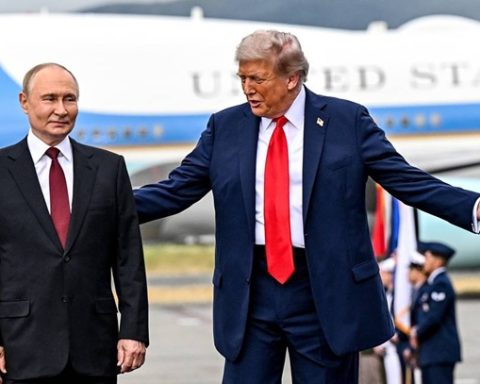
Conversely, Dennis Wilder, a former senior China adviser, contended that a Beijing summit might still appeal to Trump, allowing him to counterbalance the political optics surrounding other high-profile international meetings. “Trump would almost certainly prefer a summit in Beijing to counter the recent images of the warm welcome of Putin and Kim,” Wilder explained.
Recent developments, however, suggest the window for a Beijing visit may be closing. Trump’s calls for severe sanctions on China, including proposals for 50–100% tariffs to curb Beijing’s purchase of Russian oil, alongside placing Chinese firms on export blacklists, have escalated tensions. A senior former U.S. official warned that such moves could serve as a “potential spoiler” for any planned summit.
Despite these challenges, Chinese officials appear ready to proceed if Trump agrees at the last minute. A source noted that Beijing is “willing to host without conditions,” though U.S. insistence on fentanyl enforcement could continue to block progress. Meanwhile, China has opened an anti-dumping investigation into certain U.S. chip exports, further complicating the path forward.
Former Chinese ambassador Cui Tiankai’s recent Washington visit, which secured meetings with administration officials, signaled Beijing’s determination to keep channels open. Yet uncertainty persists, with Georgetown’s Evan Medeiros calling the potential trip “a very close call in the history of close calls,” hinging on Trump’s competing desires for policy achievements versus symbolic diplomacy.
At this stage, the White House confirms only that Trump has “expressed his openness” to meeting Xi, while providing no formal announcements. The Chinese embassy in Washington declined to comment. As negotiations continue in Madrid and across diplomatic backchannels, the possibility of a last-minute decision looms, leaving the world watching whether the two leaders will reunite in Beijing or settle for a lower-profile encounter in South Korea.