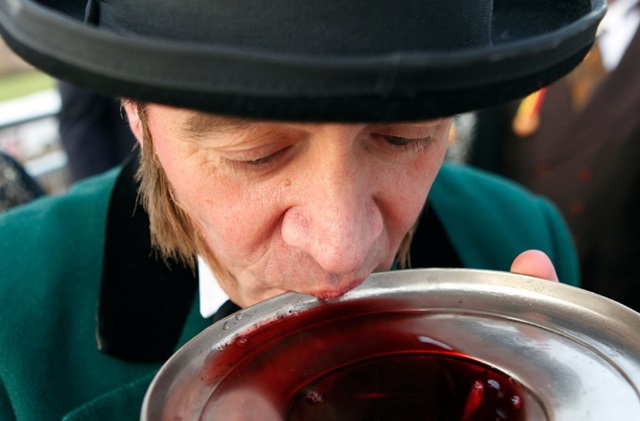
A 600-year-old tradition in the Belgian town of Geraardsbergen has been halted after new animal welfare laws banned the practice of drinking live fish in wine, sparking protests from local traditionalists. The ritual, a central part of the town’s annual Krakelingen carnival, was suspended for the first time this year, as reported by Times UK.
The festival, first recorded in 1413, features a historical procession culminating on the Oudenberg hill, where town officials—dressed as druids—traditionally sip wine containing a live fish from a 400-year-old silver goblet. This symbolic gesture marks the transition from winter to spring, reflecting the natural rise of small freshwater fish, like gudgeon, as ponds thaw.
However, new legislation passed last summer has outlawed the controversial practice on animal welfare grounds. The decision has angered locals, with protesters at this year’s event carrying signs that read, “I want fish”, claiming the ban was imposed without proper consultation.
“This is a disaster,” said Ann Panis, a costumed local alderman responsible for cultural affairs. “The regulation was approved without us ever being heard.” Mayor Fernand Van Trimpont also voiced his frustration, joining demonstrators in traditional attire and urging Flemish authorities to consider “cultural-historical arguments” when enforcing such bans.
Animal rights group Gaia, which has long campaigned against the tradition, welcomed the enforcement of the law. “Traditions are no excuse for animal suffering,” said Michel Vandenbosch, Gaia’s chairman, who warned that any violations would be reported to the authorities.
While the original ritual used gudgeon, recent decades have seen the substitution of small aquarium fish, with the tradition restricted to town officials. Despite these changes, the ban reflects a growing movement in Belgium to modernize cultural practices that clash with contemporary animal welfare standards.
This is not the first time Belgian folk traditions have faced controversy. In 2022, the Ducasse d’Ath festival lost its UNESCO cultural heritage status after backlash over its use of a blackface character known as the “Savage.”