


Britain’s standing as a global military and diplomatic power has reached what officials, analysts and former senior commanders describe as its weakest position since the end of the Second World War, according to a report by the Financial Times. The assessment comes as the country navigates political upheaval at home, mounting security challenges abroad and growing uncertainty over its place in an international order undergoing profound change.
In the weeks before Prime Minister Sir Keir Starmer’s resignation last month, Britain’s Foreign Office sought feedback from ambassadors stationed around the world through a WhatsApp group, asking how overseas governments viewed the political turmoil unfolding in London. According to people familiar with those exchanges, a recurring message emerged: many foreign governments increasingly regarded the United Kingdom as becoming more inward-looking and insular.
For British officials, those reactions reinforced concerns that had been building over several years. The departure of the country’s sixth prime minister in a decade has unfolded against a backdrop of shrinking armed forces, reduced international influence and a perception that Britain’s capacity to shape global affairs has diminished significantly.
The Financial Times reports that Britain’s decline extends beyond military capability. Traditionally, the country combined defence strength with extensive diplomatic influence, cultural reach and leadership within international institutions such as the United Nations. Those advantages, strengthened by the global role of the English language and long-standing alliances, once allowed Britain to project influence even during periods of reduced defence spending.
Officials and analysts cited in the report argue that both hard and soft power have now weakened simultaneously. Budget pressures, reductions in international aid, lower funding for institutions such as the BBC World Service and the British Council, the long-term effects of leaving the European Union and changes in the international order under US President Donald Trump have all contributed to that shift.
Foreign Secretary Yvette Cooper acknowledged those challenges in an essay for Chatham House, writing that foreign policy decisions made by successive governments had left Britain “more exposed.” She pointed to years of underinvestment in defence, growing dependence on Chinese supply chains, weakening key international relationships and damage to Britain’s international reputation following Brexit.
Those concerns come at a time when the country’s leadership is preparing for another transition. Former Greater Manchester mayor Andy Burnham is expected to become prime minister later this month, inheriting a security environment that officials describe as increasingly unstable and demanding.
Strategic uncertainty extends beyond Britain’s domestic politics. Olivia O’Sullivan, director of the UK in the World programme at Chatham House, told the Financial Times that Britain’s traditional strategic foundations have become increasingly uncertain as the United States grows less predictable, relations with the European Union continue to evolve and China expands its global influence.
The report describes Britain’s military decline as the cumulative result of decades of reduced investment following the end of the Cold War. General Sir Richard Barrons, the former commander of the UK’s Joint Forces Command, said years of gradual cuts to training, logistics and infrastructure created armed forces that are not only significantly smaller than they once were but also substantially less prepared for high-intensity conflict.
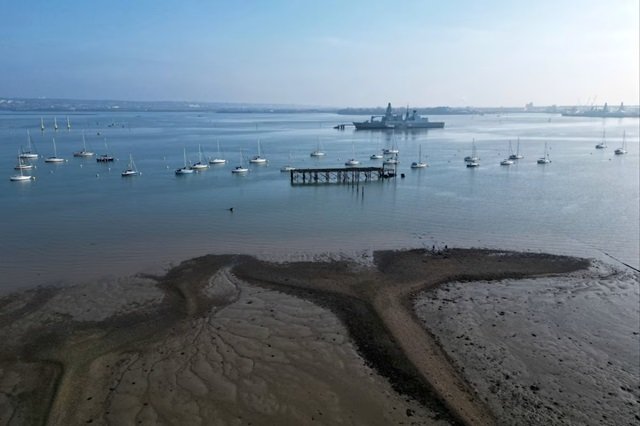
All three branches of Britain’s armed forces have contracted dramatically since the Cold War ended. The Royal Navy now operates just 13 frigates and destroyers, compared with 59 four decades ago. The army and air force have also experienced major reductions, while senior military figures say operational readiness has been eroded through years of constrained budgets.
The war in Ukraine has intensified scrutiny of those shortcomings. Although Britain has been among Kyiv’s leading military supporters, former military leaders questioned whether the UK could sustain a substantial peacekeeping deployment if required. Senior officers participating in recent military exercises reportedly acknowledged that Britain’s supply of drones would last less than a week during a high-intensity conflict, a stark contrast to the scale of drone warfare currently witnessed in Ukraine.
Procurement delays have further complicated military modernisation. The Ajax armoured fighting vehicle programme, intended to become a cornerstone of the British Army, remains eight years behind schedule after costs exceeded £6 billion and technical problems emerged during testing. At the same time, the Royal Navy faced public criticism after HMS Dragon required approximately a week to deploy during the US-Iran conflict before later experiencing technical issues upon arriving in Cyprus.
Despite those challenges, Britain continues to present itself as a leading European military power. At the NATO summit in Ankara, the government announced its leadership of a multinational initiative involving around a dozen European allies to develop deep precision strike missiles over the coming decade. Starmer also highlighted Britain’s position as NATO’s second-largest defence spender in cash terms over the past ten years.
Behind those announcements, however, financial pressures remain substantial. The government recently committed £15 billion in additional defence funding over four years, although Starmer acknowledged that £4.7 billion of that package remains unfunded. Officials have also identified a much larger requirement for future investment, including billions needed for warplanes, F-35 fighter aircraft and additional nuclear-powered attack submarines.
Treasury officials continue to express concern about defence spending, arguing that increasing investment without corresponding industrial expansion risks driving up costs. Since Russia’s invasion of Ukraine, the price of artillery shells has reportedly tripled while production capacity has increased only marginally.
Alongside military concerns, the Financial Times report highlights what officials describe as a parallel decline in Britain’s soft power. Funding reductions affecting cultural and educational institutions, tighter visa policies for international students and significant cuts to overseas development assistance have all reduced Britain’s international reach.
Government decisions over recent years have reduced foreign aid from 0.7 per cent of gross national income to a projected 0.3 per cent by 2027. The report also notes that when the Foreign Office announced a UK-led coalition to combat violence against women and girls earlier this year, only seven other countries initially joined as founding members, although officials said expansion had always been planned.
Within the Foreign, Commonwealth and Development Office, morale has also been affected by extensive restructuring, workforce reductions and organisational changes that have required many officials to reapply for their positions.
Analysts interviewed by the Financial Times argue that some elements of Britain’s changing international position reflect broader geopolitical trends beyond its control. Institutions such as the United Nations and the Commonwealth no longer carry the same influence they once did, while shifting global power balances have altered the environment in which Britain traditionally exercised leadership.
As Burnham prepares to assume office, uncertainty also surrounds future relations with the European Union. Although he has previously expressed support for Britain eventually rejoining the bloc, he recently reaffirmed that he is not proposing such a move and respects the outcome of the 2016 referendum.
Former officials and analysts agree that Britain’s future international role will depend on decisions balancing defence investment, diplomatic engagement and domestic priorities. As Professor Michael Clarke of King’s College London told the Financial Times, hard and soft power are complementary rather than interchangeable, making the condition of Britain’s armed forces and international influence central questions facing the country’s next government.










