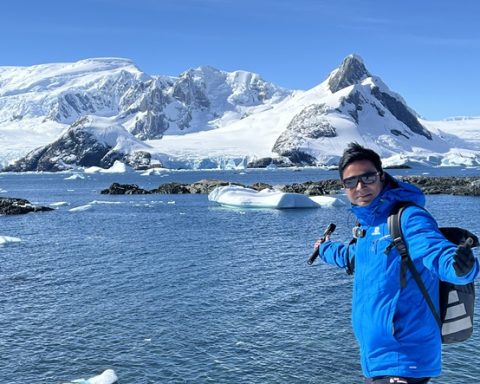
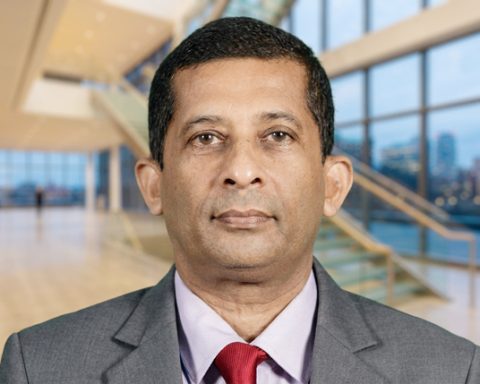
According to Der Spiegel, the extraordinary rise of Jason Arday, until recently a professor at the University of Cambridge, has become the centre of a scandal extending far beyond one academic career. Allegations of plagiarism, disputed elements of his biography and unanswered questions surrounding claims of threats against him have transformed a once-celebrated story of achievement into a case filled with uncertainty.
For years, Arday’s biography appeared almost too remarkable to be true. Born in 1985 to Ghanaian immigrants and raised in social housing in south-west London, he was the son of a cook and a nurse and anti-racist activist. Doctors diagnosed him in childhood with a severe form of autism and reportedly predicted that he would spend his life in supported accommodation.
Instead, the story presented to the public was one of extraordinary determination. Arday remained unable to speak for years but learned sign language at the age of four. He was said to have participated in the television series “Seven Up”, which followed children as they grew up. One day before his twelfth birthday, he reportedly spoke his first word: “Hello!”.
He did not learn to read and write until he was 18. Yet he was also said to have played football at such a high level that he was briefly included in the squad of English Premier League club Crystal Palace. His sporting achievements were even more remarkable. He reportedly completed 30 marathons within 35 days and ran almost 1,000 kilometres in just six days, at times with a broken leg, raising money for charity in the process. He was said to have raised almost five million pounds and was selected as an Olympic torchbearer in 2012. Alongside these achievements, he reportedly helped install wells in Brazil.
In 2015, while seeking a doctorate in education in Liverpool, Arday was diagnosed with a brain tumour. Following an operation, he reportedly had to relearn everything he had previously studied. He nevertheless passed his examination.
His academic career subsequently accelerated. In 2023, he became a professor of sociology of education at Cambridge, after several positions including one in Ohio. He was described as the youngest of only six black academics ever appointed to professorial positions at Cambridge. His work was intended to explore new ways of making higher education more accessible to black and neurodiverse people.
The appointment also attracted considerable public attention. The BBC reported on his arrival at Cambridge, where his new head was quoted as saying: “We are so happy to have you here”. Arday was described as “the best in the world” in his field. His appointment appeared to represent not only an individual triumph but also the progress of a higher-education system seeking greater inclusion of groups that had historically been marginalised.
Then, in 2025, the first serious questions began to emerge.
Arday claimed that he had received death and rape threats. His family, he said, had twice found a severed pig’s head outside their home. He also alleged that a masked man had threatened him with a knife on campus and demanded that he resign. Cambridge responded by introducing additional security measures, while the academic community expressed shock that one of its youngest black professors allegedly required protection.
Yet the extraordinary nature of the claims also raised questions. Could a man who was highly athletic, but not regarded as a record-breaking athlete, really have completed 30 marathons in 35 days? Could a masked attacker repeatedly move around a university campus without being captured by surveillance cameras? And why, it was asked, had the professor not informed colleagues about the alleged danger?
The first major accusations centred on academic integrity. A colleague who had previously been suspended by Cambridge for racist remarks accused Arday of serious plagiarism. Arday strongly rejected the allegations, attributing possible errors in his academic work to inadequate supervision and his autism. Cambridge initially described the accusations as a “vile campaign” and declined to launch an investigation.
Further questions emerged following an investigation by the Guardian, described in the Der Spiegel account as a publication not associated with right-wing agitation. The investigation examined claims surrounding Arday’s biography, including his assertion that he had raised almost five million pounds for charitable causes. Arday subsequently said that he had not raised the money alone and that those who had allegedly worked with him had signed confidentiality agreements.
The questions did not stop there. According to the Guardian investigation cited by Der Spiegel, the organisation for which Arday said he had helped install wells in Brazil had never heard of him. In Ohio, there was reportedly no knowledge of his claimed position as a visiting professor. The television series “Seven Up” had been broadcast decades before Arday’s birth, meaning he could not have participated in it. The butcher allegedly associated with the severed pig’s head reportedly could not remember selling a pig at the relevant time, and no photograph of the alleged incident existed.
Each discrepancy might have had an explanation. Taken together, however, they created a much larger question about the credibility of the story that had accompanied Arday’s rise.
Arday ultimately announced his resignation, addressing colleagues with “deep sadness”. He said that the “unceasing accusations, speculation and public comments” had taken their toll and that he had reached “the limits of what a person can endure”. He asked for “time to be myself again”. He also insisted that his resignation did not mean he accepted the “narratives” surrounding him and said he would return “stronger, wiser and with the same determination” that had defined his “journey”.
The resignation left more questions than answers. It also emerged that Arday had reported a specialist journalist to the police after the journalist had raised concerns about inconsistencies in his work. The investigation was eventually discontinued.
The controversy has now become a wider political and institutional issue. Right-wing campaigners have seized upon the case as evidence, in their view, of the dangers of progressive approaches to education. Questions have also been raised about whether institutions including Cambridge and the BBC failed to challenge aspects of Arday’s story because his rise appeared to embody a particularly compelling narrative: a black, neurodiverse candidate from a working-class background reaching one of Britain’s highest academic positions.
For the students who may have been taught by a professor now facing allegations of serious misconduct, for academics who were genuinely qualified for senior positions, and for an educational system whose efforts to widen access remain contested, the consequences could extend beyond one individual. Cambridge has now acknowledged the seriousness of the situation and announced plans to review its procedures for appointing senior personnel.
There is also an unusual final chapter to the story. On 12 August, Arday’s memoirs are scheduled to be published. The book contains many of the stories that helped define his rise and which are now surrounded by substantial unanswered questions. The publisher has so far stood by its author.
The result is a striking reversal. A life once presented as an almost perfect story of overcoming adversity and reaching the highest levels of academia has become the subject of scrutiny over what can be established as fact. For Cambridge, the episode raises questions about institutional judgement and recruitment. For the wider British education system, it places renewed attention on how inclusion, representation and academic standards are reconciled.
And for Arday, a man whose extraordinary “journey” once appeared destined for a triumphant ending, the story has entered an altogether different and unresolved chapter.