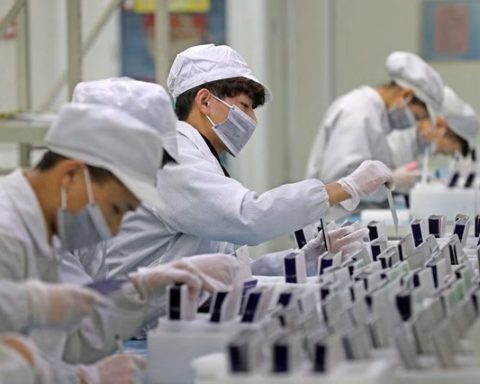
China is grappling with a significant economic transformation, one that echoes the “China shock” the country itself unleashed on other manufacturing nations in the early 2000s. Once the world’s dominant force in low-end manufacturing, China’s labour-intensive industries are now in decline, jeopardizing millions of jobs and presenting a challenge to the country’s stability and future growth.
A decade ago, Zhou Yousheng’s shoe factory in Guangdong province employed over 100 workers, contributing to China’s robust role in global manufacturing. However, in recent years, Zhou has watched his business falter. A combination of escalating wages, fierce competition from Southeast Asia, and the ongoing trade war with the U.S. has eroded China’s manufacturing edge. In fact, China’s share of the global footwear export market has dropped by 10 percentage points, with rival manufacturing hubs such as Vietnam and Indonesia capitalizing on this shift. Today, Zhou’s factory employs fewer than 20 people, and he admits that the outlook for the future is “bleak and hopeless.”
This decline in traditional manufacturing has broader implications for China’s economy. An analysis conducted by researchers from Changzhou University, Yancheng Teachers University, and Henan University shows that employment in 12 labour-intensive industries shrank by approximately 14% between 2011 and 2019, resulting in the loss of nearly 4 million jobs. The situation continued to worsen from 2019 to 2023, with another 3.4 million positions disappearing, according to a report from the Financial Times.
Frederic Neumann, chief Asia economist at HSBC, notes that China’s once-abundant supply of cheap labour has been a key driver of its manufacturing dominance. However, that advantage is now gone, and China faces a painful shift away from labour-intensive production. This transformation mirrors the disruption China imposed on advanced economies after joining the World Trade Organization in the early 2000s, when manufacturing jobs flooded into the country from more expensive markets. Now, the outsourcing trend is reversing, with countries like Vietnam and Indonesia gaining ground.
As China’s economy continues to evolve, the move toward more advanced, less labour-intensive industries could leave millions of lower-skilled workers without jobs. The shift towards high-tech manufacturing, while central to China’s growth strategy, will not provide sufficient opportunities for these displaced workers, according to analysts. “You’re not going to employ as many people by definition,” says Neumann. This concern is compounded by the fact that many of China’s low-skilled migrant workers are particularly vulnerable to the economic changes.
In response, the Chinese government has taken steps to support traditional manufacturing industries, although these efforts may not fully stem the tide of job losses. For example, the government has invested in initiatives like the Zhongda Fashion and Technology City in Guangdong, which aims to create a “smart manufacturing base” for the region’s garment industry. However, such projects may not be enough to offset the broader trend of declining labour-intensive manufacturing.
As China faces this economic transition, its leaders are focused on “new quality productive forces” such as advanced manufacturing, high-tech industries, and green technologies. But experts caution that while these sectors may generate high-tech products, they are unlikely to provide the same level of employment for low-skilled workers, particularly those displaced by the decline of traditional manufacturing.
At the same time, Southeast Asian countries are benefiting from this shift. Exports from Vietnam and Indonesia saw compound annual growth rates of 8.2% and 12.3%, respectively, from 2019 to 2023, with both countries adding millions of manufacturing jobs. As wages rise in China and the cost of doing business increases, these neighbouring countries are poised to capture a growing share of the global manufacturing market.
Despite these challenges, manufacturing is far from dead in China. High-tech factories, such as those producing electric vehicles in Guangzhou, are showcasing the country’s future vision. In these plants, machines and humans work together in highly automated environments. However, the trend toward automation means that fewer people are needed to produce advanced goods like electric vehicles, further exacerbating the employment challenges facing China’s labour market.
In this period of economic adjustment, China faces a difficult choice: how to balance its ambitious plans for technological dominance with the need to protect the livelihoods of millions of workers who have powered its industrial rise for decades. The transition away from low-end manufacturing will have long-term implications for both the country’s economy and its social stability.