by Our Economic Affairs Editor
In a newly released white paper titled “China’s Position on Some Issues Concerning China-US Economic and Trade Relations,” the Chinese government has issued a sharp and comprehensive rebuttal to ongoing U.S. trade policies, while reasserting its own commitment to multilateralism, open markets, and international economic cooperation. The paper, published today, April 9, 2025, by the State Council Information Office of the People’s Republic of China, details the country’s views on the current status and trajectory of China-US trade relations, particularly in the wake of continued U.S. tariffs, sanctions, and what it calls unilateralist policies.
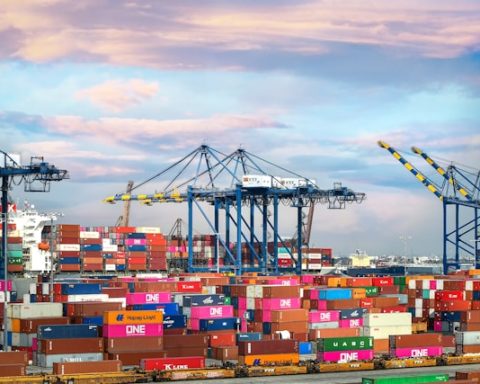
“China-US economic and trade relations are mutually beneficial and win-win in nature,” the paper declares, setting the tone for a document that both defends China’s record and lays blame for deteriorating ties squarely on Washington. Citing decades of growing interdependence, the paper notes that bilateral trade has grown from just $2.5 billion in 1979 to nearly $688.3 billion in 2024, adding that “cooperation between China and the US benefits both sides, while confrontation harms both.”
In one of its most pointed sections, China accuses the U.S. of failing to honor its obligations under the Phase One Economic and Trade Agreement signed in January 2020. “The US side has continuously tightened export control, escalated sanctions against Chinese enterprises, and repeatedly violated its obligations under the Agreement,” the white paper states. In contrast, it argues that China has “scrupulously honored” the deal, despite the challenges of a global pandemic and supply chain disruptions.
A major portion of the white paper is dedicated to dispelling accusations that China engages in forced technology transfer, unfair subsidies, and intellectual property theft. “China opposes forced technology transfer in any form,” the paper asserts, citing the Foreign Investment Law which prohibits administrative bodies from coercing companies to hand over technology. It also notes that China has taken robust measures to improve IP protection and law enforcement, including the 2024 detention of 81.6 million infringing items during customs inspections.
The Chinese government also defends its trade surplus with the U.S., arguing that it is not deliberately engineered but rather a result of structural factors in global production and American economic patterns. “The value-added accrued by China from much of the export of processed manufactured goods represents only a minor fraction of the total value,” the paper explains, adding that measuring trade in gross terms rather than value-added terms exaggerates China’s surplus.
Furthermore, the white paper criticizes recent U.S. policy documents such as the “America First Trade Policy Memorandum” and associated tariffs, calling them “isolationist and coercive.” It warns that these steps “will have serious repercussions for China-US economic and trade relations,” and calls on Washington to return to “equal-footed dialogue and mutually beneficial cooperation.”
Beijing also highlights its extensive economic openness in contrast to what it characterizes as increasing U.S. protectionism. The paper points out that China has held six consecutive China International Import Expos (CIIE), granted zero-tariff treatment to least-developed countries, and implemented over 50 measures to open up its financial sector. “China will systematically expand market access for goods,” it states, “and transform its vast market into a shared global market.”
On the issue of the exchange rate, China reaffirms that it operates “a managed floating exchange rate regime based on market supply and demand,” rejecting any accusations of currency manipulation. The RMB, it insists, has maintained “basic stability at an adaptive, balanced level.”
Perhaps the most dramatic warning in the white paper is directed at the recent U.S. consideration of revoking China’s Permanent Normal Trade Relations (PNTR) status. Such a move, it argues, would not only “undermine China-US relations and the global economic order,” but also “violate WTO rules.” “Revoking China’s PNTR status will bring China-US economic and trade relations back to the uncertainty and unpredictability that preceded China’s accession to the WTO in 2001,” the paper warns.
Accusing the U.S. of “unilateralism and economic hegemony,” China frames itself as a defender of the multilateral trading system and a responsible power that has consistently played by the rules. “China has always firmly supported and upheld the multilateral trading regime,” the paper states. In contrast, it charges the U.S. with weaponizing national security to restrict Chinese investment and exports, politicizing economic issues, and imposing unjustifiable sanctions.
Despite its strongly worded criticisms, the white paper ends with a reaffirmation of China’s preference for diplomacy and constructive engagement. “It is crucial to respect each other’s core interests and major concerns,” it concludes, “and find proper solutions to resolve the issues through dialogue and consultation.”
In issuing this white paper, China has made clear that it will not passively accept what it perceives as unfair treatment in global trade. Instead, it seeks to assert its narrative, emphasize its adherence to global norms, and encourage a return to rules-based cooperation—albeit on its own terms.