As tensions escalate in the latest round of U.S.-China trade hostilities, a growing sense of finality seems to have taken hold in Beijing. According to a recent in-depth report by ZEIT, the Chinese leadership appears to be acting on several key assumptions: that concessions in the ongoing conflict yield little, while a hardline stance offers more strategic gain; that the trade dispute is merely symptomatic of a broader systemic confrontation with the United States; and that China, unlike in the past, is now better positioned to endure—and even benefit from—this standoff.
“China has been preparing for this moment for years,” said Huang Tianlei, a China analyst at the Peterson Institute for International Economics in Washington, in an interview with ZEIT. Since the first trade war under Donald Trump in 2018, China has sharply reduced its dependency on U.S. exports—from nearly 20% of total exports to under 15%. “They deliberately diversified away from the U.S. because they knew this moment would come,” Huang explained. “And now it’s here.”
President Xi Jinping’s long-term strategy to shield the Chinese economy from Western influence seems to have paid off. Even before the West began debating “decoupling” from China, Beijing was already quietly disentangling itself—rebuilding supply chains, redirecting exports, boosting domestic innovation, and reducing technological vulnerabilities. The effectiveness of this approach is reflected in China’s resilience against U.S. measures, including recent technology sanctions under President Joe Biden. Despite attempts to curb its rise, China has caught up in many high-tech sectors, most notably with the surprise success of the AI model “Deep Seek” in early 2025.
China’s response to the new wave of tariffs, particularly from the second Trump administration, has been strategically choreographed. A recent video shared by China’s foreign ministry, featuring revolutionary leader Mao Zedong declaring, “We will never yield, no matter how long the war lasts,” symbolically ties present tensions to the Korean War. Beijing is now positioning itself as a stabilizing force for developing nations, casting Trump’s policies as chaotic and hegemonic.
Chinese foreign minister Wang Yi, speaking at the National People’s Congress, declared that China “firmly opposes power politics and hegemony” and supports “international justice”—remarks aimed directly at the Global South. “If every country puts itself first,” Wang warned, “we’ll return to the law of the jungle, which will hurt the smaller and weaker nations the most.”
Sun Chenghao, a political analyst at the China Institute for International Security and Strategy, told ZEIT that Trump’s protectionism presents an opening: “China now has a real opportunity to lead the Global South, especially if it offers fairer trade terms than the U.S.” Already, over 120 countries count China as their top trading partner.
Meanwhile, the traditionally China-friendly German business community is sensing a chance for a diplomatic reset. The confrontational stance of Germany’s outgoing foreign minister Annalena Baerbock has not been well received in industry circles. With both a shift in U.S. policy and a potential change in the German government, there are now whispers of lobbying efforts to re-engage more deeply with China. “Risk management should not mean reducing engagement with China,” reads one draft lobby paper. “To stay economically relevant, Germany must increase its presence in China.”
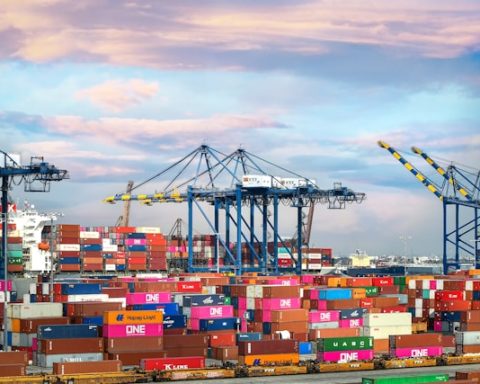
Still, friction remains between Beijing and Brussels. EU officials fear an incoming flood of redirected Chinese exports if the U.S. market becomes unviable. Small businesses like Charles Liu’s household goods company in Shenzhen—which sells to the U.S. via Amazon—are already preparing to pivot to Europe. “If tariffs hit 145%, there’s no margin left for me in the U.S.,” Liu said. “I’ll have to pass the cost to American customers—or look to new markets.”
Online sentiment within China has taken a nationalistic turn, with social media users rallying behind Beijing’s hard stance and calling for retaliatory actions. Some even suggest leveraging cooperation on the U.S. opioid crisis or referencing historical grievances like the Opium Wars to frame the conflict as a chance for national redemption.
Despite the mounting rhetoric, experts interviewed by ZEIT note that negotiation remains possible. Both sides understand the economic toll of escalation. Trump has hinted at a willingness to engage with Xi, while Beijing’s official statements leave the door open for talks—provided they are rooted in mutual respect.
But gone are the days when China might rush to compromise. “What did their previous concessions bring?” asks Huang. “More sanctions, more restrictions. This time, any rollback of tariffs will come only through tough bargaining—percentage by percentage, sanction by sanction, deal by deal.”