China and Thailand have reaffirmed their commitment to strengthening their comprehensive strategic cooperative partnership and deepening their bilateral relationship through a forward-looking, people-centered vision. This commitment was formalized in a joint statement issued on February 8, 2025, during the official visit of Thai Prime Minister Paetongtarn Shinawatra to China at the invitation of Chinese Premier Li Qiang. The visit marked the 50th anniversary of the establishment of diplomatic relations between the two nations, a milestone celebrated under the theme of the “Golden Jubilee of China-Thailand Friendship.”
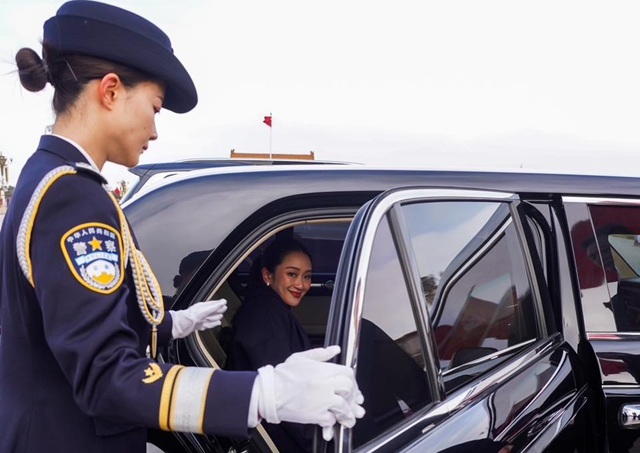
During her visit, Prime Minister Paetongtarn Shinawatra met with Chinese President Xi Jinping, Premier Li Qiang, and Zhao Leji, Chairman of the Standing Committee of the National People’s Congress. These high-level meetings reaffirmed the deep-rooted ties between the two nations, built on mutual trust, shared interests, and a common vision for regional development. Both sides recognized the significance of their strategic partnership and pledged to maintain regular high-level exchanges to further strengthen diplomatic, economic, and cultural cooperation. Prime Minister Paetongtarn also attended the opening ceremony of the 9th Asian Winter Games in Harbin, underscoring the importance of people-to-people ties in China-Thailand relations.
A significant part of the joint statement focused on Thailand’s reaffirmation of its commitment to the One-China policy, recognizing the People’s Republic of China as the sole legal government representing all of China and Taiwan as an inalienable part of its territory. Thailand explicitly stated that it would not support any call for Taiwan’s independence and expressed support for China’s “One Country, Two Systems” policy. Additionally, China reiterated its respect for Thailand’s national independence, sovereignty, and territorial integrity while supporting Thailand in pursuing its own path of development and playing a greater role in regional and global affairs.
Economic cooperation featured prominently in the discussions, with both sides committing to enhancing bilateral trade, promoting investment, and deepening collaboration in key sectors such as clean energy, digital economy, green development, and high-tech industries. The two governments agreed to accelerate the implementation of major infrastructure projects, particularly the China-Thailand high-speed railway, with plans to finalize the cooperation model and launch the next phase of development. Both sides also emphasized the importance of the China-Laos-Thailand Connectivity Development Corridor, aiming to create seamless regional transport links that would bolster trade and economic integration.
Furthering their economic collaboration, China and Thailand agreed to facilitate greater market access, streamline regulatory procedures, and encourage business-to-business exchanges in industries such as semiconductors, electric vehicles, and advanced electronics. Thailand welcomed increased Chinese investment and cooperation in areas such as artificial intelligence, biotechnology, and environmental industries. The two nations also pledged to strengthen financial connectivity, promote cross-border investment, and work toward the early conclusion of the Joint Action Plan under the Five-Year Development Plan on Trade and Economic Cooperation for 2025-2029.
Cultural and educational exchanges formed another pillar of the joint statement, with both countries committing to expanding cooperation in vocational training, language education, and media collaboration. The two sides agreed to enhance tourism cooperation by facilitating travel through a mutual visa exemption agreement and increasing direct flights between lesser-known cities. Thailand expressed its appreciation for China’s goodwill in allowing the Lord Buddha’s sacred tooth relics from Beijing’s Lingguang Temple to be displayed in Thailand, an initiative expected to further deepen cultural and religious ties between the two predominantly Buddhist nations. Additionally, discussions were held on continuing international research cooperation on pandas, an issue of symbolic significance in China-Thailand relations.
Security and law enforcement cooperation were also key topics, with both sides agreeing to intensify joint efforts to combat transnational crimes, including human trafficking, cybercrime, drug smuggling, and online fraud. The two governments pledged to work together through regional mechanisms such as the Lancang-Mekong Cooperation framework and the Safe Mekong Operation, focusing on strengthening security along the Mekong River and tackling organized crime networks. Military-to-military exchanges, defense industry collaboration, and joint exercises were also identified as areas for further cooperation to ensure regional stability.
Environmental sustainability and public health cooperation featured prominently in the statement, with both sides vowing to work together on climate change mitigation, air pollution control, and disaster preparedness. China and Thailand reaffirmed their commitment to sustainable development goals, aligning their efforts on poverty alleviation, rural development, and health security. A memorandum of understanding was signed in the field of healthcare, facilitating collaboration in health technology, traditional medicine, and pandemic response strategies.
The joint statement also underscored the importance of regional and multilateral cooperation, with both sides committing to strengthening ASEAN-China ties, upholding ASEAN centrality, and advancing negotiations on the China-ASEAN Free Trade Agreement 3.0. China expressed support for Thailand’s bid for full membership in BRICS, while Thailand, in turn, backed China’s hosting of the APEC summit in 2026. Both countries reaffirmed their commitment to a rules-based multilateral trading system under the World Trade Organization and pledged to work together to uphold international law and global governance principles.
The two nations also reiterated their shared stance on maintaining peace and stability in the South China Sea, calling for a peaceful resolution of disputes and an early conclusion of the Code of Conduct in the region. They reaffirmed their commitment to regional security through enhanced cooperation under the Lancang-Mekong Cooperation framework and the Ayeyawady-Chao Phraya-Mekong Economic Cooperation Strategy, focusing on connectivity, water resource management, and transboundary crime prevention.
The visit concluded with the signing of multiple agreements covering economic development, digital economy, artificial intelligence, customs facilitation, nuclear technology, lunar exploration, postal services, and media cooperation. Prime Minister Paetongtarn Shinawatra expressed her appreciation for China’s hospitality and extended an invitation to Chinese leaders to visit Thailand at a mutually convenient time, an invitation that was warmly accepted. The visit and the resulting agreements underscored the deepening partnership between China and Thailand as they look ahead to the next 50 years of cooperation and mutual development.