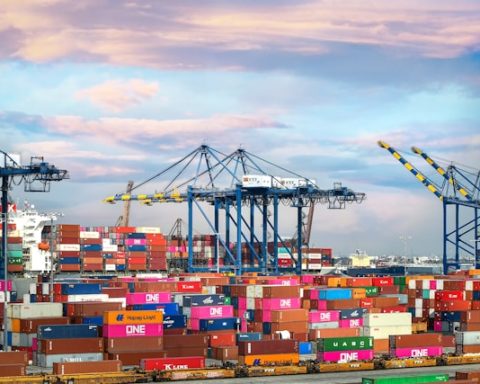
China has announced a new set of export restrictions on batteries and key components, a move analysts say could have far-reaching consequences for U.S. technology and energy sectors. The measures, which take effect on November 8, cover large-scale lithium-ion batteries used for energy storage, cathode and anode materials, and even the specialized machinery used to make them — areas where China holds overwhelming global dominance, Bloomberg said.
Under the new rules, Chinese companies must obtain export licenses from the Ministry of Commerce before shipping affected goods abroad. While Beijing has used similar tactics before — notably restricting rare earth exports during past trade disputes — this latest step marks a significant expansion of its leverage into the clean energy sector. “While it doesn’t impact as wide a range of industries as other Chinese export controls, the dominance of China in battery supply chains means they can squeeze hard and it can be felt pretty quickly by U.S. companies,” said Matthew Hales, an analyst at BloombergNEF.
The U.S. is particularly vulnerable. In the first seven months of 2025, roughly 65% of America’s grid-scale lithium-ion battery imports came from China, according to BNEF data cited by Bloomberg. These are the same batteries used to stabilize the power grid and support the rapidly growing network of data centers driven by artificial intelligence. Demand for electricity from data centers in the U.S. has more than doubled since 2017 and is expected to triple by 2028, according to the Lawrence Berkeley National Laboratory.
While China’s own AI ambitions are constrained by limited access to advanced U.S. chips, Washington’s challenge is energy. “The energy demand piece is the constraint in the U.S. for AI data center infrastructure,” said Emily Kilcrease, director of the Energy, Economics, and Security Program at the Center for a New American Security. Battery storage, virtually non-existent a decade ago, has surged to 26 gigawatts nationwide — enough to power tens of millions of homes. That figure is projected to rise to 136 gigawatts over the next decade, much of it dependent on Chinese components, Bloomberg noted.
China controls 96% of global anode production and 85% of cathode materials — two critical inputs in lithium-ion batteries. The inclusion of these items in Beijing’s new controls marks what Cory Combs of Trivium China called a “huge escalation,” given how reliant foreign manufacturers are on Chinese supply. “A lot of the battery factories that have been going up in the Southeast, they’re all going to be impacted by this — this is their raw material stream,” added Celina Mikolajczak, a veteran battery executive who previously oversaw Tesla and Panasonic’s Nevada Gigafactory operations.
The market reaction was swift. Shares of Fluence Energy Inc., a major U.S. battery storage firm, tumbled more than 12% on Friday — their steepest drop in two months — while Tesla Inc. fell 5%, Bloomberg reported. Both companies rely heavily on Chinese-made battery components.
Industry leaders warn the move will intensify existing supply chain pressures. Denis Phares, CEO of Dragonfly Energy Corp., said the new policy “adds another layer of complexity to an already tight global supply chain and underscores the importance of accelerating domestic innovation.” Dragonfly, which assembles batteries in Nevada, is now pushing to reduce dependence on Chinese-sourced parts.
Still, the restrictions carry risks for Beijing as well. China’s own battery industry, now worth hundreds of billions of dollars, faces domestic overcapacity and depends increasingly on foreign buyers. “It’s unclear how China intends to enforce its new regime,” said Bryan Bille of Benchmark Mineral Intelligence. Analysts told Bloomberg that the controls could both serve as leverage in trade talks and protect China’s technological edge. “They’ve been very explicit about not wanting to give away core technologies,” said Ilaria Mazzocco of the Center for Strategic and International Studies.
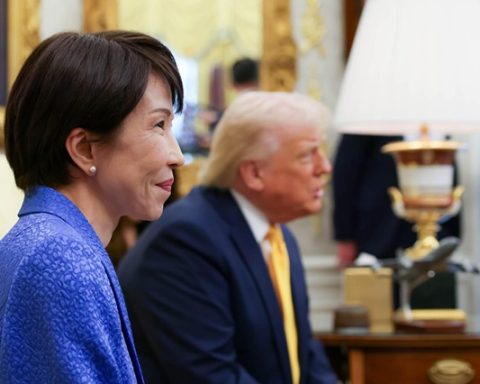
How forcefully China uses this new power may hinge on the next round of trade negotiations. Beijing relaxed similar curbs on rare earths after striking a deal with the Trump administration in June. But tensions are flaring again: President Donald Trump, responding to the new export rules, said there was “no reason” to attend a planned summit with Chinese President Xi Jinping in South Korea later this month and threatened to impose tariffs of up to 100% on Chinese goods.
With both sides hardening their positions, China’s battery export restrictions have become the latest flashpoint in an increasingly high-stakes battle for control of the world’s clean energy supply chains — one that could shape the future of global industry and geopolitics alike.