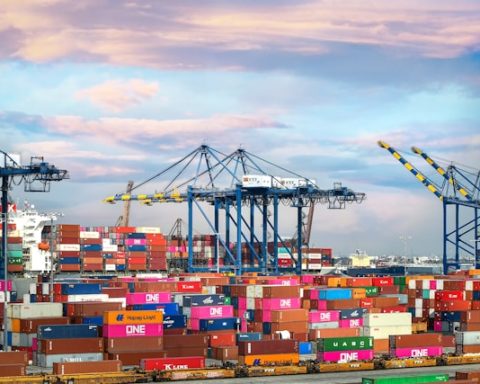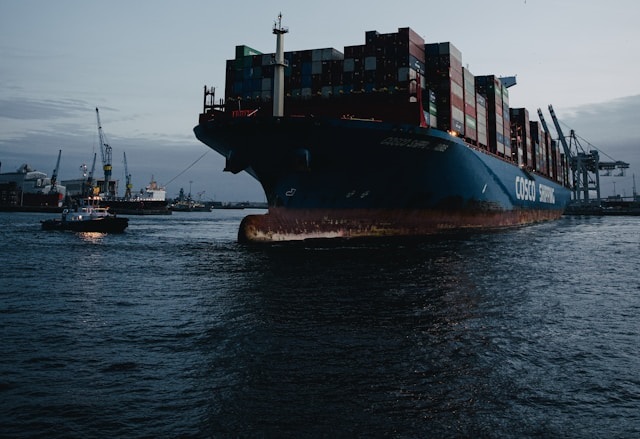
China’s largest shipping company, Cosco Shipping Corp., is seeking a powerful role in the consortium acquiring billionaire Li Ka-shing’s overseas ports business, in a bid to secure Beijing’s approval for the sensitive and politically charged deal, according to a Bloomberg report citing people familiar with the matter.
Cosco, a state-owned enterprise, is asking for veto rights—or powers of similar weight—within the consortium taking over 43 ports owned by CK Hutchison Holdings Ltd. These include two strategically critical locations along the Panama Canal, a global maritime choke point. Sources told Bloomberg that Cosco wants the ability to block any decisions it deems potentially harmful to Chinese national interests.
The request for veto power is still under negotiation. While the rest of the buyer group—including BlackRock Inc.’s Global Infrastructure Partners and Terminal Investment Ltd., controlled by Italian billionaire Gianluigi Aponte—has agreed to grant Cosco full informational access, discussions continue over the exact authority the Chinese firm will hold within the consortium.
The exclusive negotiation window between CK Hutchison and the buyer group is set to expire on July 27, though insiders say Cosco’s role could be finalized by the end of September.
Cosco’s involvement has added a new layer of complexity to a deal already seen as emblematic of the broader geopolitical rivalry between the U.S. and China. President Donald Trump has framed the potential acquisition as a strategic win for American influence in the Panama Canal region. Meanwhile, Chinese regulators have launched a probe into the deal, intensifying scrutiny of Li Ka-shing and his family’s business interests.
According to Bloomberg, the fallout has already begun to affect other parts of the Li family’s empire. Richard Li, the younger son of Li Ka-shing, has seen his efforts to expand his insurance ventures into mainland China stall amid Beijing’s growing unease. This follows earlier reporting by Bloomberg in March that Chinese authorities had instructed state-owned enterprises to pause new dealings with companies tied to the Li family.
Under the original terms of the agreement, Terminal Investment was to assume ownership of all ports except the two Panamanian facilities, which would fall under BlackRock’s Global Infrastructure Partners unit. Cosco’s inclusion in the deal, however, could shift that structure and influence how the consortium governs strategic assets.
The deal, while commercial on paper, has rapidly evolved into a test case for the shifting dynamics of global trade, national security, and the increasing weaponization of economic transactions.
Neither Cosco, CK Hutchison, BlackRock, nor MSC Mediterranean Shipping Co. (controlled by the Aponte family) responded to Bloomberg’s requests for comment.
With just days left before the exclusive talks window closes, all eyes are now on how far Beijing will go to assert its interests—and how the buyer consortium balances commercial ambitions with rising political pressure from both East and West.