China’s grip on the world’s rare-earth supply is often described in deceptively simple terms: Beijing has the minerals, the processing capacity and the leverage, while Western countries allowed their own industries to decline. But a deeper examination reveals a more complicated story. China’s advantage is not simply buried underground. It has been built through consolidation, technical experience, government intervention and an industrial ecosystem that has developed over decades.
That is the central argument of a recent deep dive by ChinaTalk, written by Aqib Zakaria and Nick Corvino, which examines the two state-owned giants now controlling nearly all of China’s rare-earth production: China Northern Rare Earth and China Rare Earth Group, referred to in the analysis as “China Southern”.
The division between the two is geographical, geological and political. China Northern, headquartered in Baotou in Inner Mongolia, is the world’s largest producer of light rare earths, including the magnet workhorses neodymium and praseodymium. China Southern, based in Ganzhou in Jiangxi, controls the heavier and scarcer elements, including dysprosium and terbium, which help permanent magnets withstand high temperatures in applications ranging from electric-vehicle motors to missile guidance systems.
Since 2024, national production quotas have gone to these two companies and no one else. In 2025, Beijing stopped publishing the quota figures altogether.
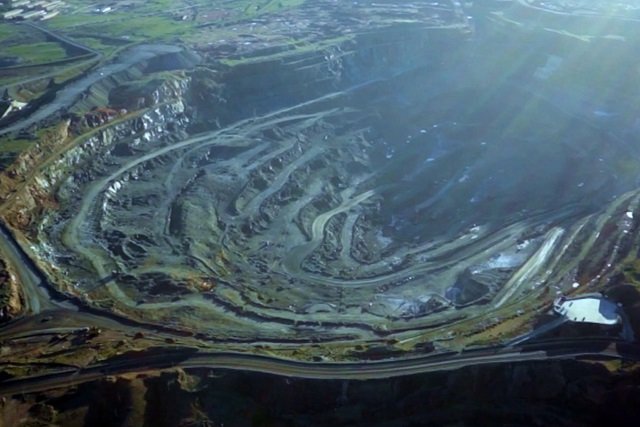
The origins of this structure lie in the very different nature of the deposits. Northern China’s light rare earths come overwhelmingly from Bayan Obo in Inner Mongolia, a vast open-pit deposit where rare earths occur alongside iron ore. Because the resource was concentrated in one location and had long been associated with state steel production, consolidation in the North was relatively straightforward and was completed by 2015.
The South was a different proposition. Heavy rare earths are found in ion-adsorption clays scattered across Jiangxi, Guangdong, Fujian and Hunan. The dispersed deposits encouraged hundreds of small mining operations, illegal extraction and smuggling routes through Myanmar. Provincial and municipal governments also had their own economic interests in mines, jobs and revenues, making them reluctant to surrender control.
When Beijing attempted to consolidate the industry into the “Big Six” rare-earth groups in the mid-2010s, the North received one group while the South received five. The original intention had been to create two groups, one in each region, but resistance in the South delayed that objective.
It was not until December 2021 that Beijing completed the Southern consolidation, merging the rare-earth assets of Chinalco, Minmetals and Ganzhou’s municipal champion into China Rare Earth Group. Guangdong’s assets were not incorporated until 2024. The two-company quota structure therefore dates only from 2024, shortly before China’s export restrictions transformed rare earths into an even more prominent instrument of economic and strategic leverage.
The financial figures illustrate the disparity between the two Chinese giants and their Western counterparts. China Northern generated about ¥32.97 billion, or roughly $4.6 billion, in revenue in 2024 and employed just under 10,000 people. By April 2026, its market capitalisation had reached about ¥177.9 billion, or $25 billion. Revenue then rose to ¥42.56 billion in 2025, while net profit more than doubled to ¥2.25 billion as higher prices associated with export controls flowed through.
China Southern’s publicly visible figures are much smaller, but they do not represent the whole group. Its listed arm reported about ¥3.03 billion in 2024 revenue, down 24 per cent, and a net loss of approximately ¥287 million. The figures cover only part of the wider organisation, while the parent China Rare Earth Group remains outside the normal public-company disclosure system.
By comparison, MP Materials, which operates America’s Mountain Pass rare-earth mine, generated $204 million in revenue in 2024 and employed fewer than 1,000 people. Even after its valuation rose following Washington deal-making, its market capitalisation remained around $10 billion, less than half that of China Northern.
Yet China’s advantage is not primarily about owning better machines. According to the ChinaTalk analysis, much of the equipment used in rare-earth mining and refining is globally commoditised. The decisive advantage lies further down the production chain, in process knowledge accumulated through decades of industrial experience.
Northern’s bastnäsite ore requires crushing, flotation and rotary kilns before chemical separation. Southern operations dealing with ionic clays rely on leaching and precipitation. The equipment is broadly understandable. What is much harder to replicate is knowing exactly how to configure the processes, which chemical recipes work best, how to maximise extraction and how to maintain near-perfect purity.
That knowledge has accumulated through China’s research and industrial institutions. Xu Guangxian, described as the “Father of Chinese Rare Earths Chemistry”, developed countercurrent extraction in the 1970s, dramatically improving the separation of neodymium and praseodymium. His work became part of the technical foundation used by both the Northern and Southern industries.
The country also developed a substantial research and training ecosystem around the sector. The Baotou Research Institute of Rare Earths has about 700 staff, including at least 200 engineers, while the China General Research Institute for Nonferrous Metals serves the Southern industry. China has around 80 mineral-processing schools and mining-engineering programmes collectively graduating thousands of students each year, alongside more than 40 specialist rare-earth laboratories.
The comparison with the United States is therefore not simply one of talent. The ChinaTalk analysis argues that America’s problem is less the absence of engineers than the absence of industrial destinations in which their knowledge can accumulate. Chemical-engineering graduates have historically moved towards other industries, while rare-earth facilities and the apprenticeships associated with them diminished.
That makes China’s advantage difficult to reproduce overnight. Workers are often specialised in particular parts of the process, from separation-system design and reagent chemistry to electrolysis-furnace operations. Recruiting one specialist does not recreate decades of accumulated institutional knowledge. Even recruiting entire teams would not necessarily reproduce a facility designed around a different ore, impurity profile and chemical process.
There is another vulnerability within China’s model: enforcement. Environmental concerns were a major reason for imposing production quotas, after unregulated Southern mining caused acid and ammonia contamination of streams and landslides. Some private operators moved into Myanmar, where Chinese companies now conduct much of the heavy rare-earth mining.
The scale of the resulting gap is striking. China produced about 260,000 tonnes of NdFeB magnets in 2024, requiring an estimated 1,750 tonnes of dysprosium for heat resistance. Yet the official national dysprosium production quota was below 900 tonnes. The ChinaTalk analysis estimates that the difference of almost 1,000 tonnes had to come from hidden overproduction, smuggling from Burmese mines, or a combination of both.
The contradiction is significant. A state that has built an extraordinary degree of control over a strategic industry has still struggled to control every mine, trader and supply route within and beyond its borders.
The two companies themselves reflect this tension. China Northern is a local state-owned enterprise, with considerable direction coming from Inner Mongolia. China Southern is a central state-owned enterprise supervised by the State-owned Assets Supervision and Administration Commission. SASAC holds 31 per cent directly, following the difficult merger of Chinalco, Minmetals and Ganzhou interests.
The resulting duopoly is therefore not evidence of a perfectly unified system. It is the product of years of bargaining between Beijing and local governments, consolidation, resistance, environmental concerns and attempts to impose order on a fragmented industry.
And beneath the geopolitics are thousands of workers whose expertise sustains the system. China Northern’s average employee compensation was about ¥183,400, or roughly $25,000, in 2024. MP Materials reported median employee compensation of $92,576 for 2025. The difference highlights a further challenge: China’s rare-earth dominance depends on specialised workers who may have financial incentives to leave.
Reports in 2025 also indicated that China’s Ministry of Commerce demanded detailed information on technical personnel at rare-earth companies and, in some cases, required passports to be collected to prevent unauthorised travel and leakage of technical knowledge.
China’s rare-earth advantage, then, is neither simply geological nor the result of uniquely gifted workers. It is an industrial system built through scale, consolidation, experience, research, organisation and state support. The mines matter, but so do the people who know how to process them, the institutions that train those people and the accumulated knowledge embedded in the factories.
That is what makes Beijing’s position so difficult to challenge. China did not merely discover a rare-earth advantage. It spent decades constructing one.