A new wave of export restrictions imposed by China on critical rare earth minerals has raised serious concerns across the global automotive industry, with experts warning of potential production shutdowns within months if supply chains remain disrupted.
The curbs, announced in early April as retaliation for steep new U.S. tariffs introduced by former President Donald Trump, extend to seven rare earth elements — particularly heavy and medium rare earths essential for manufacturing high-performance magnets used in electric vehicles, wind turbines, and military hardware.
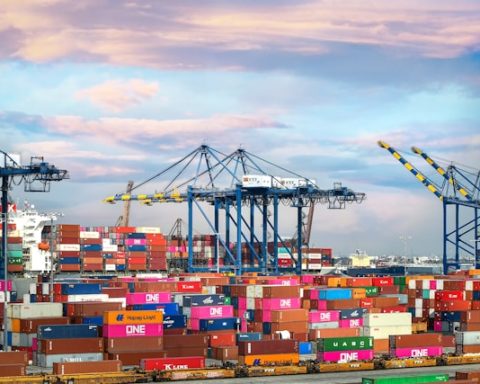
Executives and traders told the Financial Times that auto manufacturers and suppliers in Europe, the U.S., and Japan are holding just two to three months’ worth of inventory — sparking a frantic rush to stockpile materials and secure alternative sources.
“If we don’t see magnet deliveries to the EU or Japan in that time or at least close to that, then I think we will see genuine problems in the automotive supply chain,” said Jan Giese, a metals trader at Frankfurt-based Tradium.
Industry insiders warn that companies like Tesla and other global carmakers could be significantly affected. A senior automotive executive described the Chinese move as a “7 or 8” in severity on a scale of 1 to 10, calling the restrictions a strategic form of retaliation. “It’s a way for the Chinese government to say: ‘We’re not just going to go tit-for-tat on tariffs — we’ll hit you where it hurts, and get your own industries to pressure your governments to back down.’”
China dominates global processing of heavy rare earths like dysprosium, terbium, and samarium — critical ingredients in the magnets used in EV motors and fighter jets — making it difficult and costly for global producers to pivot quickly. Although lighter rare earths such as neodymium and praseodymium have not yet been targeted, analysts note that Beijing still holds considerable leverage should trade tensions escalate further.
The controls require companies to apply for export licences for every shipment and bar re-exports to the U.S., causing delays and uncertainty. According to traders cited by the Financial Times, Chinese exporters have already declared force majeure on some shipments and removed materials from international markets — creating further price opacity in an already volatile sector.
Japan, heavily reliant on Chinese rare earths, is working to mitigate the risks. A Japanese government official told the Financial Times that the country’s national stockpiles may cushion some of the short-term impact, but warned that “heavy rare earth stockpile elements do not suffice to avoid potential turbulence of automotive supply chains.”
Efforts to loosen China’s grip are underway, with companies like Australia’s Lynas planning to expand rare earth processing capacity in Malaysia by mid-2025. But the timeline is tight, and questions remain over whether new supply chains can be built before existing inventories are depleted.
Complicating matters further is the civil war in Myanmar — a major supplier of feedstock for heavy rare earths — which has disrupted flows into China and made domestic resources more valuable, incentivizing Beijing to shore up internal reserves.
Despite previous reluctance to block exports of other critical materials like gallium, Chinese restrictions have snarled shipments of metals such as antimony, used in ammunition. Analysts say the real impact of the current controls will depend on how long it takes Beijing to issue the necessary export licences — a process that has historically been opaque and inconsistent.