For decades, the Tibetan Autonomous Region (TAR) has appeared to defy the logic of conventional public finance. Its revenues remain far below its expenditure, while Beijing continues to channel enormous sums into infrastructure, security and development. Yet the apparent imbalance is not necessarily a failure in the way a corporate balance sheet might suggest. Viewed through the Chinese Communist Party’s calculation of Comprehensive National Power (CNP / 综合国力), Tibet occupies a different category: a territory whose strategic value can outweigh its direct fiscal cost.
The scale of that cost is striking. In 2025, TAR generated RMB 31.79 billion in its own revenue against expenditure of RMB 310.23 billion, producing a self-financing ratio of just 10.2%. Central subsidies reached RMB 253.88 billion, equivalent to 81.8% of expenditure and 83.7% of local GDP. On a per-resident basis, Beijing transferred approximately RMB 67,900 to the region’s 3.74 million residents.
The pattern is not new. Between 2012 and 2022, cumulative transfers reached RMB 1.73 trillion, four times the RMB 454 billion allocated during the preceding sixty years from 1952 to 2012. In 2026, planned investment in key projects stands at RMB 244 billion, alongside a fixed-asset investment target of 15%.
Taken alone, those figures portray a territory heavily dependent on the central state. But the argument presented in the source material is that the financial ledger tells only half the story.
The strategic logic stretches back more than a century. In his 1920 work The International Development of China, Sun Yat-sen described Tibet as the “Western Treasury” and identified its gold and copper wealth, while arguing that railways were necessary to extract its mineral resources. In 1956, Mao Zedong described minority territories as vast and rich in resources, defining the significance of the periphery by what it contained. Jiang Zemin subsequently fused development with social and political control through the 1999 Western Development strategy.
Under Xi Jinping, that approach has acquired a broader historical and administrative framework. In 2019, Xi invoked the ancient Qin Dynasty formula of unified script, axle-width, measures and conduct as a template for the New Era. By the 2026 TAR 15th Five-Year Plan Outline, Tibet had been formally designated as a national security barrier, ecological security barrier, strategic resource reserve base and clean energy base.
That designation helps explain why the fiscal cost is accompanied by extensive spending on security and infrastructure. Across the PRC, internal security expenditure reached RMB 1.44 trillion in 2022, compared with RMB 1.45 trillion on national defence. Tibet, Xinjiang and Beijing spend more than three times the national average per capita on internal security, under a doctrine directed against the “Three Evils” of separatism, extremism and terrorism.
In Tibet, that security architecture includes grid management, Double-Linked Household surveillance units, DNA collection covering 25% to 33% of the population and the “7+1” stability model. Along the more than 4,000 km frontier, security is also linked to settlement. By the end of 2021, 624 border xiaokang, or well-off, villages had been completed across 21 border counties. The 2019 batch of 395 villages alone required RMB 13.5 billion. Strategic border counties such as Cona and Mainling were upgraded to city status, unlocking urban development budgets facing Arunachal Pradesh.
Infrastructure spending similarly carries several functions at once. Roads, railways, energy facilities and settlements are presented not simply as economic projects but as structures capable of serving civilian access, resource extraction, military mobilisation and operational sustainment.
The economic accounting itself is complicated by Tibet’s dependence on central investment and external trade. More than 80% of secondary industry in 2017 consisted of construction projects funded by central transfers. An interprovincial trade deficit equivalent to 71% to 76% of GDP means that a substantial share of the money entering Tibet subsequently flows back to inland contractors, manufacturers and equipment suppliers.
The potential return lies in assets that cannot easily be measured through local revenue.
The Qinghai-Tibet Plateau generates 656 ± 23 Gt/year of hydrological runoff across 13 major river systems, affecting nearly 2 billion people downstream. Sanjiangyuan alone supplies 49% of the Yellow River, 25% of the Yangtze River and 15% of the Lancang-Mekong River. The 2023 Qinghai-Tibet Plateau Ecological Protection Law provides Beijing with statutory authority over the catchment while exempting hydropower needed for border defence.
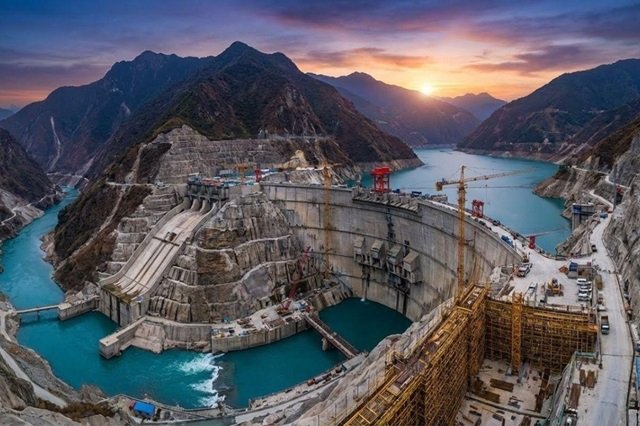
Energy is another major component of the strategy. TAR clean-energy capacity is targeted to rise from 13 GW in 2025 to 60 GW by 2030. A ±800 kV Tibet-Guangdong UHVDC transmission line, a RMB 53.2 billion project, is expected to export 43 billion kWh a year from 2029. The proposed Metog Hydropower Cascade on the lower Yarlung Tsangpo, with planned capacity of 60 GW, involves an investment of approximately RMB 1.2 trillion and is intended to generate around 300 TWh annually.
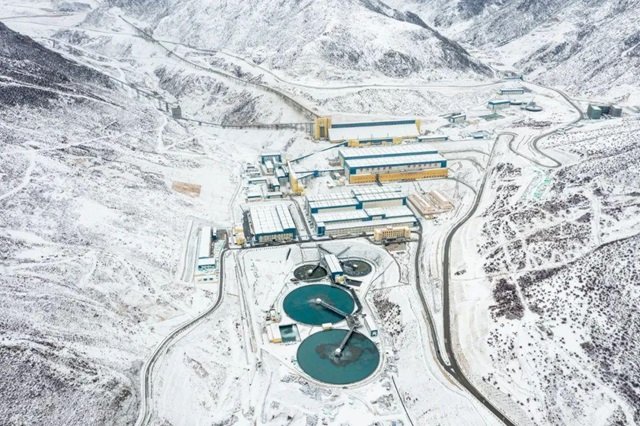
Mineral resources add another layer. The TAR contains 30.5% of China’s copper resources and 66.6% of its chromium resources, while 85% of national lithium reserves are spread across the wider plateau. The Julong Copper Mine produced 190 kt of copper in 2025, with production targeted at 300 kt in 2026 and approximately 600 kt at Phase III, at a time when China has approximately 79% national import dependence for copper concentrate.
The region also provides strategic geographic depth. Covering 1,202,800 km², or 12.5% of the PRC, the TAR places more than 1,000 km of strategic depth in front of Sichuan and the Yangtze basin and faces five states along a border exceeding 4,000 km. Its demographic trajectory also contrasts with the mainland: while China’s population declined by 3.39 million in 2025, with natural population growth of -2.41‰, TAR recorded positive natural population growth of +5.64‰.
Yet the transformation described in the source material is not solely economic or military. It also involves language, education, religion and administration. Official rhetoric has shifted from preserving Tibetan culture, including Tibetan-medium education promised in 2011–2015 white papers, towards security, border fortification and standardised Chinese. By 2023, official English-language materials had systematically replaced the term “Tibet” with “Xizang”.
The compulsory boarding-school system forms a central part of this transformation. Approximately 78% of TAR compulsory-stage pupils, and more than 80% of farmer and herder children, totalling around 1 million children, are enrolled in state boarding schools. Mandarin is mandated as the basic instructional language under the 2026 Ethnic Unity Law and revised National Common Language Law.
The legislative framework has expanded alongside these policies. SARA Order No. 5 of 2007 asserts state control over living Buddha reincarnations, while SARA Order No. 22 of 2025 bans religious venues from organising minors to study scripture. The 2023 Qinghai-Tibet Plateau Ecological Protection Law and 2025 TAR Measures establish control over water catchments. The Ethnic Unity and Progress Promotion Law, in force from July 1, 2026, mandates Mandarin instruction and national textbooks and establishes extraterritorial liability under Article 63 for individuals or organisations abroad deemed to be “undermining ethnic unity”.
The National Defense Mobilization Law Revision, in force from October 1, 2026, further authorises the requisition of civil infrastructure, including energy, transport, reservoirs and the Metog dam, for military use during operational contingencies.
The physical infrastructure reinforces the same integration. The approximately 10,000 km G219 lateral border highway runs through Aksai Chin, while G318 and G109 / G6 form major east-west and north-south routes. The Sichuan-Tibet Railway is under construction, with work accelerating along the Bomi-Rawu section towards a 2030 opening. The Xinjiang-Tibet Railway company was registered in August 2025 with RMB 95 billion in registered capital.
Logistics remain a constraint. Electrification of the Golmud section increased rail capacity by 67%, raising train weights from 3,000 to 4,000 tonnes. But refined fuel remains a critical operational limitation. The 1977 Golmud-Lhasa pipeline has a capacity of approximately 250,000 tonnes a year, leaving more than 1 million tonnes of refined fuel to be transported by rail annually across weather-exposed infrastructure. High-altitude aviation also carries a penalty, with payload reductions of 10–20% and fuel consumption increases of 30–40%.
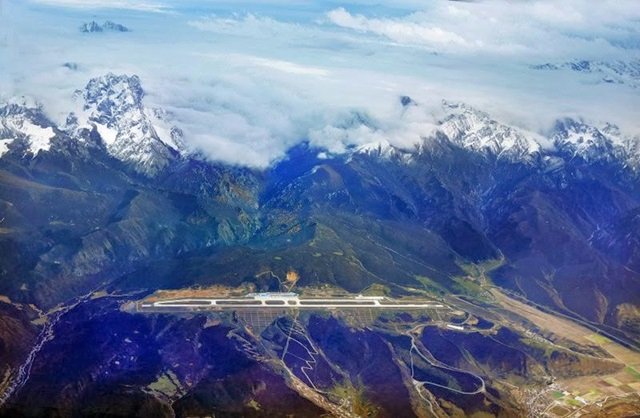
Alongside these networks stands an integrated force structure comprising the PLA Tibet Military District, with approximately 40,000 personnel, PAP detachments, “Snow” militia units, 624 border villages, 37 dual-use airfields and heliports, and an expanding UAV network across Ngari, Shigatse and Nyingtri along the G219 spine.
The resulting picture is therefore more complicated than either a fiscal burden or an economic success story. Tibet absorbs enormous public resources, while the returns identified in the source material lie in water, energy, minerals, strategic depth, border security, infrastructure and demographic presence. Physical extraction occurs in Tibet, but primary owners such as State Grid, Zijin Mining and China Yajiang Group, as well as the principal destinations of value, are located in coastal and interior China.
The central calculation is consequently not whether Tibet can pay for itself. It is whether the territory can generate strategic power greater than the financial cost required to control, integrate and develop it. By that measure, the transformation of Tibet from a cash cost into a strategic asset is not merely an economic project. It is a long-term state project in which fiscal expenditure, resource extraction, infrastructure, security and political integration operate as parts of the same national calculation.