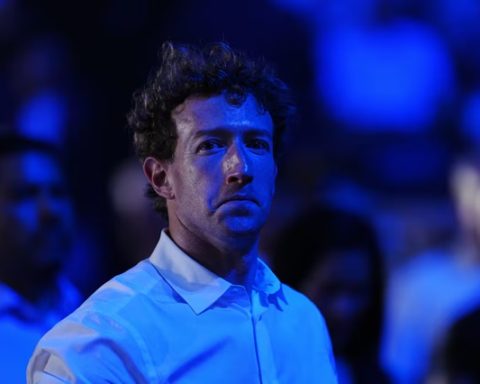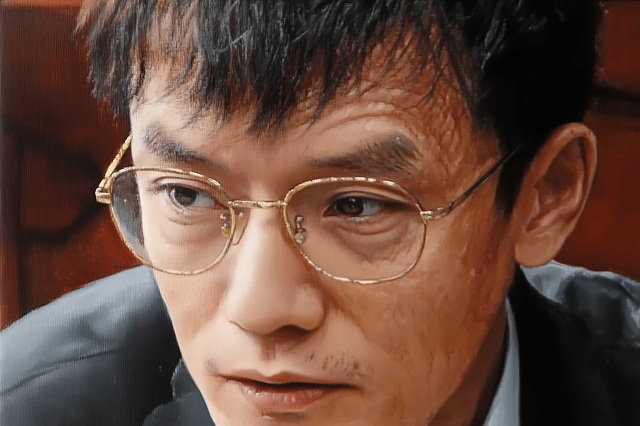
Liang Wenfeng, the founder of DeepSeek, has emerged as an unexpected hero in China, where he is celebrated for his unprecedented challenge to the dominance of American tech giants. From humble beginnings in the small village of Mililing in Guangdong province, Liang has managed to shake the very foundations of Silicon Valley, leveraging just a modest cluster of artificial intelligence chips and a small, highly skilled team of engineers. His breakthrough—series of research papers published by his AI start-up—suggested that large language models could be built using significantly fewer Nvidia chips than previously thought necessary.
This revelation has caused global investors to rethink the entire AI infrastructure model. The result? Nvidia, a key player in the AI chip market, saw its market capitalisation drop by nearly $600 billion, as the AI industry began questioning whether enormous investments in expansive AI computing clusters were truly essential for future progress.
While Silicon Valley reels from the impact of this revelation, back in Mililing, a small village so remote that it appears to have no significant online presence in English, Liang’s return home during the Lunar New Year holiday was nothing short of a triumph. Local banners proudly hailed him as a symbol of success and rural revitalisation. “Liang Wenfeng returns to his hometown to spread good results and add energy to rural revitalisation,” read one such banner, welcoming the 40-year-old billionaire.
Mililing residents, though unaware of the full extent of Liang’s influence on global tech, took great pride in his achievements. Liang’s family home has even become an unlikely pilgrimage site for those seeking to understand the origins of this once-reluctant celebrity. However, despite the local admiration, the world beyond Mililing remains in the dark about the mysterious entrepreneur who has sparked deep unease in Silicon Valley. DeepSeek and Liang himself have declined to comment on the matter.
From his early years in Mililing, Liang stood out. Growing up in a family of educators, with both his parents and grandfather serving as teachers, Liang excelled in school. A classmate recalled him as “well-behaved and mild-mannered” and noted that he was particularly skilled in mathematics and enjoyed reading comic books. After leaving high school in 2002, Liang pursued higher education at Zhejiang University, where he earned both an undergraduate degree and a master’s in computer science. His thesis focused on motion detection algorithms, a glimpse of the technical ingenuity that would later define his career.
After graduating in 2010, Liang transitioned from academia to the world of finance, applying his computing skills to automated stock trading. He founded his own hedge fund, High-Flyer, in 2015, which rapidly grew to become one of China’s leading quant funds. There, he made a fortune using sophisticated algorithms to execute trades. With a solid foundation in both finance and technology, Liang turned his attention to artificial intelligence, launching DeepSeek in 2023.
Liang’s vision for DeepSeek is clear: to create artificial general intelligence (AGI), the long-sought “holy grail” of AI development. AGI, when realized, will represent a leap forward in computer intelligence, allowing machines to perform human-like critical thinking. A fellow manager at a rival fund who has known Liang for years praised his engineering mindset, saying, “He thinks and acts like one. While we’re managing people and funds, he is coding every day.”
The AI community has been watching his progress closely. While the West has long viewed quant traders as financial masterminds, China has been less welcoming, with regulators historically critical of quants. However, Liang’s work with DeepSeek has found favor in Beijing, which sees AI as a key to the country’s technological future. In fact, before the Lunar New Year, Liang was invited to meet with China’s second-in-command, Li Qiang, alongside other top entrepreneurs, where they were urged to make technological breakthroughs for the nation.
Despite his growing influence and recognition, Liang has maintained a remarkably low profile. He has kept silent in the face of allegations from US competitors who claim DeepSeek has stolen technology or is a tool of the Chinese government. Liang’s reserved nature is well-known among those who work with him. One fund manager described him as someone who “can talk a lot when it’s a topic of interest,” but who is also capable of maintaining silence when focused on his work. If he chooses not to engage, he makes it clear, signaling that his thoughts are elsewhere.
The lack of public communication has fueled speculation, with the internet dissecting every available detail of Liang’s past. Meanwhile, residents of Mililing continue to view him as a local success story—an intelligent, hardworking young man who made it big. “We all grew up in this village,” said one former schoolmate, Leon Liang. “We’re very proud of him.”
Top 16 Key Facts about Liang Wenfeng
Here’s the key facts about DeepSeek’s CEO:
- Name: Liang Wenfeng,
- Age: Born in 1985, 39 years old as of 2025.
- Nationality: Chinese national.
- Education: Bachelor and Master in Engineering from Zhejiang University.
- Academic Focus: Specialized in information and communication engineering.
- Earliest Start: Began gathering financial data in 2008.
- Breakthrough Fund: Co-founded High-Flyer in 2015 for quantitative trading.
- Asset Milestone: Managed over $10 billion in assets by 2019.
- AI Ambitions: Started buying NVIDIA GPUs in 2021 for AI development.
- Official Launch: Founded DeepSeek in May 2023.
- GPU Efficiency: Trained models with 2,000 NVIDIA H800 chips for under $6 million.
- R1 Debut: Launched the R1 model on January 20, 2025.
- Hair and Personality: Known as a “nerdy guy with a terrible hairstyle,” yet respected.
- Government Recognition: Consulted by the Chinese government in January 2025.
- Driving Principle: Focuses on long-term innovation over short-term gains.
- Future Outlook: Aims to advance China toward artificial general intelligence.