The Democratic Republic of Congo, the world’s top cobalt producer, will lift its suspension on shipments of the metal next month, replacing a months-long ban with a quota system designed to stabilize global supply and prices, the country’s regulator said.
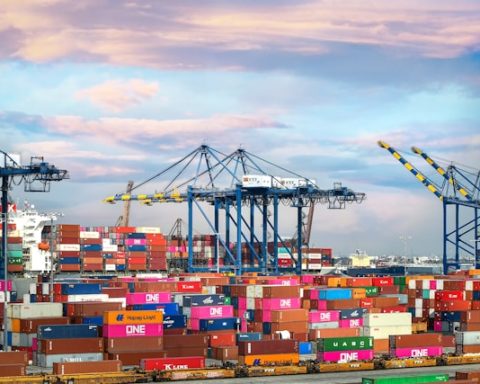
Exports will resume on October 15, after the government imposed a halt in February amid a steep slump in cobalt prices. Under the new policy, miners will be permitted to export just over 18,000 tons for the remainder of 2025, with annual caps of 96,600 tons set for both 2026 and 2027, according to the Authority for the Regulation and Control of Strategic Mineral Substances’ Markets (ARECOMS). Quotas will be allocated pro-rata based on each company’s historical exports.
ARECOMS President Patrick Luabeya told Bloomberg that the suspension “no longer requires a total ban” as prices have recovered, and the quota system will serve as a tool to “rebalance the market for the years to come.” The regulator aims to reduce global cobalt inventories to the equivalent of one month of demand.
Congo produced nearly 220,000 tons of cobalt in 2024, according to Darton Commodities, accounting for about 75% of worldwide output. The metal is a crucial component in electric-vehicle batteries, aerospace equipment, and other clean energy technologies.
The ban, first announced in February and extended in June, coincided with record-low cobalt prices, which had fallen below $10 a pound for the first time in more than two decades. Prices have since rebounded more than 60%, while cobalt hydroxide — Congo’s primary export product — has more than doubled, Bloomberg reported.
The suspension disrupted global supply chains, particularly in China, which imports 90% of Congo’s cobalt intermediates. CMOC Group Ltd., China’s biggest operator in Congo, declared force majeure on deliveries earlier this year, while the nation’s cobalt imports fell sharply in June and July.
Congo’s government, under President Félix Tshisekedi, has sought greater influence over global cobalt markets by aligning exports with demand. However, analysts have warned that tight restrictions and high prices could accelerate a shift toward cobalt-free EV batteries.
Under the quota system, 10% of export volumes in 2026 and 2027 will be reserved for national strategic projects. ARECOMS said it retains the authority to adjust quotas as needed or redirect supply toward domestic processing initiatives to encourage higher value-added production.
“We obviously hope that cobalt prices will return to a level that allows not only the survival but the sustainability of an industry essential to the energy transition,” Luabeya told Bloomberg.