As the planet barrels toward breaching key climate thresholds, scientists and policymakers are turning to an increasingly urgent question: can we reverse the damage by removing carbon dioxide directly from the atmosphere? A comprehensive feature published this week in Nature explores three major approaches to carbon removal — from air, land, and sea — and the scientific, political, and financial hurdles each faces.
One high-profile initiative, set to launch off the coast of Massachusetts, will pour a carefully formulated alkaline solution into the Atlantic Ocean to enhance its natural ability to absorb CO₂. The $10-million LOC-NESS experiment, led by geochemist Adam Subhas of the Woods Hole Oceanographic Institution, is one of several projects funded by the U.S. National Oceanic and Atmospheric Administration (NOAA). It aims to test a strategy known as ocean alkalinity enhancement. By increasing the water’s pH, the solution enables the ocean to draw in more carbon from the atmosphere — potentially scaling up to remove as much as a billion tonnes of CO₂ annually if adopted globally.
This oceanic effort is just one leg of a three-pronged strategy that scientists worldwide are now urgently pursuing. According to Nature, governments, startups, and utilities are investing billions of dollars into carbon removal technologies, grouped into three categories:
1. Direct Air Capture:
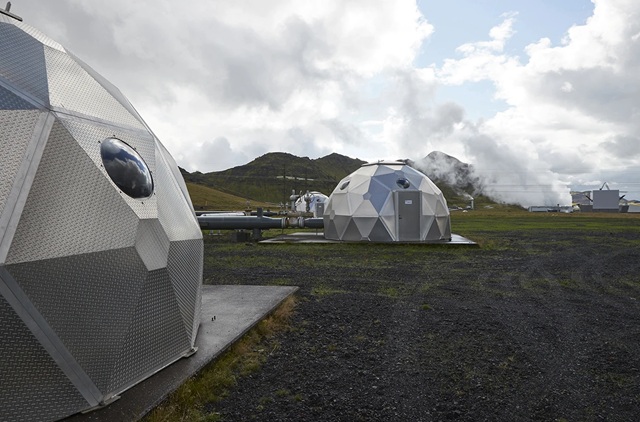
Industrial-scale machines are being deployed to suck CO₂ straight from the air. Though promising, the technology is expensive — costing up to $1,000 per tonne — and politically vulnerable. Under former U.S. President Joe Biden, the Department of Energy (DOE) committed over $2 billion to air-capture hubs in Texas and Louisiana. But since President Donald Trump returned to office, many of these projects have seen funding frozen, casting uncertainty over the future of America’s role in carbon capture research.
2. Ocean Alchemy:
In addition to LOC-NESS, other NOAA-supported projects are testing methods such as fertilizing oceans with iron to grow phytoplankton and farming seaweed — all aimed at boosting the ocean’s natural carbon sink abilities. While the basic science is promising, real-world monitoring is essential to understand ecological impacts.
3. Land-Based Removal:
From spreading silicate-rich rock dust on farmland to manufacturing biochar, scientists are exploring ways to enhance soils’ ability to store carbon. In the U.S., Stanford chemist Matthew Kanan is testing methods to speed up carbon absorption using pre-treated minerals, while in Europe, countries like Denmark and Sweden are building bioenergy plants designed to trap and store emissions underground. One recent study estimates these land-based techniques could offset up to 17% of U.S. emissions for less than $100 per tonne.
Despite the technical optimism, Nature reports that many researchers remain cautious. “We have the technologies, but we have never used them at significant scale,” said Kati Koponen, an energy researcher who helped lead a major EU study on carbon removal options. Others warn of over-relying on these future fixes as a license to delay meaningful emissions cuts today.
Wolfgang Lucht of the Potsdam Institute for Climate Impact Research put it bluntly: “There are no easy pathways to a future with massive levels of carbon removal. We must accelerate emissions reductions now — not assume the next generation will clean up the mess.”
As the window to meet the Paris Agreement’s 1.5°C target narrows, the race to refine and scale these strategies is heating up. But scientists stress that carbon removal is not a silver bullet — it’s a last resort in a toolkit that must still be dominated by aggressive decarbonization.