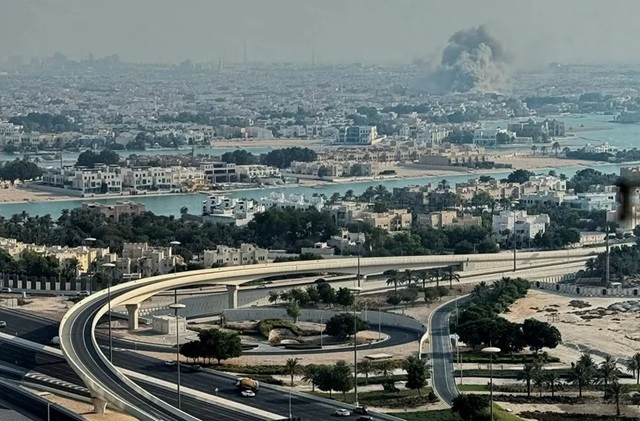
Israel’s recent airstrike on Hamas leadership in Doha was likely coordinated not only with the United States but also known in advance by Qatar, according to an Israeli official involved in Gulf relations, as reported by Haaretz.
The official told Haaretz Weekly that it is nearly impossible to believe the Israeli Air Force conducted bombing runs just 30 kilometers from Al Udeid Air Base—where a forward U.S. Central Command headquarters is located—without informing American forces stationed there. “It is hard to believe Israeli aircraft carried out such an operation without alerting U.S. counterparts,” the source stated.
Prime Minister Benjamin Netanyahu’s assertion that Israel acted independently—saying, “Israel initiated it, Israel conducted it, and Israel takes full responsibility”—has been met with skepticism. The report suggests that Netanyahu likely secured a green light from Washington before launching the attack. Haaretz also previously reported that the Trump White House effectively outsourced Gaza policy to Israel.
The involvement of Qatar raises further questions. Qatar’s Ministry of Foreign Affairs condemned the attack, calling it a “blatant violation of all international laws and norms,” and warned of threats to the safety of Qataris and residents in the country. However, Haaretz points out that such statements may be aimed more at domestic and regional audiences than reflecting actual diplomatic positions.
“It is just as difficult to see a scenario in which the strike was not known in advance to the Qatari government,” Haaretz explains. The report notes that the United States would be unlikely to jeopardize its strategic ties with Qatar—one of its most important Gulf partners—especially given recent commitments of $1.2 trillion in investments to the U.S.
Some analysts argue that Doha may have been compelled to tolerate the strike under U.S. pressure, or possibly saw the move as a way to reduce its burden as a haven for Hamas leadership. Either way, the report concludes, “it is likely the Qataris knew about the strike in advance.”
Beyond the immediate political fallout, the attack sends a broader message to the region. It signals that Israel is prepared to target Hamas figures even in states that are not directly engaged in conflict with it. Financial markets responded quickly, with the Tel Aviv Stock Exchange rallying moments before close as investors viewed the strike as a potential turning point in the ongoing Gaza conflict.
Haaretz also draws parallels to prior Israeli operations, including the assassination of Hezbollah leader Hassan Nasrallah in 2024. Israeli officials hope that targeting Hamas leaders in Doha—a city seen as a secure refuge—will disrupt the organization’s leadership. Yet, experts caution that despite eliminating key figures like Yahya Sinwar and Ismail Haniyeh, Hamas’ armed wing remains intact and under separate command structures, such as that of Izz al-Din al-Haddad, who controls hostages and battlefield decisions.