The Dutch government is on the verge of collapse after far-right leader Geert Wilders announced his Party for Freedom (PVV) is withdrawing from the ruling coalition over failed asylum policy negotiations.
The dramatic announcement came Tuesday morning following a failed late-night coalition meeting on Monday. Talks aimed at securing support for Wilders’s hardline immigration proposals broke down within minutes on Tuesday, prompting the PVV leader to declare the end of his party’s participation in the fragile four-party coalition.
“No signature for our asylum plans,” Wilders said on social media. “PVV leaves the coalition.”
Wilders, whose party won the most seats in the November 2023 election, had been pushing for the toughest asylum restrictions in Dutch history — proposals that would breach European Union law, including suspending asylum claims from people arriving via safe neighboring countries and expelling refugee residents who commit serious crimes.
“I promised voters the strictest asylum policy ever,” Wilders said. “But that was blocked. Without guarantees, I had no choice but to withdraw support.”
The conservative coalition — led by technocrat Prime Minister Dick Schoof — included the mainstream VVD, the anti-establishment NSC, and the populist farmers’ party BBB. All three allies have expressed shock and frustration over Wilders’s abrupt exit.
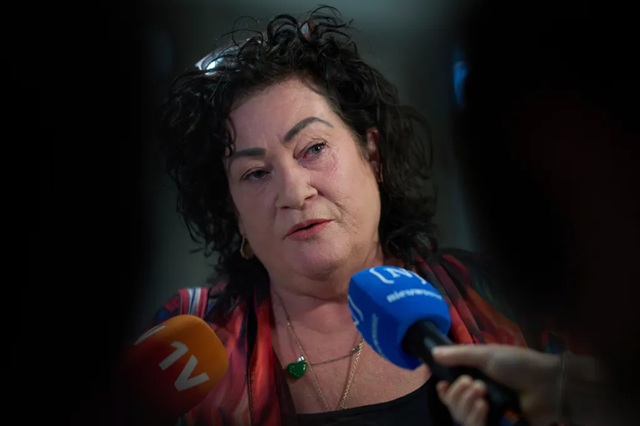
“He holds all the cards and knowingly pulls the plug,” said Caroline van der Plas, BBB leader. “It’s reckless and irresponsible. Anyone who stops now will hand the Netherlands to the left on a silver platter.”
Dilan Yesilgöz, VVD leader, accused Wilders of sabotaging right-wing goals: “He is choosing his ego. This is super irresponsible.”
Nicolien van Vroonhoven of the NSC added that the final meeting lasted just ten minutes. “We were willing to compromise, but I think Wilders had already made up his mind.”
The fallout now places the Netherlands in political limbo. Prime Minister Schoof is expected to offer his cabinet’s resignation to the king, with a caretaker government likely to remain in place until elections are held.
Polls suggest that Wilders’s PVV remains the frontrunner with 31% of public support, closely followed by a left-wing bloc led by former EU commissioner Frans Timmermans, polling at 30%. The VVD sits in third with 25%.
While new elections appear likely, some in the outgoing coalition are exploring the possibility of continuing as a minority government to avoid a vote — especially as the VVD and BBB currently trail in the polls. However, Timmermans and the left opposition are calling for immediate elections.
Wilders is gambling that public support for his anti-asylum stance — backed by a weekend poll showing overwhelming PVV voter approval for withdrawing from government — will boost his party further in a potential autumn election.
If elections are called, Dutch electoral authorities are expected to announce a date soon, with autumn being the most feasible time frame due to logistical constraints during the summer recess.