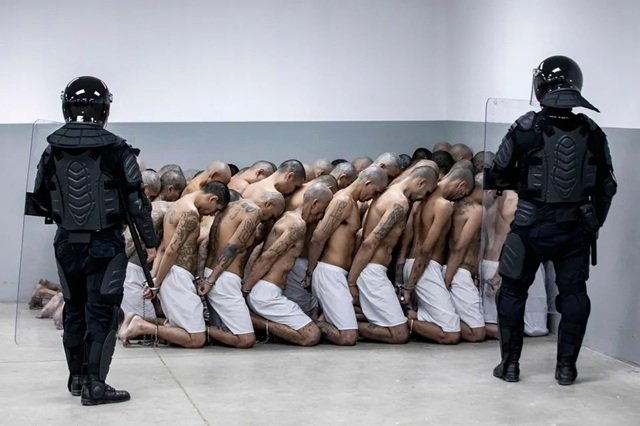
El Salvador’s President Nayib Bukele is reportedly considering an amnesty that could lead to the release of around 40,000 people arrested during the country’s prolonged state of emergency, potentially marking a significant change in a crackdown that has detained more than 90,000 suspected gang members.
Local media reported the proposed measure, quoting Bukele as saying that about half of the country’s prisoners accused of collaborating with gangs could benefit. The 45-year-old president outlined the plan at a press conference on Tuesday, according to reports published by Salvadoran media.
“We have a plan from which about 50 per cent of prisoners in El Salvador who have collaborated with gangs would benefit,” the newspaper Diario Co Latino quoted him as saying in its Wednesday edition.
Bukele said the proposed releases would exclude people convicted of murder and those who had helped conceal a body. However, people whose involvement was considered less serious could be eligible. He cited the example of a young person who acted as a lookout, warning others before police checkpoints arrived, suggesting that such a role could carry less responsibility and justify release.
The government has arrested more than 90,000 people since imposing a state of emergency in March 2022, accusing them of belonging to the Mara gangs, which have been linked to extortion, murder and forced prostitution. The proposed amnesty would apply to a substantial proportion of those detained, although details of the eligibility criteria and the timetable for any releases were not provided in the reports.
The crackdown has significantly reduced El Salvador’s murder rate, according to the source, helping transform security conditions in a country once considered the most dangerous in Central America. Bukele’s tough approach has made him one of Latin America’s most popular leaders, while also attracting sustained criticism over its impact on civil liberties and due process.
Human rights organisations and the Catholic Church have accused the authorities of arresting innocent people and denying detainees access to legal representation. The United States government under President Donald Trump has also sent additional prisoners to El Salvador, including people who were apparently innocent, according to the report.
Bukele has governed under emergency powers since the end of March 2022, with the legislature extending the measures 55 times. His party and allies hold 57 of the 60 seats in parliament, which has also authorised indefinite presidential re-election. Bukele has described himself as “the coolest dictator in the world”.
The reported amnesty would represent a potential departure from the mass-incarceration policy that has defined his administration’s response to organised crime. However, the available account does not establish whether the proposal has been formally adopted or when it might take effect.
Elsewhere in Central America, Costa Rica is moving towards a similar prison model. President Laura Fernández opened a new facility on Wednesday, built at a cost of US$35 million and designed to accommodate 5,100 inmates.
Costa Rica is also confronting the consequences of drug trafficking. Cocaine is transported from its coast towards Europe, while the country recorded 907 homicides in 2023, a record at the time. The government has attributed most of those killings to organised crime. Like Bukele, Fernández is described as a supporter of US President Donald Trump.