by Our Correspondent in Colombo
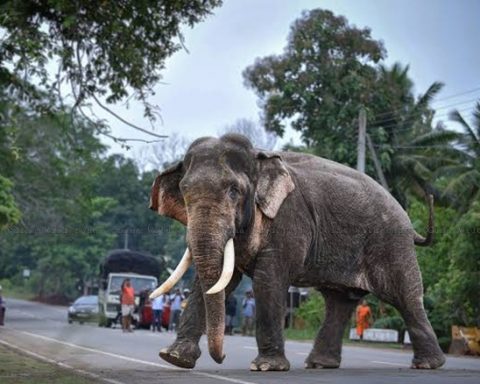
Sri Lanka is facing an unprecedented escalation in the human-elephant conflict, with both elephant and human deaths reaching alarming levels. The year 2023 marked the highest number of elephant deaths in a single year since independence, with 488 elephants killed. In the same year, 187 people lost their lives due to elephant attacks—the highest ever recorded. Disturbingly, projections for 2025 indicate that these figures are likely to rise even further, pushing the crisis to a critical threshold that experts describe as a national tragedy.
From 2011 to mid-2025, an estimated 4,600 elephants and 1,528 people have died in incidents linked to human-elephant conflict. These statistics expose a deep and worsening struggle between human settlements and the island’s dwindling elephant population. Contrary to popular belief, the rise in conflict is not due to an increase in elephant numbers. The last national elephant census in 2011 recorded 5,879 elephants, but the loss of 4,600 animals since then strongly suggests that the population is in steep decline. Experts warn that frequent killing of strong male elephants has distorted the natural gender ratio and eliminated unique genetic traits, further weakening the species.
Historical data underscores the scale of the crisis. Between 1950 and 2000, 3,949 elephants died—an annual average of about 80 deaths. However, from 2000 to mid-2025, the figure has surged to 6,773, averaging 270 per year. This represents a more than threefold increase compared to pre-2000 levels. Analysts point to rapid habitat loss and fragmentation as the principal causes of this escalation.
According to the 2010 Forest Conservation Department census, Sri Lanka’s forest cover stood at 1.95 million hectares, or 29.7% of total land area. Elephants primarily inhabit dry mixed evergreen forests, intermediate monsoon forests, grasslands, and thorny scrub areas—constituting about 26.5% of the island’s land area. Yet, these habitats are increasingly fragmented and disconnected, forcing elephants into human settlements in search of food and water. The resulting encounters often end in tragedy for both humans and animals.
The roots of the crisis can be traced to policy decisions taken after 2010, when extensive deforestation was carried out to facilitate large-scale agricultural and infrastructure projects under the National Physical Plan and international lending agreements. These projects—many tied to commercial agriculture and multi-purpose irrigation schemes—have destroyed vast stretches of elephant habitat. The remaining forests are divided by highways, railways, and human settlements, leaving elephants with little room to roam. As a result, human-elephant conflict has evolved from a localized issue into a nationwide ecological emergency.
Conservationists and environmental experts have proposed a series of comprehensive strategies to mitigate this crisis. Central among them is the creation of a networked system of elephant habitats under the coordination of the Forest Conservation Department, Wildlife Conservation Department, and other state agencies. This includes removing fragmented electric fences that block traditional elephant corridors and replacing them with strategically placed, reinforced barriers supported by biological defenses such as cactus and lime hedges. A legal framework for the regulation, approval, and monitoring of electric fences is also recommended.
Another crucial proposal calls for the construction of tunnels or crossings along major highways and railways to facilitate safe elephant movement, thereby reducing accidents. The legalization and protection of identified elephant corridors, removal of garbage dumps that attract elephants, and the prohibition of cattle grazing in protected forests are also key recommendations. Experts emphasize that restoring degraded habitats by removing invasive plant species, converting monoculture forest plantations into grasslands, and rehabilitating traditional water tanks are essential steps toward restoring balance to elephant ecosystems.
The report further highlights the need to halt illegal cultivation and mining activities in reserved forests, strengthen enforcement against land encroachment, and reassess flawed development policies under the National Physical Plan. A fundamental shift toward sustainable land use—guided by ecological science rather than political or commercial agendas—is urgently needed.
To ensure lasting impact, conservationists urge the government to establish an Elephant Conservation Fund to finance long-term protection efforts and a National Land Commission to develop a coherent land-use policy. Such measures, they argue, must be grounded in community participation and environmental stewardship rather than short-term economic gain.
The current human-elephant conflict in Sri Lanka is no longer just a conservation issue—it is a national emergency that threatens biodiversity, agriculture, and rural livelihoods alike. Unless immediate, science-based action is taken to restore habitats, enforce protective laws, and reform development policies, the country risks losing not only its elephants but also the ecological balance that sustains its people. The tragedy unfolding today stands as both a warning and a call to action for Sri Lanka’s leaders to protect one of the island’s most iconic and endangered species before it is too late.