by Luxman Aravind
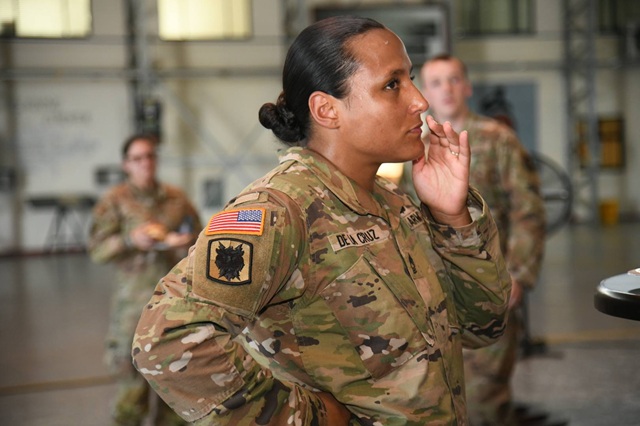
Nine days after Cyclone Ditwah tore through Sri Lanka’s coast, the public woke to the unexpected sight of a United States military team landing in the country under the banner of “emergency assistance.” The phrasing alone raises questions, but the timing raises far more. In any democratic society, foreign military deployments—even for humanitarian purposes—are not matters to be sprung upon the citizenry. They are decisions that demand transparency, procedural clarity, and public accountability. Yet Sri Lanka’s government offered no prior announcement, no Parliament briefing, and, critically, no publication of any authorising Order in the Gazette under the Visiting Forces Act. What should have been a routine procedural disclosure has instead become a revealing case study in how executive power operates in the shadows, even during what is presented as a humanitarian moment.
The central issue is not the presence of U.S. personnel per se, nor the question of whether humanitarian assistance is needed. It is the absence of due process. Democracies distinguish themselves from authoritarian states through the predictability and publicity of their legal procedures. If foreign armed forces enter domestic civilian space—even temporarily, even benignly—those who govern must follow the laws designed precisely to prevent arbitrary or opaque military activity. In Sri Lanka, these laws are quite explicit. The Visiting Forces Act requires an Order to be issued by the President and published in the Gazette. The publication requirement is not ceremonial; it is the mechanism by which the public is informed and legal validity is secured. Without publication, there is no legal authority. Yet nine days after the cyclone struck, no Gazette notice exists in the public domain confirming the legality of these foreign troop movements. If the Order was issued but not disclosed, the government has violated the principle of transparency. If the Order was never issued, the government has violated the law itself. Neither possibility inspires confidence.
The argument that the disaster created an emergency so acute that the government had no time for procedural formalities might have carried weight on day one or day two, when chaos reigned and rescue efforts were truly time-critical. But by day nine, when U.S. forces arrived, the emergency-phase rationale collapses. This was not an instance of foreign soldiers airlifting survivors from rooftops in the midst of a storm. It was a pre-arranged deployment that followed days of diplomatic preparation. During that time, government institutions were fully functional, ministers issued routine press statements, and the machinery of state proceeded as normal. It is therefore impossible to characterise the lack of public notification as an unavoidable consequence of crisis. It is better understood as a deliberate bypassing of democratic procedure.
Other democracies offer compelling comparison. In Germany, the Bundestag’s Parliamentary Participation Act requires parliamentary approval for any deployment of German armed forces abroad, but it also governs foreign forces stationed on German soil under NATO arrangements. Crucially, every such decision is public and debated. In the United Kingdom, where the executive enjoys greater discretion, deployments of foreign troops under the Visiting Forces Act are nevertheless formally announced and legally documented. In Canada, the arrangement of foreign military assistance—whether U.S., British or otherwise—requires clear public disclosure and parliamentary scrutiny, even during natural disasters. Australia, too, insists that visiting forces operate under publicly available status-of-forces agreements and that disaster-relief deployments are communicated to the citizenry.
Even in the United States, a country with enormous executive flexibility in military matters, domestic deployments of foreign forces are unthinkable without public visibility. The principle is straightforward: foreign military activity within sovereign territory affects civilians, jurisdiction, and the rule of law. Therefore, it must be visible, debated, and legally authorised. Democracies do not invite armed personnel inside their borders quietly. They cannot afford such secrecy. History teaches why.
During the Cold War, several governments attempted covert arrangements with foreign militaries, often under the pretext of crisis or national security. In Italy, the clandestine “Gladio” network operated for decades without parliamentary knowledge, provoking national outrage when its existence became known in the 1990s. In Iran under the Shah, secret agreements permitted U.S. intelligence and military presence, ultimately fuelling public resentment and contributing to the regime’s collapse. In the Philippines, the Marcos government permitted foreign military operations without public or legislative oversight, leading to decades of disputes over sovereignty and constitutional interpretation. Even in democratic Japan, early post-war arrangements involving U.S. forces were kept from the public, causing political turbulence once revealed. These examples illustrate a consistent pattern: secrecy regarding foreign military activity, regardless of intention, almost always erodes public trust and undermines democratic legitimacy.
Sri Lanka is not immune to this logic. The country has a long history in which opacity in defence matters—whether during periods of civil conflict, foreign assistance arrangements, or post-war security operations—has fuelled suspicion, controversy, and institutional fragility. The lesson is clear: when the public is excluded from information concerning foreign military presence, speculation fills the vacuum, and governance itself becomes destabilised. The government’s silence on the legal status of the U.S. team, particularly when Indian forces had already arrived earlier under similarly opaque circumstances, strengthens the impression that the state views transparency as optional. Yet transparency is not a luxury; it is the core component that distinguishes lawful governance from discretionary rule.
The legal question, therefore, becomes a democratic one: does the Sri Lankan public have the right to know, promptly and clearly, when foreign military forces enter the country during civilian circumstances? If Sri Lanka is a democracy, the answer must be yes. Democratic states do not grant military access to foreign powers without informing their citizens. They do not rely on public guesswork or leaked photographs. They do not hide procedural authorisations or delay their publication until after the fact. They certainly do not wait nine days and then invoke “emergency assistance” as though time-sensitive rescue missions began more than a week after the disaster. Emergencies demand speed; bureaucracies demand order; democracies demand transparency. Sri Lanka’s government appears content with the first two, while neglecting the third.
If the government has complied with the Visiting Forces Act, it should publish the relevant Gazette immediately. If it has not complied, it owes the public an explanation, not a belated press release filled with post-hoc justifications. Silence is not an acceptable posture in matters involving foreign armed forces. The public deserves clarity about the mandate, scope, authority, and legal jurisdiction of the U.S. and Indian military personnel currently operating on Sri Lankan soil. Without that clarity, the state risks normalising ad hoc military access unrelated to public oversight.
The broader question extends beyond this particular cyclone. Sri Lanka must ask itself whether its legal procedures for foreign military deployments are sufficiently robust, respected, and transparent. If they are not, the issue will surface again—perhaps in a more contentious context. A democracy cannot operate on unstated understandings, private agreements, and withheld documents. It must operate on law, visibility, and informed consent. Nine days after Cyclone Ditwah, what should have been a straightforward humanitarian arrangement has instead exposed a wider accountability deficit. The government may hope this moment passes quietly. But in a democracy, silence is seldom just silence. It is a warning.