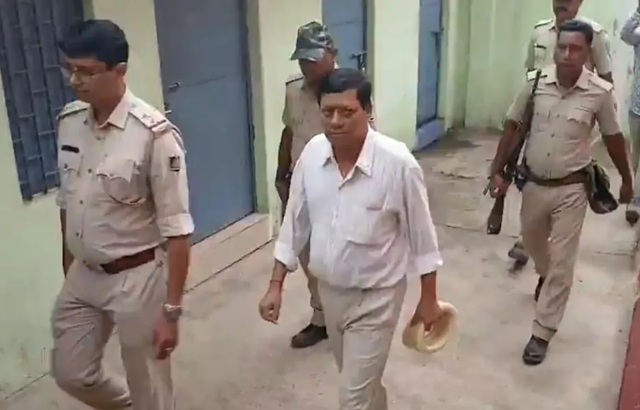
A former college principal in India, Punjilal Meher, has been sentenced to life imprisonment for sending a parcel bomb disguised as a wedding gift that killed two people and injured another in 2018. The verdict was delivered by a court in Bolangir, Odisha state, nearly seven years after the tragic attack that took the lives of 26-year-old Soumya Sekhar Sahu and his 85-year-old great aunt, Jenamani. Sahu’s wife, Reema, was seriously injured in the explosion, which occurred just five days after the couple’s wedding.
On February 23, 2018, the newlyweds opened a parcel sent to their home in Patnagarh town, reportedly addressed to the bridegroom as a wedding gift. The package exploded upon Soumya pulling a thread, causing significant damage to the house and devastating consequences for the family. Reema, then 22, spent over a month recovering in hospital. Soumya was employed as an engineer with a Japanese electronics firm in Bengaluru.
The court found Meher, 49 at the time, guilty of murder, attempted murder, and use of explosives. Despite the prosecution labeling the crime as “heinous,” Judge Sonali Patnaik declined to categorize it as a “rarest of the rare” case that would have warranted the death penalty, opting instead for life imprisonment.
Investigations revealed that Meher’s motive stemmed from resentment after he was replaced as principal of Jyoti Vikash College by Sanjukta Sahu, the victim’s mother, in 2014. Meher reportedly refused to accept the change, displaying disrespect and issuing threats fueled by jealousy and anger. Police discovered that Meher had taught himself to make explosives using YouTube tutorials and online manuals, which he later deleted.
In the months leading up to the attack, Meher conducted tests using fireworks to perfect his bomb-making. On the day of sending the parcel, he created an alibi by attending a class and avoided leaving digital traces by not purchasing a train ticket. The parcel traveled 650 kilometers by bus before reaching the Sahu household, having passed through several courier hands.
Police initially struggled with the case until an anonymous letter sent to authorities in April 2018 suggested alternative suspects and motives. However, handwriting analysis and investigative work led police to Meher. The letter’s details, known only to the perpetrator, helped break the case open.
After the sentencing, Soumya’s father expressed disappointment that the court did not impose the death penalty but thanked the judiciary for delivering justice. The case, widely known as the “wedding bomb” attack, remains a chilling reminder of personal vendettas turned deadly.