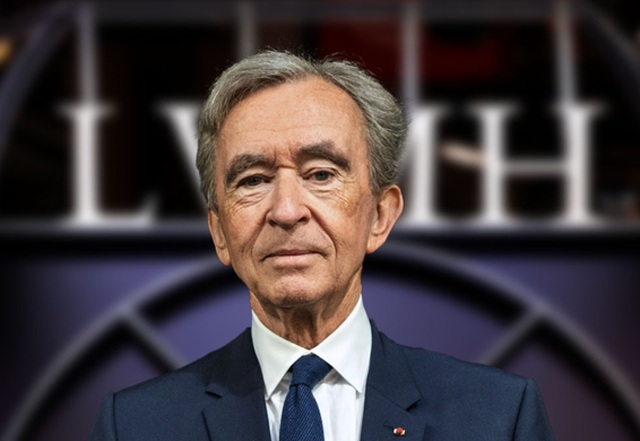
Bernard Arnault, the billionaire head of luxury empire LVMH and France’s richest man, has sharply criticised a proposed 2 per cent levy on the country’s wealthiest households, warning it would be “deadly for our economy.” His intervention comes as support grows for the plan, backed by economist Gabriel Zucman, and as polls show overwhelming public approval, according to The Sunday Times (UK).
The proposed tax would apply to individuals with assets exceeding €100 million (£87 million) and is estimated to raise €20 billion annually by targeting about 1,800 households. Advocates argue this could help close nearly half of France’s budget deficit, a pressing challenge for Prime Minister Sébastien Lecornu as he seeks parliamentary backing for his fiscal agenda.
Arnault, worth an estimated £116 billion ($156 billion), dismissed the plan as ideological rather than economic. In comments to The Sunday Times, the 76-year-old LVMH chief called Zucman “first and foremost a far-left activist” who “puts at the service of his ideology a pseudo-academic competence that is itself widely debated.” He added: “This is not a technical or economic debate, but a clearly stated desire to destroy the French economy.”
Public opinion, however, is strongly aligned with Zucman’s proposal. A recent poll by Ifop found that 86 per cent of French voters support the so-called “Zucman Tax.” Large-scale protests have further fueled the debate, with hundreds of thousands marching in Paris and other cities under banners demanding higher taxes on the super-rich to fund hospitals, schools, and public services.
Zucman, a 38-year-old economist and protégé of Thomas Piketty, has become a central figure in the debate. Speaking from his office in Paris, he said: “People understand the basic reality that the super-rich don’t pay enough tax.” He argues that the existing system allows billionaires’ wealth to snowball unchecked, while ordinary citizens pay proportionally more. Dismissing claims that his measure would drive wealthy individuals out of France, Zucman said studies show the mega-rich are far less mobile than critics suggest. To deter tax flight, he has proposed an “anti-exile” shield requiring those who leave the country to continue paying the levy for up to a decade.
The clash between Arnault and Zucman highlights France’s long and controversial history with wealth taxes. A similar measure under President François Hollande a decade ago raised only modest revenue and led some wealthy citizens to relocate abroad. President Emmanuel Macron scrapped the tax in 2017, replacing it with a narrower property levy. Critics of Zucman’s plan argue it risks repeating past failures, with seven leading economists warning in Le Monde that the new proposal would generate closer to €5 billion annually — far below his €20 billion estimate.
Still, Zucman points to the surge in fortunes among France’s elite as evidence of the need for reform. In 2010, the combined wealth of the 500 richest French households was €200 billion; by 2023 it had risen sixfold to €1.2 trillion, equivalent to 42 per cent of national GDP. He insists his proposal closes key loopholes that undermined earlier efforts, including exemptions for entrepreneurs’ shares.
The debate is dividing France’s political establishment. While the Socialist Party has made support for a wealth tax a condition for approving Lecornu’s budget, Macron’s centrist Renaissance party and conservative Republicans remain resistant. Yet polls show even their voters are overwhelmingly in favour.
Internationally, the wealth tax debate is gaining momentum. Zucman has urged the G20 to adopt a global levy on billionaires and believes his French proposal could set a precedent. “I’ve never met someone aged 25 or 30 saying they’re scared about paying a 2 per cent tax once they have more than €100 million,” he said, arguing that economic opportunity and entrepreneurship would not be harmed.
Arnault, however, remains unconvinced. “How could he directly involve me when I am certainly the largest individual taxpayer and one of the largest professional taxpayers through the companies I run?” he said. “Any other comment seems pointless, as this is clearly not a technical or economic debate, but rather a clearly stated desire to destroy the French economy.”