French minister Éléonore Caroit has warned that a victory by Marine Le Pen in France’s 2027 presidential election could have consequences extending well beyond French politics, potentially altering the country’s long-standing internationalist tradition and creating tensions within the European Union. Speaking to El País in New York after arriving to take part in the United Nations General Assembly, Caroit defended France’s commitment to multilateral institutions and argued that the current crises facing the international system make them more necessary rather than less.
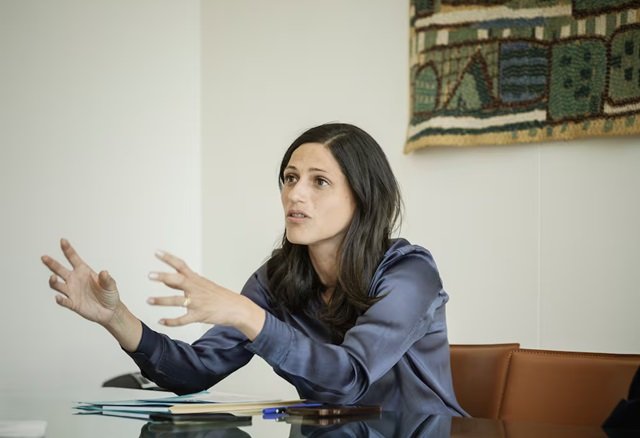
Caroit, a 41-year-old French-Dominican lawyer and minister responsible for Francophonie, international partnerships and French citizens abroad, is a member of Renaissance, the party that emerged from Emmanuel Macron’s political movement and is now led by former prime minister Gabriel Attal. Her appearance at the General Assembly comes as Macron addresses the United Nations for the final time as French president, with his mandate due to end in May next year. France is also holding the presidencies of the UN Security Council and the G7, giving the government an opportunity, Caroit said, to reinforce its support for international institutions at a time when their authority is being questioned.
She described the present international environment as one marked by an increase in both the number and scale of conflicts. Since the Second World War, she said, there had not been so many conflicts with such significant effects on economies. She cited the Strait of Hormuz, through which 20% of the world’s hydrocarbon production is affected, as an example of how a regional crisis can generate wider consequences. Macron, she said, had remained deeply engaged in multilateral diplomacy, including climate diplomacy and efforts to resolve international crises, and wanted his final appearance at the UN to reinforce that approach.
Caroit’s principal domestic concern is the possibility that Le Pen could represent France at the United Nations after next year’s election. “Her victory would have a strong impact on Europe and the world,” she said, arguing that France, alongside countries such as the United Kingdom and Canada, has been a pillar of support for the multilateral system challenged by the United States. She said she would continue campaigning to ensure that French voters understood what she described as the risks of a Le Pen government. According to Caroit, those risks include “a rupture with France’s internationalist tradition”, the possibility that France could turn inward and a potential break with elements of European integration. She noted that Le Pen had until recently advocated France’s departure from the EU and said a government led by her would therefore represent more than an ordinary change of administration.
The future of the United Nations itself was another central issue in Caroit’s defence of multilateralism. She acknowledged that the organisation faces financial and governance crises and said France supports reforms to its institutional governance. The UN also faces a crisis of confidence and legitimacy among member states questioning its usefulness and functioning. But Caroit rejected the idea that these difficulties make the organisation dispensable. “It is true that the UN has several crises,” she said. “But if the UN did not exist, we would have to invent it.” Its value, in her view, lies in providing a place where governments can meet, debate and express divergent positions while addressing conflicts and global challenges including climate change and artificial intelligence. She also pointed to the continued participation of countries that criticise the organisation, including the United States.
France’s position on the conflict involving Iran is similarly framed around de-escalation and international law. Caroit said France is not a belligerent in the Middle East conflict but is attempting to reduce tensions because of its global consequences. She stressed that the crisis extends beyond energy supplies: the closure of the Strait of Hormuz, she said, puts 45 million people at risk of acute malnutrition because of its potential effects on food security.
She also rejected the idea that Europe can become accustomed to the war in Ukraine. Some political parties in France and elsewhere in Europe are calling for reduced support, she said, but the French government takes the opposite position, arguing that European security depends on a durable and just resolution that takes Ukraine’s long-term interests and its requested security guarantees into account. Caroit also highlighted conflicts receiving less international attention, particularly Sudan and the situation in the Great Lakes region and the Democratic Republic of the Congo, noting that France remains mobilised over Sudan and that the region is also facing an Ebola epidemic.
Artificial intelligence presents another area where Caroit believes international coordination is necessary. Her argument is that governments retain a powerful instrument in regulation, but effective regulation of a global technology requires countries to work together. States have different approaches, including some that view AI primarily through short-term commercial and economic interests. The prominence of artificial intelligence at this year’s General Assembly, she said, may indicate that some governments previously reluctant to regulate the technology are reconsidering their positions.
The UN is also preparing to choose a successor to António Guterres. Caroit said the next secretary-general should be able to speak with all sides and demonstrate a degree of neutrality regarding previous activities. She stressed that the appointment should not be seen as a political nomination and that the rules of the selection process should be respected. France, like most member states, has not publicly identified its candidate. She rejected suggestions that the process is already at risk of becoming deadlocked, saying the international environment is more complicated than it was a decade ago but that the meetings of world leaders during the General Assembly could prove decisive. France and Mexico are also jointly promoting reform of the Security Council veto, an initiative Caroit said has attracted support from more than 120 countries, indicating substantial backing for discussion of changes to the system.