


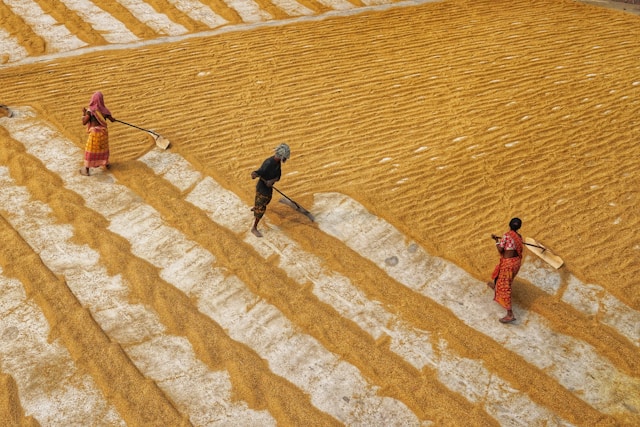
To reduce dependence on crude oil imports and as an eco-friendly strategy, the Government of India is implementing plans to blend ethanol with petrol. This is a commendable initiative. As of 28 February 2025, India has achieved a 17.98% ethanol blending rate under the ongoing ethanol supply year (2024–25), moving steadily towards the 20% blending milestone. This is a remarkable achievement.
To reach the target of 25% ethanol blending, a substantial increase in domestic ethanol production is essential.
Feedstock for Ethanol Production
To ensure adequate ethanol availability, the Government of India has introduced several proactive policies and incentive schemes. Numerous new ethanol production projects are currently under implementation.
The sugar industry remains the backbone of the ethanol economy, with sugarcane molasses as the primary feedstock. After maximising ethanol production from molasses, the government has also approved sugarcane juice, maize, biomass, grain, rice, and other materials as alternative feedstocks.
Cost-Benefit Scenario
When food crops such as maize are used for ethanol production, it is essential to question whether this is the most beneficial use compared to other applications. This decision must be grounded in a comprehensive cost-benefit analysis.
The government must not be driven solely by the goal of ethanol availability for blending, without a thorough evaluation of other potential uses for maize. Critics argue that the government’s approach reflects a narrow focus, overlooking more productive and appropriate uses of maize, and may be akin to “cutting off the nose to spite the face.”
Application Potential of Maize
Maize is India’s third most important cereal after rice and wheat. It serves as both a food and fodder crop and is also a raw material for several industrial and derivative products.
Many maize-based derivative products are not produced in India and are imported. For example, citric acid and L-lysine—both of which can be derived from maize—are entirely imported. India imports over 100,000 tonnes of citric acid and 85,000 tonnes of L-lysine annually, with domestic demand rising by 6–7% per year. Other maize-derived imports include mannitol.
India currently produces 42 million tonnes of maize per annum, with a target to increase production to 50 million tonnes by 2030. Producing high-value derivatives like citric acid and L-lysine would be far more profitable than converting maize to ethanol. Moreover, this would reduce foreign exchange outflows.
To promote ethanol production from maize, the government is offering incentives and has fixed attractive procurement prices for ethanol.
In January 2024, Oil Marketing Companies (OMCs) increased the procurement price of maize-based ethanol to ₹71.86 per litre, which includes a ₹5.79 per litre incentive. This move aims to help meet the 20% ethanol blending target by 2025.
Rice as Feedstock for Ethanol – Unacceptable in Letter and Spirit
Rice is an essential food grain critical for addressing hunger and nutritional needs. Across Asia—including India, Japan, China, Thailand, Vietnam, and Sri Lanka—rice has deep cultural and emotional significance. Any shortage of rice is likely to cause social unrest.
Recently, Japan released 300,000 tonnes of rice from emergency reserves due to a domestic shortage, amid rising public discontent and reports of rice theft. A Japanese minister reportedly resigned over the crisis.
Given this context, using rice for ethanol production raises serious concerns. Many consider this a misuse of a vital food resource and fundamentally wrong. It is a high-stakes decision that conflicts with the public’s perception of rice as a necessity for human welfare.
It is imperative that rice be used primarily for human consumption. Diverting it for non-food purposes reflects a lack of understanding of the ground realities.
Despite these concerns, the Government of India has increased the rice allocation for ethanol production to 5.2 million tonnes for the 2024–25 ethanol supply year, which began in November 2024.
Assuming a conversion rate of 470 litres of ethanol per tonne of rice, this allocation could yield approximately 2.45 billion litres of ethanol.
What Justification?
The government has not provided any satisfactory justification for using rice as ethanol feedstock beyond stating the need to boost ethanol production.
Perhaps the government believes it has sufficient rice stock in Food Corporation of India (FCI) godowns to justify such usage. As of 15 May 2025, India reportedly holds 38.19 million tonnes of rice—well above the buffer norm of 13.54 million tonnes. Additionally, unmilled paddy reserves could yield another 21.36 million tonnes of rice.
There are frequent reports of FCI facing storage constraints, with rice being kept in the open, leading to spoilage. Is the government planning to use damaged rice for ethanol production? No official statement has clarified this.
If India indeed has surplus rice, the wiser strategy would be to export it—boosting agricultural income and earning foreign exchange. Given rising crude oil import costs, enhancing exports wherever feasible, including rice, is a more sustainable solution.
Unfortunately, the government lacks a consistent rice export policy. For instance, it imposed export curbs in 2023–24, then lifted them in October 2024 after granaries were filled. The remaining restriction—on 100% broken rice—was lifted in March 2025.
Other Options
Beyond ethanol blending, there are other ways to reduce crude oil imports. While India is increasing renewable energy production and promoting electric vehicles, there is significant untapped potential in non-food crop ethanol feedstock.
Algae stands out as a viable alternative. It can be cultivated in coastal areas and wastelands, requires no clean water, and thrives on sunlight and carbon dioxide. Algae species contain about 20% oil, and their biomass can also be fermented to produce ethanol.
Algae cultivation does not compete with food crops, making it an ideal solution. It is surprising that the government has not seriously pursued this opportunity.
Is This Short-Term Planning?
India’s population has now surpassed 1.4 billion and continues to grow. Estimates suggest it may reach 1.9 billion in the coming decades. Despite economic progress, a significant portion of the population lives below the poverty line. The government provides free rice to low-income groups for sustenance.
In this context, allocating rice for ethanol production is rightly criticised as a short-sighted and counterproductive policy. If rice production drops due to seasonal or other factors, continued ethanol allocation could become untenable.
India should learn from the ongoing rice crisis in Japan and the social unrest it has triggered.
The correct path is to export surplus rice, particularly as global rice prices fluctuate. Organisations such as the FAO, the US Department of Agriculture, and the International Grains Council estimate that global rice production for the 2024–25 season will exceed 535 million tonnes—10 million more than the previous season—creating carryover stocks into 2025–26.
Despite this, the international rice trade remains vibrant. India should establish a stable export strategy instead of shifting policies frequently.
Diverting surplus rice for ethanol production merely because there is a temporary surplus reflects short-term thinking and knee-jerk policymaking.












