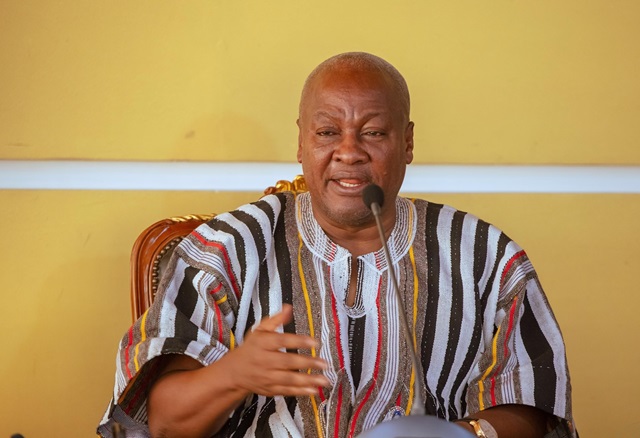
Ghana’s newly elected President, John Mahama, is calling for a reassessment of the country’s three-year, $3bn agreement with the International Monetary Fund (IMF), a deal forged by the previous administration. Mahama, who took office in December, plans to initiate a two-day “national economic dialogue” starting March 3 in Accra. This event will gather stakeholders from the private sector, academia, and civil society to discuss a roadmap for the country’s economic recovery.
Ghana’s economic turmoil, which led to a 2022 debt default, has raised Mahama’s concerns regarding the IMF program, which he claims was created without the current administration’s input. He has voiced his desire for a “renegotiation” of the agreement to make adjustments aligned with the country’s economic reality. However, some analysts remain skeptical, with experts like John Asafu-Adjaye from the African Center for Economic Transformation warning that Mahama will likely have limited options to adjust fiscal policies due to the IMF’s strict conditions. These conditions include curbing government expenditure, improving revenue mobilization, and halting central bank lending to the government.
Despite these constraints, Mahama, who previously served as president from 2012 to 2017, aims to address issues such as debt restructuring and tax reforms. Ghana’s finance minister, Cassiel Ato Forson, is expected to propose tax cuts in the upcoming budget, though the country still struggles with a tax-to-GDP ratio well below the African average. Inflation, which peaked at 54% in 2022, has since slowed to 23.5%, but remains significantly above the central bank’s target. As the IMF projects modest GDP growth of 4.4% this year, many businesses in Ghana continue to face challenges, including high borrowing costs and a depreciating local currency. Traders, especially in sectors reliant on imports, are feeling the pinch as costs rise.