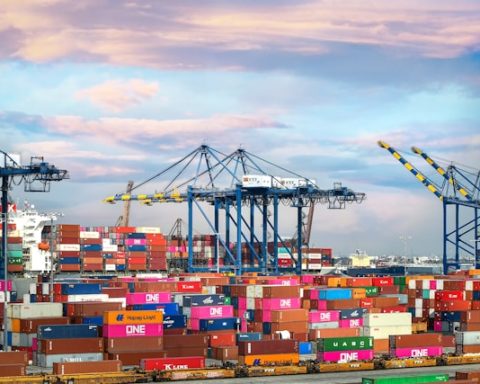
The world economy has so far weathered the heaviest barrage of U.S. tariffs since the 1930s, buoyed by resilient consumer spending, corporate absorption of higher costs, and a surge in artificial intelligence-driven investment. Yet President Donald Trump’s latest threat to impose sweeping tariffs on Chinese goods has reignited fears of a fresh shock to global markets.
This week, finance ministers and central bankers gather in Washington for the International Monetary Fund and World Bank annual meetings amid heightened economic and geopolitical uncertainty. Key topics include the $20 billion U.S. lifeline to stabilize Argentina’s peso, proposals to utilize frozen Russian assets for Ukraine, and the implications of surging government debt.
Six months ago, the economic outlook appeared grim following Trump’s “Liberation Day” tariffs, which rattled financial markets and stoked fears of global downturns. Since then, surprises have skewed positive: U.S. GDP grew at its fastest pace in nearly two years in the second quarter, and the S&P 500 has climbed 32% from an April low, fueled by AI innovations and record investment in data centers. Companies have largely managed tariff disruptions by maintaining higher inventories and accepting thinner margins.
However, economists warn this resilience may not last. Harvard University’s Karen Dynan noted, “We are going to see a slowing of the global economy.” Trump announced on Friday a potential 100% tariff on Chinese products from November 1, with the possibility of retreat if China eases restrictions on rare earths.
Global debt levels are also escalating, reaching nearly $338 trillion in the first half of 2025—a jump comparable to pandemic-era increases. U.S. efforts to bolster Argentina’s economy ahead of midterm elections, coupled with slowing payroll growth, shrinking manufacturing jobs, and China’s prolonged factory slump, add to growing concerns. Germany’s second-quarter contraction and weak exports further underscore fragility in major economies.
Trade growth is expected to slow dramatically next year. The World Trade Organization forecasts merchandise trade volumes rising just 0.5% in 2026, down from 2.4% in 2025. “Headwinds to the global economy are stiffening,” said HSBC’s Frederic Neumann, highlighting the delayed impact of U.S. tariffs. Citigroup’s Nathan Sheets echoed concerns that higher prices could eventually dampen U.S. consumer demand, with knock-on effects worldwide.
In the tech sector, exuberance around AI may mask vulnerabilities. IMF Managing Director Kristalina Georgieva warned that current valuations resemble those of the dot-com era, cautioning that a sharp correction could slow global growth and disproportionately hurt developing countries. Oxford Economics models show a U.S. tech slowdown potentially reducing global growth to 2% in 2026, compared with a baseline forecast of 2.5%. PwC economist Alexis Crow stressed that whether the AI boom translates into sustained productivity gains remains uncertain.
For businesses and consumers, the impact of tariffs is increasingly tangible. Mike Brundidge of Acme Food Sales Inc. said, “Very few things in life are certain but I can guarantee you prices on the shelf for the consumer in a grocery store are going up. There’s just no way around it.”
As policymakers navigate trade tensions, debt concerns, and tech market fragility, the global economy’s resilience faces its most critical test yet.