Even as forests shrink in many parts of the world due to logging, wildfires, and other human activities, their total carbon dioxide (CO2) absorption is on the rise, spurred by warmer temperatures that enhance photosynthesis in colder regions.
A 2024 report by the Global Carbon Project (GCP), a scientific consortium tracking global carbon emissions, shows that annual CO2 uptake by forests has increased by roughly 5 billion metric tons over the past 50 years. In nearly every year since the 1990s, forest absorption has outpaced emissions from wildfires and other sources.
Atmospheric carbon concentrations, however, continue to climb. Levels reached 420 parts per million (ppm) in 2023—50% higher than pre-industrial levels of 278 ppm—driven primarily by fossil fuel emissions. “Despite the accelerated carbon absorption by forests, atmospheric CO2 concentrations continue to rise, as emissions from fossil fuels are increasing even faster,” said Yoshiyuki Takahashi, head of the Office for Terrestrial Monitoring at Japan’s National Institute for Environmental Studies.
Global forest area has steadily declined, raising concerns about the sustainability of CO2 absorption. According to the World Bank, forests covered 31% of the world’s land surface in 2022, down from 33% in 1992, largely due to human activities such as logging and burning. “Globally, 10 million hectares of forest are lost annually, resulting in an economic loss equivalent to about 10% of the world’s gross domestic product,” said Minoru Takada, deputy director at the United Nations Forum on Forests, at a symposium held by Japan’s Forestry Agency last December.
The situation varies by region. Asia saw a net increase of 38 million hectares of forest between 1990 and 2020, with China promoting large-scale afforestation to combat desertification, raising forested land from 16.3% to 23.8% over 30 years. Europe also expanded its forest cover by 23 million hectares in the same period, supported by afforestation programs and land-use changes.
By contrast, the Southern Hemisphere has faced severe deforestation. South America and Africa lost a combined 240 million hectares of forest over the past three decades. In Brazil, forests are often cleared for meat and soybean production, while in Africa, trees are removed for fuel and agriculture.
Even where forests remain, their carbon absorption potential is declining without proper management. In Japan, where forests cover two-thirds of the land, absorption peaked at 110 million tons in 2003 but fell below 60 million tons by 2022, despite stable forest area. Aging trees—most over 50 years old—grow more slowly, reducing CO2 uptake. Experts say managing forests through selective thinning and replanting is essential to maintain their role as carbon sinks.
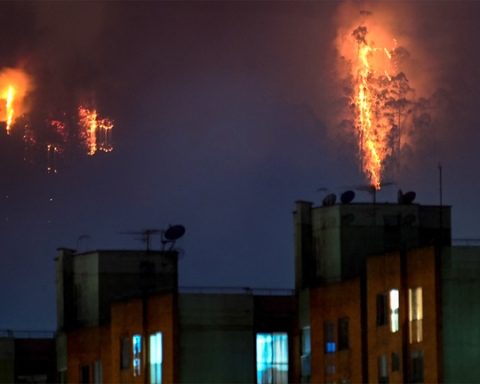
Wildfires, intensified by climate change, have also caused significant damage in Japan, the U.S., and other regions this year, further threatening forest carbon storage.
Forests remain crucial not only for mitigating climate change but also for supporting biodiversity and purifying water. Preventing deforestation and restoring lost forests will test humanity’s ability to safeguard the planet for future generations, according to researchers cited in Nikkei Asia.