by Our Economic Affairs Editor
As Hambantota International Port (HIP) embarks on an ambitious expansion plan, the port is set to redefine its role in global maritime trade. With the introduction of state-of-the-art crane technology slated for early February 2025, HIP is taking significant strides to enhance its container operations. Wilson Qu, CEO of Hambantota International Port Group (HIPG), recently highlighted the port’s unwavering commitment to tapping into under-exploited markets, positioning the port to become a major player in regional and international shipping.
HIPG’s strategy is multifaceted, involving a well-thought-out balance between seaside and landside initiatives designed to stimulate growth and boost its market share. The port’s expanded focus aims to increase container volumes while solidifying Sri Lanka’s standing as a competitive and lucrative destination for global maritime traffic. This strategic vision is set to bolster the country’s economy and make HIP a key asset in the global logistics network.
Advancing the Industrial Zone and Creating Local Employment
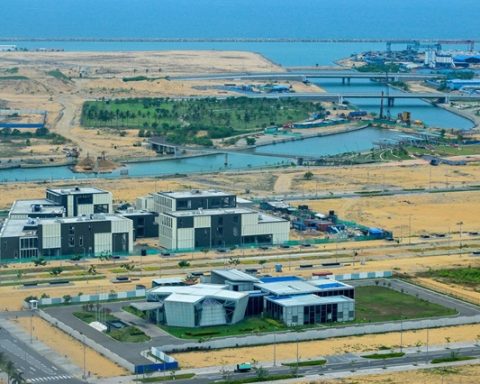
On the landside, HIP is rapidly progressing with plans to attract international investors to its growing industrial zone. The recent agreement to establish a sponge-mattress factory within the zone marks a significant milestone, being the first of its kind since the port’s launch of container operations. This factory is expected to target high-demand export markets in the USA, Europe, and Canada, helping to diversify Sri Lanka’s export base while providing a crucial economic stimulus to the region.
The industrial zone is poised to become a major economic hub, generating considerable employment opportunities and fostering collaboration between local entrepreneurs and global business partners. By creating a conducive environment for both foreign and domestic investment, the port is not only creating value for Sri Lanka’s manufacturing sector but is also reinforcing its status as a vital logistics and transshipment hub. The ability to generate gateway cargo from this industrial zone will directly enhance HIP’s attractiveness to shipping lines, improving port connectivity and contributing to regional economic growth.
“We are focused on cultivating an environment that encourages entrepreneurship, as well as foreign direct investment,” said Wilson Qu. “This will allow Sri Lanka to fully realise the potential of its industrial zone, which will, in turn, drive more cargo throughput, establishing Hambantota as a vital node in the global supply chain.”
Entering Relay Cargo and Transshipment Markets
In parallel with its landside strategy, HIP is keen to leverage its geographic advantage to enter the relay cargo market, a niche opportunity with significant growth potential. Relay cargo refers to the transfer of goods between two ships of the same carrier at an intermediate port. This strategic move allows shipping lines to optimise their operations, streamline routes, and reduce overall transit times, making it an attractive service for global shipping operators. By positioning itself as a relay cargo hub, HIP is positioning Sri Lanka at the forefront of regional shipping activities.
In addition to relay cargo, HIP is actively targeting the regional transshipment market. Currently, over 70% of containerised cargo from BIMSTEC countries bypasses Sri Lanka, creating a significant opportunity for HIP to capture a portion of this untapped market. By offering more efficient and cost-effective transshipment services, HIP aims to shift the region’s shipping dynamics and capture a more substantial share of global container traffic.
“The underperformance of Sri Lanka’s ports in the transshipment market is an opportunity we are determined to capitalise on,” Qu remarked. “By targeting markets that currently bypass Sri Lanka, we are positioning HIP as a viable alternative, providing competitive rates and exceptional service to international carriers.”
In practical terms, transshipment involves the movement of cargo between ships at an intermediate port, typically when no direct route exists between the origin and destination. By tapping into this market, HIP is set to optimise regional shipping routes, attract global shipping lines, and strengthen Sri Lanka’s maritime capabilities, all of which will contribute to long-term economic growth for the island nation.
Reinforcing Sri Lanka’s Position in Global Maritime Trade
The international maritime sector is fiercely competitive, with several established hubs across Asia and beyond. However, Sri Lanka’s strategic location along key shipping routes between East and West provides a unique advantage that HIP plans to capitalise on. Through its comprehensive marketing and operational strategies, the port is seeking to position itself as the go-to hub for regional container transshipment and relay cargo.
“The unique positioning of Hambantota Port in the Indian Ocean makes it an ideal stopover for shipping lines seeking to optimise their routes across the East-West trade corridor,” said Qu. “Our approach focuses on delivering exceptional service, competitive rates, and cutting-edge infrastructure—ensuring that Sri Lanka becomes a major player in the global shipping network.”
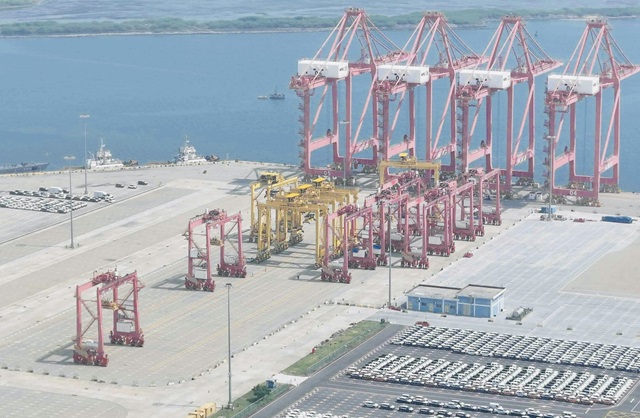
Beyond merely leveraging Sri Lanka’s geographical location, HIPG is heavily investing in its infrastructure, ensuring that the port is equipped to handle increasing volumes of cargo and meet the demands of the global logistics industry. The introduction of advanced crane technology is just the beginning of a broader infrastructure upgrade that will enable the port to handle a greater range of container sizes, improve operational efficiency, and enhance overall service reliability.
Disrupting False Narratives and Setting the Record Straight
The development of Hambantota Port has been marred by misleading narratives, particularly regarding its financial viability and the nature of its partnership with China. Some Western media outlets have pushed the idea that Sri Lanka is burdened with unsustainable debt or that the port serves China’s geopolitical interests. However, HIPG has clarified that the port’s expansion is about securing long-term commercial success for Sri Lanka, rather than bowing to external pressures.
The leasing agreement with China, while often mischaracterised in international media, was designed to ensure better management and operational efficiency of the port, given its early financial challenges. The focus has always been on boosting the port’s competitiveness and sustainability, not on political influence. HIPG’s strategy is focused on maximising the port’s commercial value, benefiting Sri Lanka’s economy while making the port a key global player in shipping and logistics.
“Many of the concerns surrounding Hambantota are based on outdated or inaccurate information,” Qu asserted. “The port is a critical economic asset for Sri Lanka, and its expansion is geared toward securing economic growth for the country, not serving geopolitical interests. We are focused on enhancing the port’s infrastructure, expanding markets, and attracting international investment.”
With a clear focus on infrastructure, market expansion, and strategic partnerships, Hambantota International Port is set to play an increasingly central role in global maritime logistics. The port is aiming to handle 10 million TEUs between 2025 and 2026, with ambitious plans to capture a significant portion of the relay cargo and transshipment markets. By capitalising on Sri Lanka’s central location in the Indian Ocean and offering superior infrastructure and services, HIP is poised to become a transformative force in the region’s shipping industry.