Hong Kong has unveiled a sweeping new initiative aimed at expanding its role as a global gateway for China’s Belt and Road Initiative (BRI), positioning itself as a key commercial and logistical link between mainland China and emerging markets across Asia, the Middle East, and beyond.
Belt & Road Commissioner Nicholas Ho Lik-chi confirmed that the city plans to “deep dive into ASEAN, Central Asia, and the Middle East” through the expansion of its air connectivity network. This includes the addition of new direct routes to strategic destinations, building on recently launched flights to Xinjiang, Riyadh, and Dallas, Texas—an important transit hub for flights bound for Latin America.
With over 150 direct air routes already in operation, Hong Kong is leveraging its globally respected infrastructure, financial ecosystem, and geopolitical neutrality to attract capital and talent. “A lot is settling in Hong Kong because we’re stable, open, and connected,” Ho told the South China Morning Post, underscoring the city’s appeal in a shifting global economy.
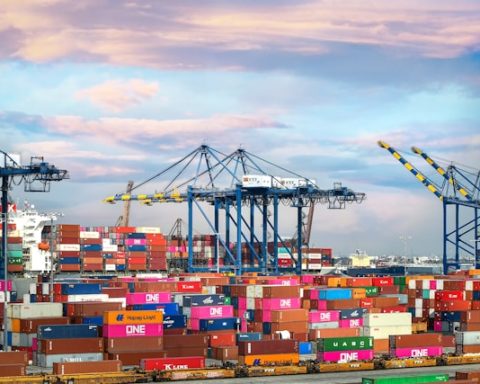
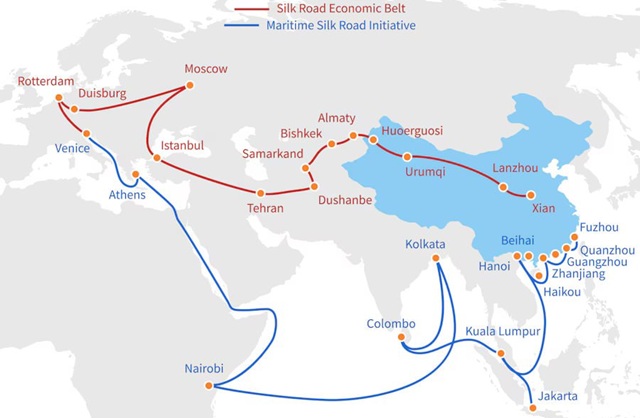
While Hong Kong handles between 50–60% of China’s outward financial flows and up to 65% of inward investment, it is just one artery in a vast network of global connectivity envisioned by Beijing. The broader Belt and Road Initiative includes six major economic corridors, dozens of sub-routes, and vital infrastructure projects spanning pipelines, railways, ports, and fiber-optic networks—collectively known as the Digital Silk Road.
Air connectivity is also playing an increasingly important role, with major commercial air cargo corridors such as Zhengzhou–Luxembourg now linking China’s industrial zones to global trade centers. By doubling down on aviation, Hong Kong is aiming to complement this network and reassert its relevance amid rising competition from regional hubs.
As the world’s trade routes grow more contested and geopolitics more complex, Hong Kong is betting that stability, openness, and connectivity will be the formula that keeps it indispensable in China’s global economic strategy.