Guangzhou Baiyun International Airport has reclaimed its position as China’s busiest airport, handling more than 67 million passenger trips in the first nine months of 2026 following an US$8.1 billion expansion that significantly increased its capacity and international connectivity.
The airport overtook Shanghai Pudong International Airport, which recorded 66.58 million passenger trips over the same period, according to official figures released by the Guangzhou municipal government. Baiyun had lost its leading position to Pudong in 2024 and 2025.
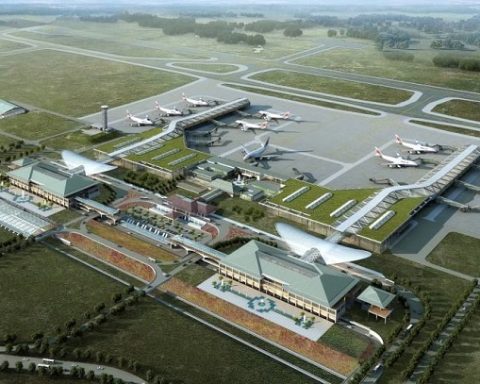
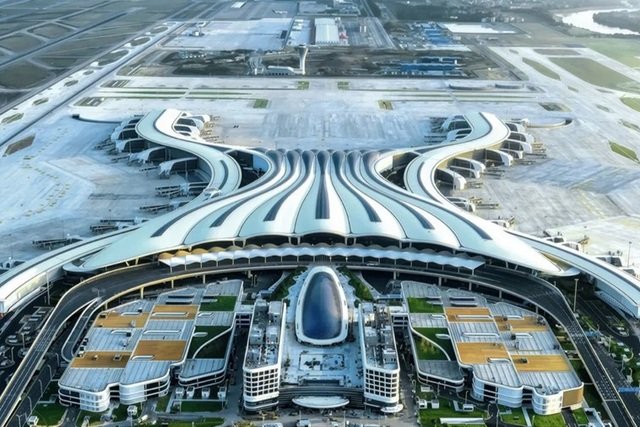
Completed after five years of construction, the 53.77 billion yuan (US$8.1 billion) expansion included a third terminal and a fifth runway. The investment addressed longstanding capacity constraints and increased the airport’s annual passenger-handling capacity to 120 million, the municipal government said in a statement published on its official WeChat account. Authorities expect passenger traffic to reach 90 million this year.
The expanded airport has also strengthened Guangzhou’s connections with international markets, particularly in Southeast Asia, Central Asia, the Middle East and Africa. Its international network now covers more than 100 destinations, with routes prioritising countries and regions that are major trading partners of China.
Immigration checkpoints at Baiyun processed more than 15 million inbound and outbound passenger movements during the first nine months of 2026, representing an 18.3 per cent increase from the same period last year.
The expansion has already attracted regular business travellers using Guangzhou as a transit point for regional journeys. Gao Zhendong, a business consultant who advises Chinese factories operating in Southeast Asia, frequently travels between his home in Hainan and Vietnam through Baiyun.
“There are several direct flights from Guangzhou to Hanoi daily,” Gao said. He added that fares ranged from a few hundred yuan to about 1,200 yuan (US$180), making the route convenient for business travellers who often need to arrange last-minute journeys.
The new 422,000-square-metre terminal has also become part of the airport’s appeal. Its facilities include extensive carpeted interiors, architectural features inspired by Lingnan-style arcades and a range of Cantonese restaurants.
Other travellers have cited the airport’s connections with Chinese cities as an advantage. Cai Mingdong, who commutes between Ningbo and Kuala Lumpur for doctoral studies, regularly uses Terminal 3 when travelling internationally.
“Connections to other Chinese cities are quick, and layover times are relatively short,” he said, adding that a one-way journey from Ningbo to Kuala Lumpur through Guangzhou costs about 1,000 yuan.
Although Shanghai is geographically closer to Ningbo, Cai said travelling to Pudong airport by high-speed rail and connecting transport could take five to six hours. “In that same amount of time, I could fly via Guangzhou and already be at my apartment in Kuala Lumpur,” he said.
David Wong, a lecturer at Hang Seng University of Hong Kong who researches air transport and regional economic development, said the new terminal had strengthened Baiyun’s ability to attract passengers and businesses.
He described the effect as a “siphon effect”, whereby improved airport infrastructure attracts additional passenger traffic and commercial activity, including trade exhibitions and business meetings, to the airport and surrounding areas.
However, Wong cautioned that the airport’s growth could face pressure from rising jet-fuel prices, competition from China’s high-speed rail network and rival airports in neighbouring cities. Higher operating costs could affect airlines, while alternative transport options could influence passenger demand.
He said closer cooperation among airports in the region, including those in Shenzhen and Hong Kong, could strengthen the area’s aviation network but also intensify competition for passengers and cargo.
“A network of airports in nearby cities, including Shenzhen and Hong Kong, could work together to benefit the region but also intensify competition for passengers and cargo,” Wong said.