For the first time since the deadly four-day conflict with Pakistan in May, India has officially confirmed it lost an unspecified number of fighter jets, but rejected claims that the hostilities brought the nuclear-armed rivals close to the brink of atomic war.
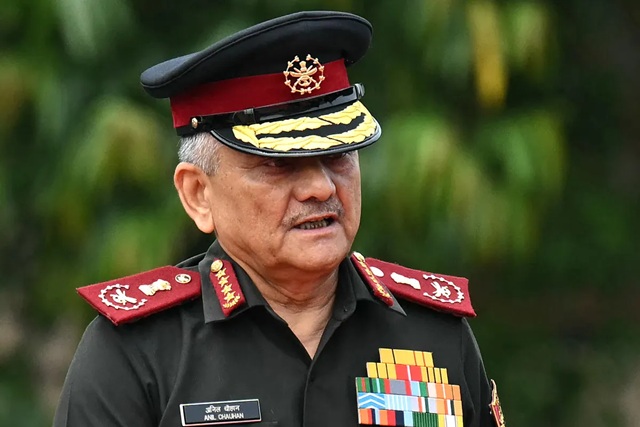
Speaking in an interview with Bloomberg TV on the sidelines of the Shangri-La Dialogue in Singapore, Chief of Defense Staff General Anil Chauhan said the exact number of Indian jets downed was not as important as the tactical lessons learned from the skirmishes.
“What is important is that, not the jet being down, but why they were being down,” Chauhan told Bloomberg, pushing back against Pakistan’s claim that it shot down six Indian warplanes during the fighting. “That’s absolutely incorrect,” he said, without offering India’s own figures.
Chauhan emphasized that the Indian military had identified and corrected errors during the conflict, allowing it to resume long-range precision strikes within two days of the losses. “The good part is that we are able to understand the tactical mistake which we made, remedy it, rectify it, and then implement it again,” he said.
The conflict, which began on May 7, was the most intense between the two countries in more than 50 years. Triggered by a brutal attack in Indian-controlled Kashmir that left 26 civilians dead, the hostilities quickly escalated to include drone, missile, artillery, and air strikes along the volatile India-Pakistan border.
While Pakistani Prime Minister Shehbaz Sharif claimed earlier this month that his country had shot down six Indian fighter jets, his assertion remains unverified by independent sources. Until now, India had refrained from publicly confirming any aircraft losses.
Despite the ferocity of the clashes, Chauhan dismissed suggestions that the crisis approached nuclear escalation. When asked about former U.S. President Donald Trump’s claim that the United States helped avert a nuclear conflict, Chauhan called the idea “far-fetched.”
“I personally feel that there is a lot of space between the conduct of conventional operations and the nuclear threshold,” he said, adding that communication channels with Pakistan “were always open” during the conflict.
India also downplayed the impact of foreign military assistance reportedly provided to Pakistan, including Chinese air defense and satellite support. “They didn’t work,” Chauhan said, claiming that India was still able to conduct “precision strikes on heavily air-defended airfields of Pakistan deep 300 kilometers inside, with the precision of a meter.”
Both nations have since engaged in diplomatic outreach aimed at shaping international narratives around the conflict. Chauhan noted that while the ceasefire currently holds, its future “depends on Pakistan’s actions.” He warned that India has made its “red lines” clear and will act accordingly if provoked.
The May conflict underscores the enduring volatility in South Asia and the fragile balance between two nuclear powers with a history of war, unresolved territorial disputes, and deep-seated mistrust.