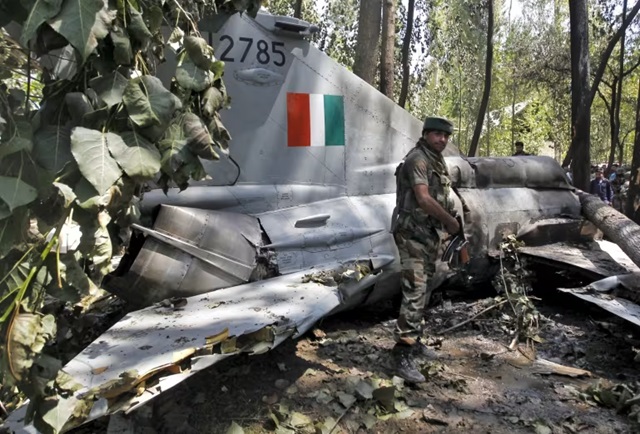
After serving as the backbone of the Indian Air Force (IAF) for over 60 years, the Soviet-origin MiG-21 is officially retiring on Friday, closing a historic yet controversial chapter in India’s aviation history, Nikkei Asia reported.
The IAF inducted the MiG-21 in 1963, and the aircraft went on to participate in every major conflict involving India, including the 1965 and 1971 wars with Pakistan and the 1999 Kargil conflict. Known for its agility and supersonic speed, the MiG-21 was long celebrated as India’s first supersonic fighter and a key pillar of its air defense. However, the jet’s reputation was marred by a troubling safety record, earning grim nicknames such as “Flying Coffin” and “Widowmaker” after hundreds of crashes over the decades.
According to data shared in 2012 by then–Defense Minister A.K. Antony, India had acquired 872 MiG aircraft of various types since the 1960s, with 482 involved in accidents that killed 171 pilots and nearly 50 civilians. Analysts told Nikkei Asia that factors such as harsh flying conditions, delayed acquisition of advanced trainers, and systemic shortcomings also contributed to the jet’s accident rate. Former Air Vice Marshal Rajiva Ranjan noted that the MiG-21’s role in the 1971 Bangladesh liberation war remains one of India’s most significant military triumphs.
With the MiG-21’s retirement, attention now turns to its successor: the indigenously built Tejas Light Combat Aircraft. On Thursday, India’s defense ministry signed a contract worth 623.7 billion rupees ($7 billion) with Hindustan Aeronautics Ltd. (HAL) for 97 Tejas Mk-1A fighters, adding to a previous order of 83 jets. Deliveries, though delayed, are expected to begin soon, with the aircraft powered by U.S.-made GE F404 engines.
“The Tejas, in a way, replaces the MiG-21,” Defense Secretary R.K. Singh said, while acknowledging challenges with timelines. Air Chief Marshal A.P. Singh also expressed concern earlier this year over repeated project delays. India is further developing the Tejas Mk-II and an advanced stealth fighter, the AMCA, as part of its broader push for defense indigenization.
Still, questions linger over whether India should supplement its indigenous efforts with more foreign acquisitions. Retired Brigadier Rahul Bhonsle told Nikkei Asia that delays in the Tejas program have left gaps in India’s air defense. He suggested that additional Rafale jets, manufactured by France’s Dassault Aviation, could fill the shortfall, though he cautioned that fighter procurement requires long-term planning.
Security analyst N.C. Bipindra warned that the MiG-21’s retirement reduces the IAF’s squadron strength to below 30, well short of the sanctioned 42 squadrons. However, he added that the phase-out opens commercial opportunities for both the Tejas program and potential foreign purchases, including Rafales. “Local industries in the supply chain also get a piece of the business cake,” he said.
For India, the farewell to the MiG-21 marks both the end of an era and the beginning of a high-stakes transition toward a modernized and diversified air fleet.