


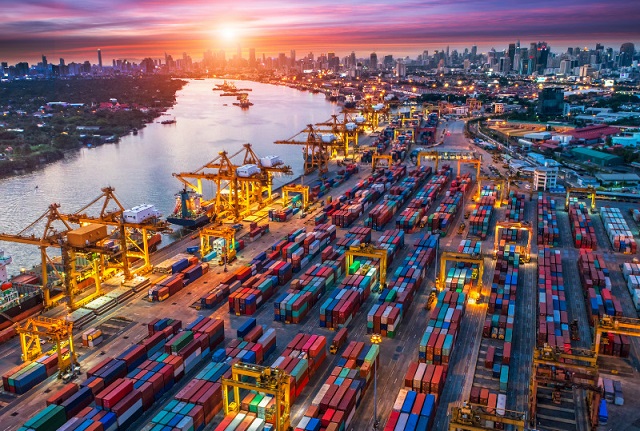
India has identified 50 public-private partnership (PPP) projects worth more than $7.2 billion, surpassing the original targets of the National Monetisation Pipeline, Ports, Shipping, and Waterways Minister Sarbananda Sonowal said at the Business Standard Infrastructure Summit on Thursday. He added that the government aims to increase private participation in major ports to 85 per cent by 2030, a move expected to accelerate efficiency and investment in the sector.
Among the upcoming projects, the greenfield port at Vadhavan in Maharashtra will be the largest port in the country by capacity when operational, with an estimated investment of $9.1 billion. The project will be developed in phases, with the first phase scheduled for completion in 2029 and the second by 2037. The Nicobar port project, valued at $5.7 billion, is also planned for phased development over the next decade. According to Sonowal, both projects will play a key role in strengthening India’s position in global maritime trade.
The minister also emphasized that India is working on alternative trade corridors, including the India-Middle East-Europe Corridor (IMEC) and the International North-South Transport Corridor (INSTC), to safeguard trade routes and supply chains from geopolitical uncertainties. Over the past decade, India’s port sector has expanded significantly, with cargo handling at 12 major ports increasing from 855 million tonnes to 1,690 million tonnes. Overall port capacity currently stands at 2,600 million tonnes, with the government setting a target of 10,000 million tonnes by 2047.
Sonowal outlined the government’s Amrit Kaal Vision 2047, which proposes an investment of around $960 billion to modernize and expand the maritime sector. The vision focuses on enhancing port infrastructure, improving operational efficiency through digitisation and automation, promoting green shipping initiatives such as hydrogen hubs, and boosting coastal tourism. He said the plan would also position India as a global hub for shipbuilding, ship repair, and recycling, generating millions of jobs in the process. Linking these goals to Prime Minister Narendra Modi’s economic roadmap, Sonowal reiterated that India is on track to become the world’s third-largest economy by 2029 and the largest by 2047.
To support this transformation, the government has introduced sweeping legislative reforms. During the most recent parliamentary session, five landmark bills were passed: the Indian Ports Bill 2025, the Merchant Shipping Bill 2025, the Coastal Shipping Bill 2025, the Carriage of Goods by Sea Bill 2025, and the Bills of Lading Bill 2025. According to the minister, these legislations replace outdated frameworks—some dating back to the 19th and early 20th centuries—and establish a globally competitive, environmentally sustainable legal structure for maritime operations.
On the financial side, the Union Budget introduced several measures to encourage investment in the capital-intensive sector. These include the creation of a Maritime Development Fund with a corpus of $300 million, the launch of a new Ship Building Financial Assistance Policy, the extension of the Tonnage Tax scheme to inland vessels, and customs duty exemptions on key input materials for shipbuilding and shipbreaking. Large ships have also been granted infrastructure status, while shipbuilding clusters are being promoted to build scale and competitiveness.
Sonowal further highlighted the government’s commitment to green shipping. Under the ‘Harit Sagar’ guidelines, ports are being equipped with methanol and green hydrogen production facilities, bunkering stations for green fuels, and dedicated green corridors. Electric tugboats are being introduced in at least six to seven major ports to replace conventional fuel-based operations. India has also ratified the Hong Kong Convention on ship recycling, which came into effect this June, strengthening its commitment to sustainable maritime practices. The minister said that the private sector has enormous opportunities in this transition, with investments in green infrastructure alone expected to run into billions of dollars.











