In an investigative report by The Washington Post has revealed startling allegations of covert activities by India’s premier intelligence agency, the Research and Analysis Wing (R&AW), aimed at influencing the political structure of the Maldives, a strategic nation in the Indian Ocean. The report highlights the intensifying competition between Asia’s two major powers, India and China, for dominance in the region.
The Background: Rising Tensions in the Maldives
In late 2023, Mohamed Muizzu, a pro-China leader, became the President of the Maldives, a move that triggered concerns in New Delhi. In his initial speeches, Muizzu vowed to expel Indian military personnel stationed in the Maldives, signaling a clear pivot towards China. His administration also expressed interest in signing military agreements with Beijing, exacerbating tensions with India.
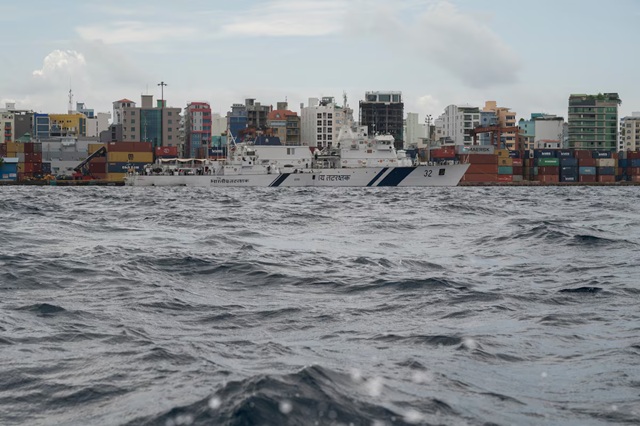
As the Maldives occupies a crucial location in the Indian Ocean, straddling key maritime trade routes, its alignment with China was perceived as a significant threat to India’s regional interests. This geopolitical backdrop set the stage for alleged clandestine efforts by Indian intelligence to counter Muizzu’s influence.
Alleged Conspiracy to Oust Muizzu
The Washington Post reported that by early 2024, agents linked to R&AW began secret discussions with Maldivian opposition leaders about the possibility of impeaching President Muizzu. According to documents obtained by the newspaper, a plan dubbed the “Democratic Renewal Initiative” was formulated. The document outlined a strategy to bribe 40 members of parliament, including lawmakers from Muizzu’s own party, to secure enough votes for impeachment. Additionally, payments were proposed for senior army officers, police officials, and even criminal gangs to ensure the plan’s success.
The total cost of the scheme was estimated at 87 million Maldivian rufiyaa (approximately $6 million), which the conspirators reportedly hoped to secure from India. Despite months of planning, the impeachment attempt failed to materialize due to insufficient support, and India ultimately refrained from financing the effort.
Broader Implications of the Alleged Plot
The revelation of these covert activities highlights the high-stakes rivalry between India and China for influence in smaller South Asian nations. While India has historically supported democratic movements and provided humanitarian aid across the region, the report suggests that New Delhi has also engaged in actions that contradict its democratic ideals, particularly in countries leaning towards Beijing.
For India, maintaining influence in the Maldives is critical to countering China’s growing presence in the Indian Ocean. Beijing has already established significant economic and political footholds in the region through its Belt and Road Initiative, including funding infrastructure projects in the Maldives. The construction of a $200 million bridge linking Malé to its airport is a prominent example of China’s investments.
India’s History of Political Involvement in the Maldives
This is not the first time India has been accused of meddling in Maldivian politics. The report points out that India has long supported the Maldivian Democratic Party (MDP), which is aligned with its interests. In previous years, Indian officials allegedly played a role in choosing MDP candidates and shaping their election strategies. During the 2023 presidential elections, Indian advisors reportedly assisted the MDP campaign against Muizzu, although their efforts ultimately failed to secure victory.
Reactions to the Report
The allegations have sparked mixed reactions in both nations. While India’s Ministry of External Affairs declined to comment on the report, some Indian officials have expressed concerns that such revelations could damage New Delhi’s image as a democratic leader in the region. Maldivian officials, including Communications Minister Ibrahim Khaleel, also refrained from commenting.
However, President Muizzu’s administration appears to have been aware of the alleged plot. According to the report, Muizzu countered the conspiracy by offering bribes to lawmakers to join his party, ensuring his hold on power. He also intensified anti-India rhetoric, accusing New Delhi of bullying smaller nations.
India’s Strategic Pivot
Following the failure of the impeachment plan and the April 2024 parliamentary elections, in which Muizzu’s party emerged victorious, India reportedly shifted its strategy. Recognizing the Maldives’ dire economic situation, New Delhi extended financial assistance, including deferring $100 million in debt repayments and providing a $700 million currency swap. These measures were seen as an attempt to maintain influence despite Muizzu’s initial hostility.
Geopolitical Ramifications
The report paints a picture of the Maldives as a microcosm of the broader India-China rivalry. Both nations have sought to secure strategic and economic advantages in the region, often through covert or overt political interventions. For smaller nations like the Maldives, this competition has created opportunities for economic aid but also heightened risks of instability and external interference.