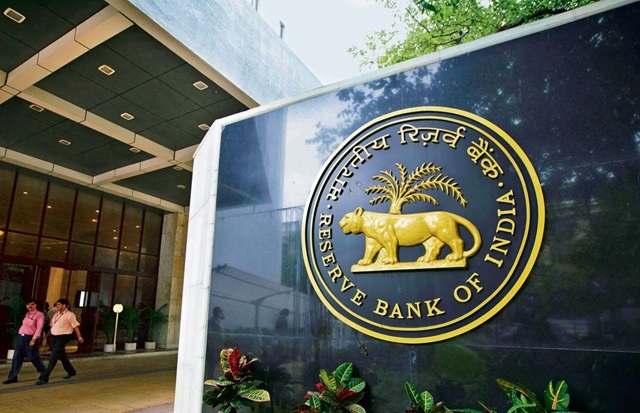
India’s benchmark 10-year bond yields saw a significant drop on Wednesday, falling by nine basis points to 6.49 percent, just days ahead of the Reserve Bank of India’s (RBI) monetary policy review scheduled for April 9. This decline follows the central bank’s announcement to purchase bonds worth Rs 80,000 crore in April. As reported by The Indian Express, while such a fall in bond yields generally signals market expectations of lower interest rates in the future, it doesn’t necessarily guarantee an immediate reduction in interest rates.
Bond yields are the returns that investors expect to earn if they hold a bond until maturity. When bond yields decrease, bond prices tend to rise. In this case, the sharp decline in India’s bond yields is part of a broader trend, with the yield on the 10-year bond dropping 62 basis points (bps) since the beginning of the financial year 2024-25. This marks the largest drop in five years. Since March, the 10-year bond yield has fallen by 24 bps following the RBI’s repo rate cut of 25 bps in February.
The movement in Indian bond yields is also closely linked to the trajectory of U.S. bond yields. The 10-year U.S. Treasury yield decreased to 4.15 percent on April 1, continuing its downward trend to 4.12 percent the following day. This decline in U.S. yields has been attributed to investors seeking safer assets in anticipation of U.S. President Donald Trump’s impending tariff announcement on Wednesday.
In India, the banking sector’s improved liquidity has also played a role in reducing bond yields. Last week, a slight liquidity deficit helped drive down the cut-off rates for all three Treasury bills to nearly the same level of 6.30 percent. According to Madan Sabnavis, Chief Economist at Bank of Baroda, the current liquidity situation, combined with the RBI’s preparation for upcoming operations, suggests that bond yields could continue to fall. The RBI’s announcement of four open market operations (OMOs) in April, each worth Rs 20,000 crore, further indicates its readiness to manage liquidity.
Inflation data has also played a role in shaping market expectations. The Consumer Price Index (CPI)-based inflation for February 2025 remained at 3.61 percent, providing the RBI with a “comfort zone” for potential repo rate cuts. The corresponding inflation rates for rural and urban areas stood at 4.64 percent and 3.87 percent, respectively. Additionally, the rate of inflation based on the Wholesale Price Index (WPI) Food Index decreased from 5.97 percent in January 2025 to 3.75 percent in February 2025. These inflation figures give the RBI some flexibility in its monetary policy approach.
As the RBI’s monetary policy review approaches, speculation is growing about possible actions, including a potential reduction in the Cash Reserve Ratio (CRR), a shift to an accommodative stance, or a cut in the repo rate by 25-50 bps. Sabnavis indicated that a 25-basis-point cut in the repo rate is more likely, with a change in stance also possible.
With the RBI having injected approximately Rs 5.5 lakh crore of durable liquidity into the banking system so far this quarter through a mix of OMOs, longer-duration variable rate repo (VRR) auctions, and forex swaps, liquidity conditions are expected to remain favorable. As noted in a report by Tata Mutual Fund, this positive liquidity outlook is likely to continue in the near future.