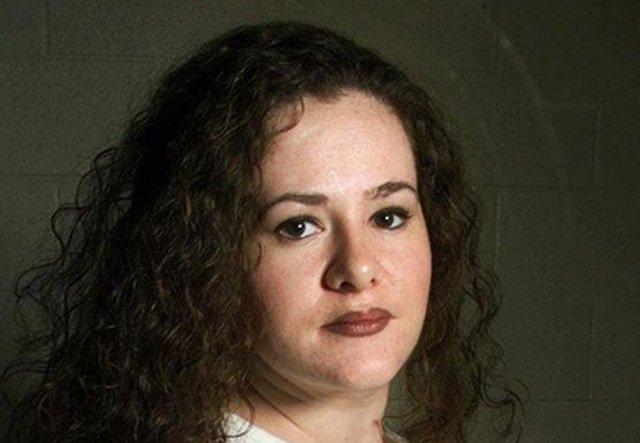
Christa Pike was supposed to be executed by lethal injection in Tennessee on Wednesday. Instead, after receiving two injections of pentobarbital, the 50-year-old remained alive for more than an hour before being taken to a clinic. Her lawyers said she was receiving “life-saving measures”, while witnesses reported that she had remained conscious, complained of pain in her arm and at times appeared to gasp for air. The failure has created an unusual legal problem because Tennessee law does not specify what should happen when an execution has been carried out but the prisoner survives.
Pike was sentenced to death for the 1995 torture and murder of a fellow student, committed when she was 18. She carried out the killing with two friends and later testified against both of them. One received a life sentence and the other a suspended sentence. Pike’s lawyers had argued that severe abuse during her childhood and adolescence should prevent her execution. A court granted a last-minute stay, but the US Supreme Court subsequently allowed the execution to proceed.
Witnesses described an execution that departed sharply from the expected procedure. Pike reportedly asked whether it was normal for the vein in her arm to feel as though it were about to burst. Journalists present at the execution said she sang with her spiritual adviser after the injection, but did not become unconscious. Her lawyers filed two emergency motions while she was still in the execution chamber, arguing that she remained alive after receiving both doses of pentobarbital. They said her heart was still beating and that she was snoring and sometimes gasping for air.
The precise reason the drugs failed to kill her remains unknown. One possibility is that the pentobarbital did not enter her bloodstream correctly, perhaps because the intravenous line was not properly positioned. Her lawyers had previously told a hearing that her veins were difficult to access. Reports that she complained of burning and pain in her arm are also potentially consistent with the drug entering tissue rather than a vein, since pentobarbital can irritate tissue. Other possibilities include a problem with the drug itself, its storage, the execution protocol or an individual physical factor affecting the medication’s action. None of those explanations has been established.
The incident is particularly significant because it is the second failed execution in Tennessee this year. In May, officials were unable to find a suitable vein through which to administer a lethal dose of pentobarbital to a condemned man, and the execution was abandoned. Governor Bill Lee, a Republican, has now announced that an execution scheduled for December will also be postponed. Tennessee had previously suspended executions after concerns that the drugs used for lethal injections had not been adequately tested.
The wider context is the continuing use of capital punishment in the United States. According to the source, the US is the only Western country that still carries out executions. Joe Biden, the previous president, commuted numerous federal death sentences to imprisonment and suspended federal executions. Donald Trump subsequently lifted that moratorium and has encouraged states to carry out executions. Twenty-seven US states, slightly more than half, currently permit the death penalty. Some Republican-led states are also seeking to use methods including firing squads and gas. Tennessee permits both lethal injection and the electric chair, although most prisoners are executed by injection.
Pentobarbital is a barbiturate that suppresses the central nervous system through the GABA-A receptor, producing sedative and anaesthetic effects. It was previously used as a sedative and sleeping medication and is still used in assisted suicide, including by euthanasia organisations in Switzerland. Its use in executions has nevertheless been associated with failed procedures. The Death Penalty Information Center, a US non-profit organisation that collects data and research on capital punishment, found that between 1890 and 2010, executions failed in an average of 3 per cent of cases, with lethal injection accounting for most failures.
Recent cases illustrate the difficulties. In Arizona in 2022, a condemned prisoner reportedly had to tell execution officials how to establish an intravenous line. Executions have also failed in Idaho and Alabama because officials could not locate a suitable vein. In Alabama in 2025, a prisoner died after a 40-minute struggle during an execution using nitrogen delivered through a breathing mask.
Robin Maher, director of the Death Penalty Information Center, told the New York Times that Pike’s case was “the worst incident we have ever experienced” and that “something like this has never happened”. The immediate legal consequences remain unresolved. Tennessee Governor Lee has ordered an investigation, while the state Department of Correction said it had followed “all steps of the lawful, established execution procedure of the state”, approved by the attorney general. The department also said the substance specified in the protocol had consistently proved effective.
A doctor consulted by Pike’s lawyers, Joel Zivot of Emory University, told the BBC in an email, according to the broadcaster, that the delayed start of resuscitation meant Pike might have suffered brain damage.