India’s private sector expanded at its slowest pace in more than four years in July, as a marked slowdown in the country’s dominant services sector weighed on overall business activity despite stronger export orders and continued employment growth, according to a flash survey released by S&P Global.
HSBC’s flash India Composite Purchasing Managers’ Index (PMI), compiled by S&P Global, fell to 54.3 in July from 57.1 in June, significantly below the Reuters poll median forecast of 57.7. Although the index remained above the 50-point threshold that separates growth from contraction, the latest reading marked the weakest pace of expansion in more than four years, signalling a notable loss of momentum in the private sector.
The survey indicated that export demand remained a key source of support for businesses. International sales increased at the fastest pace since March, helping to sustain activity even as domestic conditions became more challenging. Rising export orders contributed to continued growth in manufacturing output and new business, providing a degree of resilience amid the broader slowdown.
The services sector, however, emerged as the principal drag on overall economic activity. The business activity index for services dropped to 53.1 in July from 57.4 in June, its weakest reading since February 2022. According to the survey, the decline reflected difficult market conditions, order cancellations and a reduction in client enquiries, all of which curtailed the pace of expansion across the sector.
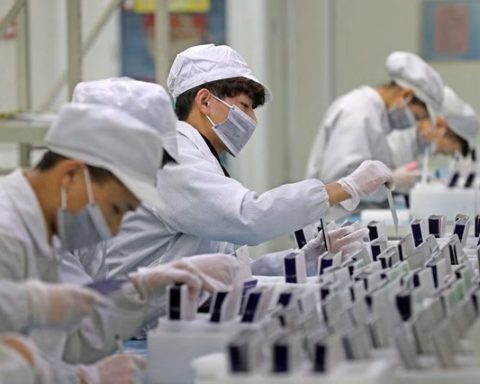
Manufacturing activity proved comparatively more stable, although it was not strong enough to offset the slowdown in services. The factory activity index edged down to 53.9 from 54.2, reaching a four-month low. Even so, manufacturers continued to report expanding output and new orders, supported by robust demand from overseas markets and stronger export sales.
The July survey suggests that the exceptionally strong growth momentum seen over the past two years is beginning to moderate. With the services sector, which has driven much of India’s recent economic expansion, slowing more sharply, the survey indicates that the economy is becoming increasingly dependent on manufacturing. However, manufacturing has yet to show signs of accelerating sufficiently to compensate for the weakening pace of services activity.
Despite the softer overall performance, businesses remained optimistic about future demand. Companies continued to increase their workforce for a seventh consecutive month, reflecting expectations that business conditions would remain supportive and that demand would continue to hold up in the months ahead.
At the same time, firms faced mounting cost pressures during July. The survey found that input costs increased at a faster pace, driven by higher fuel, labour, material and transportation expenses. Businesses passed on part of those increased costs to customers, resulting in output price inflation rising to a three-month high.
Although India’s private sector remained in expansion territory, the latest PMI data point to a moderation in growth, with the slowdown in services outweighing the relative resilience of manufacturing. Even as export demand and sustained hiring helped cushion the decline, the July figures suggest that businesses are facing a more challenging operating environment than in recent months while continuing to contend with rising costs.