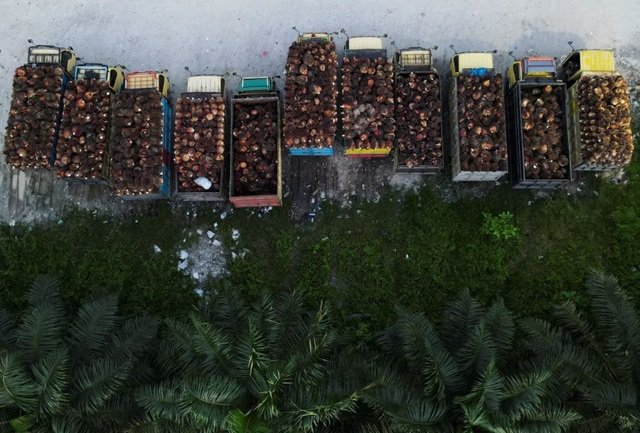
Indonesia’s palm oil industry is showing signs of recovery after analysts said the government is expected to scale back a controversial export overhaul that had sparked concerns over international trade disruptions and triggered a sharp sell-off in plantation stocks.
The reported policy shift follows concerns from buyers and exporters over Indonesia’s earlier proposal to centralize exports of strategic commodities through a state-backed entity. While the government has not officially confirmed the change, analysts said the move would reduce risks to global palm oil supply chains and remove a major source of market uncertainty.
On May 20, the Indonesian government announced a directive requiring strategic exports, including coal, crude palm oil and ferroalloys, to be routed through a newly established state-owned company, Danantara Sumberdaya Indonesia (DSI). The proposal raised concerns among industry participants over potential delays and disruptions to international shipments.
Analysts from brokerages including UOB Kay Hian and RHB said the government’s revised approach could prevent a major bottleneck in commodity trade. They said officials now appear focused on strengthening monitoring and oversight rather than replacing private exporters with a state-controlled trading system.
According to reports, Indonesia plans to impose tighter monitoring on key commodity exports to prevent exporters from undervaluing shipments and avoiding taxes. Under the revised framework, independent exporters would continue managing direct relationships with overseas buyers but would be required to justify declared export prices against market benchmarks.
Dony Oskaria, Chief Operating Officer of Danantara Indonesia, sought to ease industry concerns by stating that DSI would not become a trading intermediary that purchases commodities from producers and resells them internationally. He said the organization would continue working with industry stakeholders to ensure its mandate does not disrupt export activity.
CGS International economists said Indonesia’s original objective was to prevent export value leakages and address government concerns that some commodity shipments had historically been under-invoiced. However, analysts said the initial implementation timeline proved too ambitious, leading authorities to adjust the policy approach.
UOB Kay Hian analyst Amerul Iqmal said the changes represent a shift in DSI’s role from a strict export gatekeeper to a pricing oversight mechanism. The brokerage said the revised policy significantly reduces the risk of supply chain interruptions that had unsettled financial markets.
The uncertainty surrounding the export plan had also affected Indonesia’s currency and equity markets. The rupiah weakened against major currencies, while foreign investors reduced exposure to Indonesian stocks. Macquarie analyst Ari Jahja said regulatory uncertainty contributed to large foreign equity outflows and left the Jakarta Composite Index among the weakest-performing emerging market indexes in dollar terms.
Plantation companies were among the hardest hit during the market downturn. UOB Kay Hian said leading palm oil producers suffered significant share price declines before the policy outlook improved. The brokerage upgraded First Resources Limited to a “buy” rating with a target price of S$3.65, noting that the company’s shares had fallen 23 percent following the initial export announcement before recovering after reports of a policy adjustment.
The brokerage also maintained a “buy” recommendation on Bumitama Agri with a target price of S$2.01, saying both companies had underperformed Malaysian peers during the period of uncertainty.
RHB upgraded the broader regional plantation sector to “overweight,” citing reduced regulatory risks and stable crude palm oil prices. Analysts said the easing of concerns over state intervention could provide support for plantation stocks that had been discounted during the policy uncertainty.
Weather risks are also emerging as a factor that could influence future palm oil prices. RHB said the U.S. National Oceanic and Atmospheric Administration has issued an El Niño Advisory and estimated an 88 percent probability that the weather event could strengthen during the key growing period between November and January.
The brokerage highlighted previous strong El Niño events in 1997-98 and 2015-16, when palm oil yields declined by 17 percent and 14 percent respectively. Historical data cited by RHB showed crude palm oil prices increased during those periods and continued rising in the following year after drought-related production impacts emerged.
UOB Kay Hian analysts said near-term production may remain stable due to biological delays in crop cycles, but warned that a structural supply shortage could emerge by 2027. The combination of reduced export policy risks and potential commodity price increases has led analysts to expect stronger earnings prospects for palm oil producers.
RHB said it sees potential upside to its crude palm oil price assumptions of RM4,400 for 2026 and RM4,300 for 2027 as Indonesia’s policy direction becomes clearer and global supply conditions remain uncertain.