Deep within the vast expanse of China’s remote Taklamakan Desert, thousands of kilometres from the nearest coastline, a striking military landscape has been taking shape. According to an investigation by Telegraph UK based on satellite imagery, Beijing has constructed highly detailed replicas of American warships, fighter aircraft, naval installations and Taiwan’s most important government buildings, creating one of the most extensive known military training complexes dedicated to preparing for a possible conflict over Taiwan.
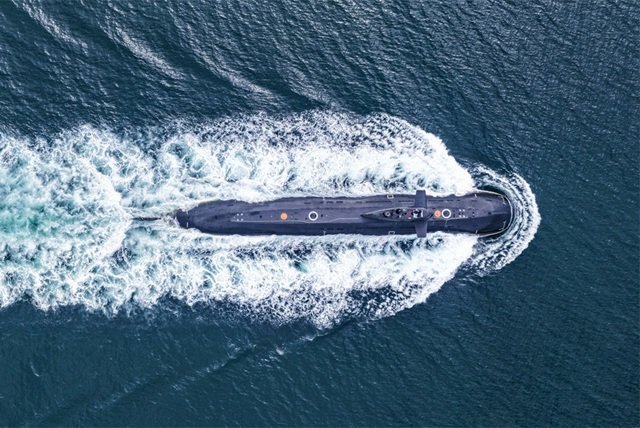
Among the most recent discoveries is a three-dimensional replica of a US Arleigh Burke-class destroyer. Satellite images analysed by Telegraph UK show the vessel under construction in February before appearing nearly complete three months later. Situated roughly 2,700 kilometres from open water, the ship is clearly not intended for naval operations. Instead, experts cited in the report say its purpose is to serve as a realistic target for weapons testing and military exercises designed to simulate attacks against American forces that could intervene in a Taiwan contingency.
The life-sized destroyer reproduces many features of the original vessel, including its mast and elements of its radar equipment. According to the report, such accuracy enables China’s People’s Liberation Army (PLA) to refine missile strikes against realistic targets rather than generic representations. Damien Symon, a geo-intelligence researcher at The Intel Lab who first identified several of the maritime models, told Telegraph UK that the precision of the replicas demonstrates “a highly specific focus on potential adversaries rather than generic capability building.”
The warship is only one element of a much larger military training network spread across the desert. Satellite imagery reviewed by Telegraph UK also identified replicas of American fighter aircraft, Taiwanese military facilities, US naval bases and key government buildings in Taipei. Together, these sites illustrate an expansive programme intended to replicate potential battlefields with remarkable detail.
Taiwan remains a central strategic objective for Chinese President Xi Jinping, who has repeatedly stated that the island should ultimately come under Beijing’s control. While the United States does not maintain a formal defence treaty guaranteeing military intervention, many defence specialists believe Washington would likely become involved if Taiwan were attacked. That possibility has made American military assets central to many of China’s training scenarios.
The report describes a sprawling training complex shielded by mountains in the Taklamakan Desert. Maritime targets occupy one section of the range, while aircraft replicas are positioned roughly 66 kilometres away. One of the most distinctive features is a 37-kilometre railway system designed to simulate moving naval targets. Mock warships are mounted on rail cars and pulled along tracks, allowing missile crews to practise engaging vessels that mimic movement at sea.
The various ship models differ in size and shape, providing opportunities to test anti-ship ballistic missiles against multiple target profiles. Earlier satellite images from 2021 showed one such vessel in pristine condition equipped with radar reflectors. More recent imagery shows the same target heavily damaged, indicating repeated live-fire exercises.
Elsewhere within the desert complex are full-scale replicas of some of the United States Navy’s most significant assets. Telegraph UK identified at least two mock-ups of the USS Gerald Ford, America’s largest aircraft carrier, alongside outlines representing Arleigh Burke-class destroyers positioned near the training tracks.
The air warfare component of the facility is similarly detailed. Satellite images reveal mock runways scarred by impact craters alongside formations of model American aircraft. Two rows of F-22 fighter replicas include several visibly destroyed airframes believed to have been struck during missile testing. Nearby models resemble F-16 and F-35 fighter jets. Defence specialists interviewed by Telegraph UK said that using precise replicas of US aircraft allows Chinese forces to improve missile seeker performance and artificial intelligence guidance systems against the exact shapes and signatures of potential adversaries.
The satellite imagery also extends beyond ships and aircraft to major overseas military installations. One desert installation closely replicates Yokosuka Naval Base in Japan, the largest American naval base in the country and home to permanently stationed Arleigh Burke-class destroyers. With more than 55,000 US troops based in Japan under the bilateral security treaty, Yokosuka would likely play a significant role in any American response to a Taiwan conflict.
Lu Li-shih, a former lieutenant commander in Taiwan’s navy, told Telegraph UK that the replica appears designed for anti-access and area-denial exercises targeting one of America’s most strategically important regional bases. Satellite images show mock warships positioned within the artificial harbour, while analysts identified missile impact craters nearby, suggesting repeated strike testing.
China has also recreated Taiwan’s Su’ao Naval Base, an important facility on the island’s eastern coast. According to satellite imagery, live-fire tests conducted between January and February 2022 struck parts of the replica pier and destroyed structures believed to assist missile calibration. Lu said the location presents a particularly challenging target because missiles launched from mainland China would need to cross Taiwan’s mountainous terrain before reaching the base.
Beyond naval and air targets, the training programme also focuses on urban combat. Telegraph UK reports that China has constructed full-scale replicas of Taiwan’s presidential office, foreign ministry, judiciary and surrounding government district. Two separate versions of Taipei’s Bo’ai Special Zone have been identified, including one at the Zhurihe training grounds dating back to 2014 and another in Inner Mongolia that closely reproduces the surrounding street network and city blocks.
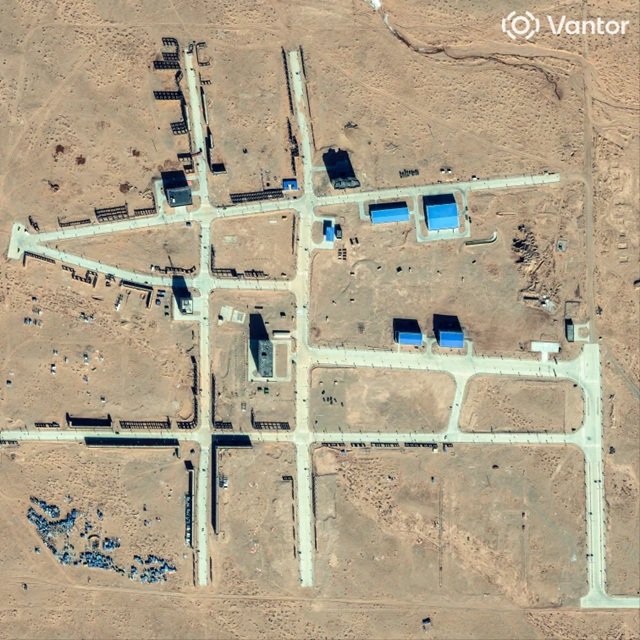
Sean O’Connor, lead satellite image analyst at defence firm Janes, said the facilities enable soldiers to manoeuvre through realistic urban environments as though operating in Taipei itself. Thomas Shugart, a senior fellow at the Center for a New American Security and former US Navy submarine commander, told Telegraph UK that the models were likely intended as rehearsals for ground operations targeting specific government institutions.
Chinese state media has previously broadcast footage showing PLA soldiers conducting assault drills against a replica of Taiwan’s presidential office. Satellite imagery published last year also identified an extensive tunnel network connecting different government building replicas, apparently simulating scenarios in which Taiwan’s leadership might attempt to move underground during a conflict.
While military forces around the world routinely prepare for potential adversaries, several experts interviewed by Telegraph UK said the scale and sophistication of China’s replica-building programme stand apart. Former Indian Navy rear admiral Monty Khanna described the scope of the preparations as unprecedented, while Symon said the damage visible across multiple mock targets points to credible long-range strike capabilities.
According to the report, the mock-ups may be used to test a range of advanced Chinese weapons, including YJ-21 and YJ-17 hypersonic anti-ship missiles as well as DF-27 ballistic missiles capable of striking targets thousands of kilometres away. Telegraph UK also noted that images of the training facilities serve a broader strategic purpose by signalling military preparedness to Taiwan, the United States and regional allies.
The findings emerge as governments across the Indo-Pacific continue to increase defence spending and expand military procurement amid growing regional security concerns. In May, US Defence Secretary Pete Hegseth said there was “rightful alarm regarding China’s historic military buildup and the expansion of its military activities in the region and beyond.” The satellite evidence published by Telegraph UK provides a detailed view of the military infrastructure underpinning those concerns and offers a rare glimpse into how China is preparing for scenarios centred on Taiwan and potential international intervention.