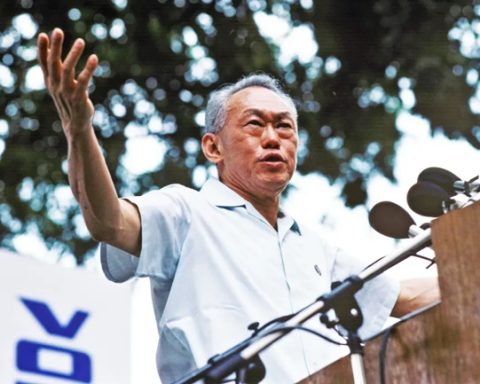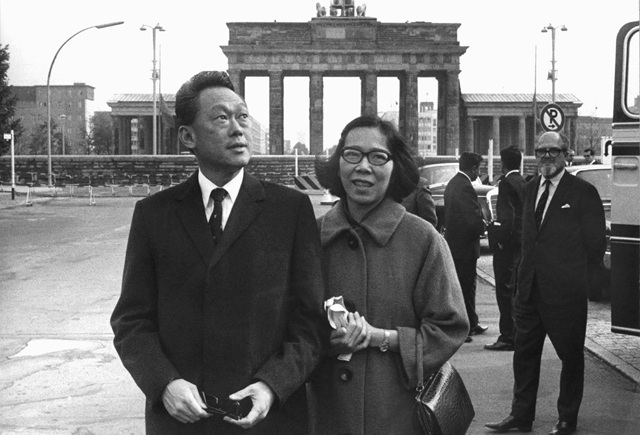
A newly released book by former Straits Times editor-in-chief Cheong Yip Seng pulls back the curtain on Singapore’s formative years, offering rare, behind-the-scenes anecdotes about the political personalities who shaped the island nation after independence. Ink and Influence: An OB Markers Sequel, excerpted recently in the South China Morning Post, provides a compelling inside view of a leadership team that, while fiercely loyal to founding Prime Minister Lee Kuan Yew, was never afraid to challenge his authority in private.
Cheong, who led The Straits Times and later served as an editorial adviser to the South China Morning Post, recounts how senior civil servants and ministers like S. Rajaratnam, S.R. Nathan, Goh Keng Swee, and Lim Kim San navigated power, loyalty, and dissent behind closed doors during Singapore’s earliest decades.
One story centres on S. Rajaratnam—Singapore’s first foreign minister—and his then-permanent secretary S.R. Nathan, who would later become president. During a meeting with a foreign journalist critical of Singapore, Rajaratnam ignored a request from Lee Kuan Yew’s office to meet urgently. Despite several reminders, Rajaratnam prioritised the interview. “Never mind,” was Lee’s reply when Rajaratnam finally returned the call hours later. Nathan’s retelling of the incident to Cheong highlighted the mutual trust within the leadership and the seriousness with which they treated press engagement—even with critics.
Such moments, according to Cheong, debunk the myth of an authoritarian Cabinet with little room for internal dissent. “It was not true that LKY was not open to dissenting views,” he writes. “Whether he accepted them or not, though, was another matter.”
Other anecdotes reflect moments of defiance against Lee’s notorious impatience. In the midst of a hijacking crisis at Seletar Airport in 1977, Deputy Prime Minister Goh Keng Swee told Lee to stop calling S.R. Nathan for updates, telling him bluntly: “Leave him alone, he will call when he has something useful to report.” Lee relented.
Similarly, Lim Kim San, the no-nonsense Minister for National Development, once snapped at Lee for bypassing him and contacting his subordinates directly. “If you keep doing this, you really do not need me here!” he reportedly told Lee before slamming the phone down. The calls stopped.
Cheong also documents deep disagreements on policy. Lim Kim San strongly opposed the size of Singapore’s financial reserves, high ministerial salaries, and the way the People’s Action Party (PAP) selected political candidates. He criticized the system as producing uniform politicians—“It’s like a sausage machine,” he once said—yet kept these views private out of loyalty to the administration.
The book also gives a human portrait of Rajaratnam, the idealistic wordsmith behind the Singapore Pledge and the visionary who first coined the term “global city” in a 1972 speech. Despite his contributions, Rajaratnam spent his retirement in quiet isolation, occasionally publishing pseudonymous letters under humorous monikers like “One-legged chicken” to take subtle jabs at the government—a habit that did not amuse Lee Kuan Yew. The Straits Times eventually banned pseudonyms to shield him from public embarrassment.
Beyond government, Cheong explores the complex relationship between the Singapore press and political leadership. During his time as editor, he worked closely with Lim Kim San again—this time as executive chairman of Singapore Press Holdings (SPH), where Lim sought editorial independence, but also acted as a monitor for the government.
Cheong recalls how Lim handled a sensitive request from Lee Kuan Yew to remove an editor seen as problematic by the Cabinet. After Cheong refused, Lim quietly filed away the letter. “We did not hear from LKY again on this matter,” Cheong writes.
Throughout Ink and Influence, Cheong captures the delicate balancing act Singapore’s early leaders performed—between ideology and pragmatism, loyalty and independence. As the city-state grappled with nation-building, the personalities behind the policies proved to be just as influential as the decisions themselves.
Ink and Influence: An OB Markers Sequel is published by World Scientific Publishing and available now. The excerpt was first published by the South China Morning Post, where Cheong served as an editorial adviser after his decades-long career in Singapore journalism.