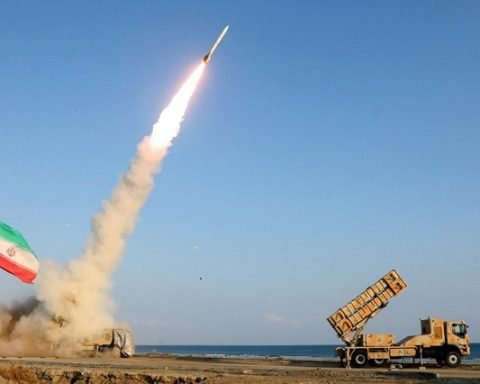
As regional and global tensions continue to escalate, Iran has unveiled an array of new military capabilities during large-scale exercises spanning the past three months. The Iranian army and the Islamic Revolutionary Guard Corps (IRGC) have tested advanced air defense systems, missiles, drones, warplanes, tanks, and naval vessels, signaling the country’s preparation for a potentially turbulent year ahead.
Military Drills and Strategic Posturing
The exercises—dubbed Eqtedar, Zolfaqar, and Great Prophet—were conducted across Iran, the Sea of Oman, and the northern Indian Ocean. Iranian military officials have stated that these drills demonstrate the country’s ability to respond to external threats, particularly from the United States and Israel, which have expressed intentions to strike Iran’s nuclear facilities and critical infrastructure.
Iran has also reiterated its commitment to retaliating against Israeli attacks, following recent escalations in the ongoing conflict in Gaza. Military leaders claim these exercises showcase Iran’s growing self-reliance in defense technology and its readiness for any potential confrontation.
Underground Missile Complexes and Advanced Weaponry
Among Iran’s most significant revelations are three underground military bases, described by state media as “missile megacities.” These secret facilities house an extensive arsenal of ballistic missiles, some mounted on mobile launchers for rapid deployment. The newly unveiled missile systems include:
- Khorramshahr-4: A liquid-fuel rocket with a 2,000km range and a warhead weighing up to two tonnes.
- Jahad: A missile with a 1,000km range and a 650kg warhead.
- L360: A solid-fuel missile capable of striking targets 180km away with a 150kg payload.
- Qadr: A two-stage missile with a 2,000km range and a 750kg warhead.
- Emad: A liquid-fuel missile with an 1,800km range and a warhead capacity of 750kg.
Additionally, the IRGC Navy showcased its secret underground naval base along Iran’s southern coast, featuring hundreds of missile-equipped speedboats and antiship mines. One of its latest developments, the Qadr-380 cruise missile, boasts a 1,000km range, allowing Iran to strike naval targets from deep within its territory.
Air Defense Enhancements
Following Israeli attacks on Iranian military infrastructure in late 2024, Iran has emphasized strengthening its air defense systems. In recent drills, Iran demonstrated the capabilities of its Bavar-373, an advanced high-altitude missile defense system designed to intercept threats at distances exceeding 300km.
Iran also showcased the 15-Khordad, Majid, Arman, Zoubin, and Tondar systems, along with the newly introduced 358 loitering surface-to-air missile, which has a 400km range. The military also conducted drills to defend key nuclear sites at Natanz, Fordow, and Khondab, as well as strategic infrastructure such as airports, refineries, and seaports.
Naval and Ground Forces Display Strength
Iranian naval forces presented their latest warships, including the Jamaran and Zagros, along with a fleet of high-speed missile boats. The IRGC’s Heydar-110 catamaran, touted as the world’s fastest speedboat at 110 knots, was also revealed.
The army displayed its Karrar main battle tank and BMP2 armored personnel carriers, while Iranian special forces conducted amphibious landing drills simulating coastal defense scenarios. Additionally, the Hadid-110 jet-powered suicide drone was tested for underwater launch capabilities.
Drone and Air Force Capabilities
Iran continues to invest in unmanned aerial vehicles (UAVs), having recently commissioned the IRIS Shahid Bagheri, the country’s first drone carrier. This converted merchant ship features an extended runway and multiple drone launch hangars, capable of deploying reconnaissance and attack UAVs, including variants of the Ababil, Mohajer, and Homa drones.
Meanwhile, Iran’s Air Force deployed Saeqeh and Azarakhsh fighter jets, along with Russian Yak-130 trainers and MiG-29 aircraft to intercept simulated enemy drones. Military leaders have suggested that Iran is still awaiting the delivery of advanced Su-35 fighter jets from Russia.
A Defiant Stance in a Volatile Region
As geopolitical pressures mount, Iran’s military demonstrations underline its commitment to bolstering national defense and maintaining a posture of defiance against perceived threats. The unveiling of advanced missile, drone, and naval capabilities signals Iran’s intent to sustain military preparedness amid ongoing hostilities in the Middle East and heightened tensions with Western powers.