The economic pressure being exerted on Iran by the United States is inflicting severe hardship on the population without materially changing the country’s core demands or preventing Tehran from challenging US operations and forces across the region. As the confrontation enters another volatile phase, the crisis is exposing a growing divide inside Iran’s political establishment over whether resistance or compromise offers the better path forward.
According to an assessment by The Soufan Center, the scale of economic distress caused by a US naval blockade and sanctions is not in doubt. Yet the worsening conditions have intensified an internal debate over how Iran should respond. That debate is likely to remain muted while US and Iranian forces continue their tit-for-tat exchanges, but it has not disappeared. Instead, the pressure is sharpening the divide between elected civilian leaders concerned about the consequences of economic collapse and hardline figures within the Islamic Revolutionary Guard Corps (IRGC), who argue that Iran is confronting an existential threat.
The immediate economic indicators are stark. Iran’s currency, the rial, fell to 2.2 million to the dollar on Wednesday, pushing the cost of some basic imported goods beyond the reach of many Iranians. Economists estimate the official inflation rate at more than 80 per cent, although that remains far below the 300 per cent figure cited by President Donald Trump on Monday.
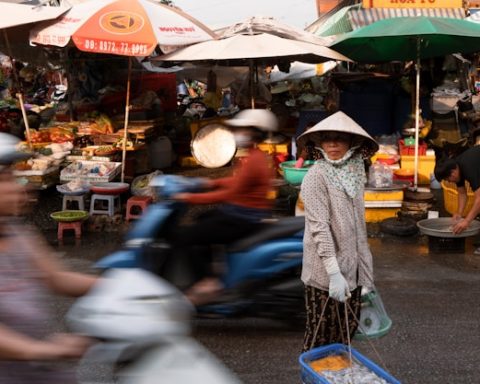
Across Iran, social media accounts have shown bazaars in major cities largely devoid of customers. Many merchants have reportedly closed their shops because of a lack of sales or products. The deterioration comes as the US blockade and sanctions initiatives, including Operation Economic Fury and its successor, Operation Economic Outcast, announced last week, increasingly constrain Iran’s ability to generate foreign currency.
The pressure is particularly acute in the energy sector. Energy industry sources report that Iran has gone seven weeks without shipping meaningful crude exports through the Strait of Hormuz, reportedly cutting off Tehran’s principal source of foreign-currency earnings. Previous US-led sanctions campaigns did not prevent Iranian crude from reaching international buyers, particularly China, which before the war purchased more than 80 per cent of Iran’s oil exports.
China has since shifted towards other suppliers outside the region and reduced its domestic oil consumption. According to the material assessed by The Soufan Center, those changes could become permanent even if the war ends in the short term. Iran has sought alternative ways to keep trade moving, including reported cooperation with neighbouring Iraq to blend Iranian and Iraqi oil before sending the combined product through the Strait. Tehran is also expanding land and rail trade with northern neighbours and Pakistan, while increasing seaborne trade across the Caspian. The extent to which these routes can compensate for the loss of conventional oil exports, however, remains unclear.
For ordinary Iranians, the most visible consequence of the blockade has been a severe gasoline shortage. Even before the war, Iran’s refineries could not produce enough fuel to meet domestic demand, leaving the country dependent on imports for roughly 10 to 15 per cent of its requirements. The blockade has prevented imports of refined products, while Israeli strikes damaged several refineries during the early days of the war.
The result has been widespread shortages and hours-long queues at petrol stations. Authorities have attempted to reduce consumption by cutting the amount of fuel drivers can purchase at higher, less-subsidised price tiers. But the shortage has also exposed a disagreement at the heart of Iran’s political system.
President Masoud Pezeshkian wants reserve gasoline stockpiles drawn down to prevent further increases in fuel prices. IRGC leaders argue instead that Iran is at war and that those reserves must be preserved for military use. The dispute reflects a broader division between elected civilian officials, who are closely connected to their constituents and fear that economic deterioration could generate mass unrest, and hardline security figures who see confrontation with Washington as an existential struggle.
The IRGC, backed by other hardliners around Supreme Leader Mojtaba Khamenei, the judiciary and informal clerical networks allied with the government, maintains that Washington is an untrustworthy adversary. IRGC Major General Mohsen Reza’i, recently appointed Secretary General of Iran’s highest security body, the Supreme National Security Council (SCNC), has become a principal representative of that position. He and other senior IRGC leaders, including current commander Ahmad Vahidi, insist that Iran must regain and maintain control of the Strait of Hormuz and obtain financial compensation for the war.
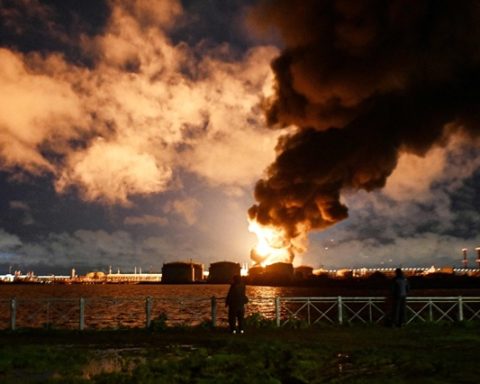
Those conditions are unacceptable to Washington. Some hardliners oppose negotiations altogether and favour escalation designed to punish and humiliate the United States. The determination to prevent the US Navy from controlling the Strait contributed directly to Iran’s attempt on Sunday to introduce mines into the waterway. The operation was discovered and pre-empted by US airstrikes, triggering the latest round of retaliatory exchanges.
Pezeshkian represents the clearest counterargument. He has warned that continued economic deterioration could eventually produce mass unrest. While only small and scattered protests over economic conditions have appeared so far, the possibility of a wider uprising is clearly recognised inside the regime. Chief Justice Gholam-Hossein Mohseni-Eje’I, himself a noted hardliner, warned on state television last week that those attempting to create “chaos and unrest” would face a “very strong and firm response” from police, security and intelligence forces and the judiciary.
For Pezeshkian and other moderates, the alternative is renewed engagement with Washington. They argue that the most viable way to halt the economic decline is to return to the June US-Iran Memorandum of Understanding. Speaking at the Shanghai Cooperation Organization summit in Kyrgyzstan on Monday, Pezeshkian said that if the United States returned to its commitments under the memorandum, Iran would “immediately reciprocate”.
His remarks on state television Friday appeared to reinforce that position. “We may have many things; we may even have missiles and bombs, but they are of no use,” he said. Majles Speaker Mohammad Bagher Ghalibaf, despite his own history as an IRGC leader and his close ties to hardliners, has also defended negotiations, arguing that dialogue should not automatically be interpreted as surrender. In the Iranian daily Kayhan, he wrote: “Any rational action, any authoritative dialogue, or any attempt to take the nation’s rights from the enemy should not be incorrectly defined as compromise and passivity.”
The renewed fighting, however, is likely to strengthen the hardliners in the immediate term. As US strikes inflict further damage on Iranian infrastructure and personnel and economic conditions deteriorate, the political space available to moderates is narrowing. Iranian leaders have also supported counterstrikes as the confrontation continues, reinforcing the argument that Iran is engaged in a battle for survival.
The central question is therefore no longer simply whether US sanctions are hurting Iran. They plainly are. The more consequential question is whether economic pressure can compel Tehran to abandon positions that remain central to its security establishment.
For now, Washington appears to believe it can. Trump has reportedly shut the door on a new agreement, telling Fox News on Tuesday that a deal with Iran is “not worth the paper it’s written on” and that he has already given Iranian leaders “a lot of chances”. But The Soufan Center assessment points to a fundamental dilemma: if no credible off-ramp is offered, such as a return to the June MOU, the economic pressure may not produce compromise. Instead, it could strengthen those inside Iran who argue that escalation is the only remaining means of resisting economic strangulation.