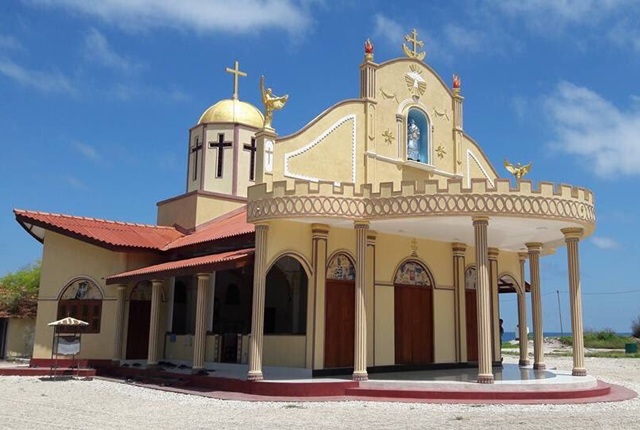
The annual festival at St. Anthony’s Church, Katchatheevu commenced on February 27 with the traditional flag-hoisting ceremony, drawing devotees across the Palk Strait to the small but spiritually significant island of Katchatheevu. The event, attended by pilgrims from Sri Lanka and India, marks one of the most prominent religious gatherings shared by the two nations.
Special religious observances and prayers were conducted on February 28, culminating in the annual festival Mass held as a joint service symbolizing longstanding cultural and spiritual ties between the communities. The main liturgy brought together more than one hundred priests and nuns from both countries, led by clergy representing the districts of Jaffna and Sivaganga.
Festival proceedings began on Friday evening with the ceremonial hoisting of the church flag, followed by Thiruch Sepamalai meditation and the observance of the Way of the Cross, conducted jointly by visiting devotees. These rituals set the tone for the main celebrations, which took place the following morning with a large open-air Mass attended by clergy and lay worshippers alike.
More than 4,000 pilgrims traveled to the island, arriving in approximately 85 boats, along with an additional 24 vessels carrying worshippers from Rameswaram. Authorities arranged extensive logistical support to manage the influx, including transportation coordination, medical assistance, and safety measures.
The Sri Lanka Navy provided essential services for the event, overseeing maritime safety, health facilities, and general welfare arrangements for visitors throughout the celebrations.
According to Roman Catholic Diocese of Jaffna priest Josephtas Jeparatnam, the festival’s central moments included the flag hoisting, Eucharistic adoration, and the joint Mass offered for peace and well-being. He called on devotees to unite in prayer for their nations and for harmony among all people.
Clergy from India were led by Lourdu Anand, who noted that more than fifty priests and religious representatives had joined the pilgrimage under his leadership, highlighting the festival’s enduring role as a bridge of faith and goodwill across national boundaries.