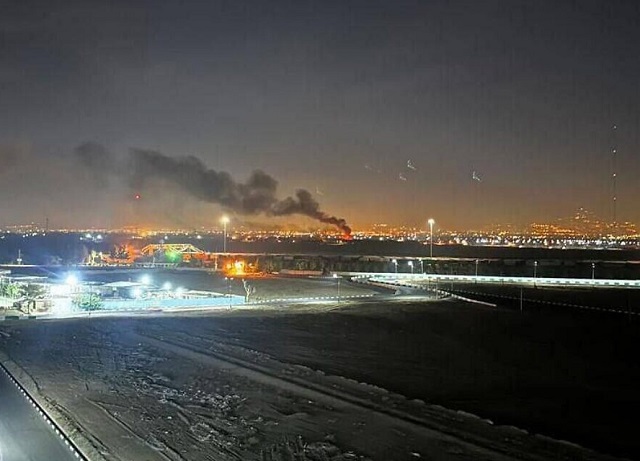
Israel launched U.S.-endorsed airstrikes targeting Iranian military sites across Tehran, Khuzestan, and Ilam, marking one of the most direct confrontations between the two nations in recent years. Iran’s air defense systems responded swiftly, intercepting multiple incoming threats while warning citizens against misinformation circulating from “enemy media.” Tehran’s loud defenses triggered public alarm, and authorities reported limited damage that they are currently evaluating. Video footage of intercepted objects lighting up Tehran’s night sky has circulated widely online, capturing the intensity of the encounter.
While the U.S. refrained from direct participation in the strike, its backing was clear. A senior Biden administration official confirmed that Washington worked closely with Israel in recent weeks to design a response that would be “targeted and proportional.” This collaboration aimed to minimize civilian harm while strongly deterring further Iranian aggression, in line with U.S. strategic interests. The Biden administration also pointed to recent deployments of THAAD missile defense systems in Israel, emphasizing a readiness to counter any retaliatory strikes from Iran. In a direct statement, the official underscored that if Iran escalates further, the U.S. stands “fully prepared to defend.” Washington simultaneously urged allies to push Iran toward restraint, aiming to limit further hostilities.
Rear Admiral Daniel Hagari, spokesperson for the Israel Defense Forces (IDF), emphasized the importance of this “reprisal strike,” stating that it effectively targeted Iranian missile production facilities and air defense systems. The IDF’s selection of these sites was deliberate, Hagari said, aimed at diminishing Iran’s military capabilities in the face of recent Iranian attacks on Israeli assets and ongoing pressure from Iran-backed groups in Lebanon and Gaza. With this operation, Hagari noted, Israel has achieved “a broader operational freedom” to respond to Iranian threats across the region.
The U.S. has signaled its “readiness to mediate ceasefire” efforts in Lebanon and Gaza, reinforcing its commitment to regional stability amid the growing hostilities. Biden administration officials are also engaging with Middle Eastern allies to maintain diplomatic pressure, acknowledging that sustained escalation could jeopardize the fragile balance across the region.
The regional atmosphere grew even more tense following an earthquake scare in northern Israel. Initially reported as a 4.9-magnitude earthquake near Arraba, the Geological Survey of Israel clarified it was a controlled IDF explosion targeting a Hezbollah explosives cache in Lebanon. While no severe structural damage was reported, authorities cautioned citizens to remain vigilant. This event highlighted the heightened sensitivity in the area, where military and seismic activities converge, amplifying public concerns.