
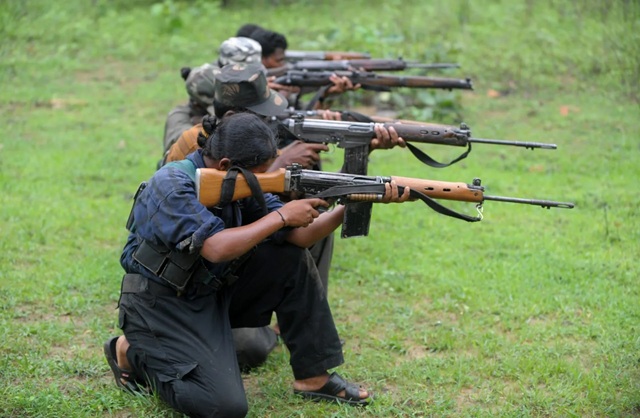
On September 5, 2026, a Special National Investigation Agency (NIA) Court in Jagdalpur, Bastar District, Chhattisgarh, convicted 10 surviving cadres of the Communist Party of India-Maoist (CPI-Maoist), including three women, for their roles in the Jhiram Ghati massacre in the Darbha region of Sukma District on May 25, 2013.
The conviction of the 10 Maoists by a Special NIA Court in Jagdalpur, 13 years after the Jhiram Ghati attack, brings a measure of judicial accountability for one of the most consequential operations of the Maoist insurgency in Chhattisgarh. The court is scheduled to pronounce the quantum of punishment on September 16, 2026. Yet the significance of the verdict extends well beyond the 10 Maoists convicted. Jhiram Ghati remains important because the attack demonstrated, with devastating clarity, the consequences of mistaking a decline in the intensity of violence for a destruction of insurgent capability. That warning had been articulated before the attack.
In March 2013, SAIR had assessed that the Maoists were in a phase of “tactical retreat”, concentrating on reconsolidating their strengths, enhancing recruitment to the People’s Liberation Guerrilla Army (PLGA), developing alternative communication channels to prevent information leakage, intensifying propaganda and expanding overground mobilisation. The assessment cautioned that the State must not mistake a decline in violence for the destruction of Maoist capacity.
Barely two months later, the Jhiram Ghati attack provided a brutal demonstration of that distinction. On May 25, 2013, CPI-Maoist cadres ambushed the Congress Party’s Parivartan Yatra (Trek for Change) convoy in the Darbha Valley of Bastar. Among those killed were Chhattisgarh Congress chief Nand Kumar Patel, his son Dinesh Patel, former Leader of Opposition Mahendra Karma and former Union Minister Vidya Charan Shukla (who later died of his injuries in hospital). Security personnel and Congress workers were also killed. While contemporary accounts initially reported 28 fatalities, the NIA case records 27 persons killed, including 10 Police personnel, and 38 injured.
The attack was not simply another entry in the chronology of Maoist violence. It was a demonstration of operational capacity. The Maoists selected difficult terrain, ambushed a sizeable political convoy, used an improvised explosive device and sustained an attack against an armed security contingent. Reports that several political leaders were subsequently targeted after their protective personnel had exhausted their ammunition underscored both the determination of the attackers and the inadequacy of the security arrangements.
This is where the Jhiram episode intersects directly with the present conviction. The NIA court has now convicted the 10 accused. The prosecution examined 101 witnesses and relied on forensic and documentary evidence. Eleven persons had originally faced trial, but one died during the proceedings. Several other accused named during the investigation remain absconding. The defence has indicated that the verdict will be challenged in a higher court.
The conviction is significant, but it should not be confused with a complete historical or operational accounting of the attack. The political controversy surrounding Jhiram has persisted precisely because questions have remained about the extent to which the investigation established the larger planning and command structure behind an operation of such scale. Congress leaders have repeatedly alleged that the investigation did not adequately examine a wider conspiracy. Such allegations remain political claims and cannot be treated as established fact merely because they have been repeatedly made. Nonetheless, they point to an important distinction: convicting participants is not necessarily the same as reconstructing the entire architecture of an insurgent operation. This distinction matters particularly in the context of the Maoist movement’s subsequent trajectory.
In 2013, the insurgency still possessed the territorial depth, organisational networks, local intelligence and armed formations necessary to conduct major operations in Bastar. Today, that environment has changed substantially. Sustained security operations, the expansion of security infrastructure, leadership losses and large-scale surrenders have substantially reduced the Maoists’ operational footprint in Chhattisgarh and elsewhere across the country.
Counter-insurgency is particularly vulnerable to what may be called the comfort of declining statistics. Once fatalities fall and large attacks become less frequent, political and administrative establishments begin to interpret improving indicators as evidence of irreversible success. Jhiram was a warning against precisely such self-deception.
There was another failure: the protection of political activity in a high-risk insurgency theatre. Whatever the subsequent political recriminations over responsibility for the security arrangements, the basic lesson is uncomplicated. Political mobilisation in an insurgency-affected area cannot be treated as ordinary political campaigning. Intelligence, route sanitisation, convoy discipline, communications, contingency planning and adequate protective cover are integral to the conduct of such activity.
The passage of 13 years has changed the Maoist threat substantially, but it has not diminished the importance of these lessons. The Maoist insurgency’s current weakened state is reflected not only in the decline of its operational footprint but also in the fate of some of the prominent Maoists originally named in the Jhiram investigation. Thippiri Tirupathi alias Devuji, a CPI-Maoist Politburo member and believed to have become the Maoist ‘general secretary’ after the death of Nambala Keshava Rao alias Basavaraju, the former CPI-Maoist ‘general secretary’, surrendered in Telangana on February 22, 2026. Barse Deva alias Barsa Sukka, who succeeded Madvi Hidma as ‘commander’ of PLGA Battalion 1, surrendered on January 2, 2026, while CPI-Maoist ‘Central Committee Member (CCM)’ Ganesh Uike alias Pakka Hanumantu was killed in an encounter in Odisha on December 25, 2025. A generation of security personnel and administrators now operating in Bastar encounter a far weaker Maoist movement than the one that executed Jhiram. They must, nevertheless, understand what that organisation was once capable of achieving.
The verdict is to be welcomed as an important step towards accountability. But Jhiram Ghati cannot be reduced to the conviction of 10 accused or to a historical footnote. Its deeper significance lies in the warning that preceded the attack, and the failure to adequately heed it. Thirteen years on, the central lesson of Jhiram remains unchanged: the absence of frequent violence does not, by itself, establish the absence of insurgent capability.