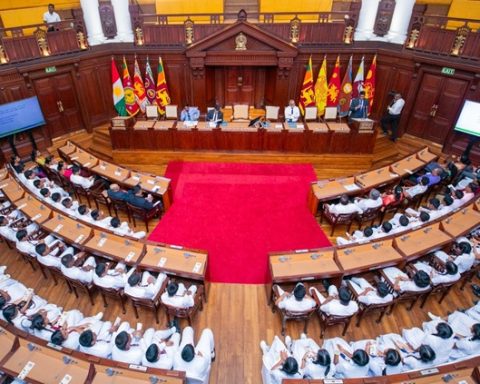

The following article is based on author’s presentation at the Sri Lanka Economic Summit 2025 organized by Ceylon Chamber of Commerce in Colombo January 2025. – Editors
Korea’s economic transformation is a remarkable example of strategic planning, resilience, and innovation. In my presentation at the summit, I explored the policies and strategies that enabled Korea to rise from the devastation of war to become one of the world’s most advanced economies. The lessons from Korea’s experience provide valuable insights for Sri Lanka as it seeks to drive transformational economic growth.
Korea’s journey from a war-torn nation in the 1950s to a global economic powerhouse was not accidental. GDP per capita rose from just over $100 in the early 1960s to more than $33,000 today. The foundation of this growth was export-oriented industrialization, emphasizing manufacturing excellence and strategic trade partnerships. Korea’s exports, which accounted for only 4% of GDP in the early 1960s, now contribute nearly 44%, underscoring the success of its outward-looking economic policies.
Strong leadership and institutional support played an essential role in Korea’s industrial success. Government-driven policies facilitated investments in key industries, including shipbuilding, semiconductors, and automobiles. The public and private sectors worked closely together to formulate long-term development plans, ensuring a business-friendly environment. For Sri Lanka, a commitment to policy continuity and private-sector engagement is crucial for achieving similar results.
Education and human capital development were also central to Korea’s success. By the 1960s, Korea had already achieved high enrollment rates in primary and secondary education, surpassing many nations with similar income levels. The government further invested in vocational and technical education to equip the workforce with the skills necessary for industrialization. The creation of research institutes and technical universities bolstered innovation and technological advancement. Sri Lanka must prioritize similar investments in its workforce, aligning education with industry needs and embracing digital transformation.
Korea’s economic rise was facilitated by global economic conditions and strategic international partnerships. The country leveraged foreign capital at favorable terms and engaged in trade agreements that expanded market access. The normalization of relations with Japan in 1965 and participation in the Vietnam War, which brought significant foreign exchange earnings, provided critical capital for industrial development. Sri Lanka should seek similar global collaborations, leveraging trade agreements and foreign direct investment to drive economic expansion.
Industrial policy was a key pillar of Korea’s transformation. Beginning with its first five-year development plan, Korea implemented policies to foster innovation, incentivize research and development, and support technology adoption. Tax credits for R&D, subsidies for technology imports, and policies that encouraged technology transfer helped build a competitive industrial base. Large conglomerates (chaebols) played a significant role in accelerating industrialization by investing in high-growth sectors. Sri Lanka should focus on fostering domestic enterprises and supporting their integration into global supply chains.
Korea’s infrastructure investments were equally vital to its success. Massive investments in power, transportation, and digital connectivity laid the foundation for economic growth. Electrification rates soared from 12% in 1961 to nearly 98% by 1981, significantly enhancing industrial productivity. Sri Lanka must undertake similar infrastructure reforms, ensuring efficient logistics networks and energy security to support economic expansion.
Export promotion was central to Korea’s economic policy. The establishment of the Korea Trade Promotion Corporation (KOTRA) in 1962 provided essential support for exporters. Policies such as tax incentives, tariff exemptions, and concessional credit for export-oriented businesses stimulated international trade. Monthly export promotion meetings, chaired by government officials, monitored progress and resolved industry challenges. Sri Lanka should implement a similar proactive approach, strengthening trade promotion mechanisms and providing targeted support for exporters.
Innovation and technological advancements continue to drive Korea’s economic progress. Today, Korea ranks among the top spenders on R&D as a percentage of GDP, with investments exceeding 4.5%. The establishment of government-funded research institutions and collaboration between academia and industry facilitated Korea’s transition to a knowledge-based economy. Sri Lanka must prioritize innovation, increasing R&D investments and fostering a culture of technological advancement.
The 1997-98 Asian financial crisis was a significant challenge for Korea, exposing vulnerabilities in its financial and corporate sectors. However, Korea’s swift response, including market-based reforms, financial restructuring, and labor market adjustments, enabled a strong recovery. The crisis underscored the importance of economic resilience, fiscal prudence, and regulatory efficiency. Sri Lanka, facing its own economic challenges, can learn from Korea’s experience by implementing structural reforms that promote financial stability and economic competitiveness.
Demographic trends also played a role in Korea’s economic strategy. While Korea faces an aging population, it has continued to prioritize productivity enhancements through automation and workforce upskilling. Sri Lanka, with a younger population, has the advantage of a demographic dividend but must invest in skill development and entrepreneurship to fully leverage its workforce potential.
Trade relations between Korea and Sri Lanka hold significant growth opportunities. Bilateral trade has seen steady expansion, and Korea has been an active development partner, providing aid and investment in key sectors. Further collaboration in technology transfer, infrastructure development, and human capital investment can strengthen this partnership, benefiting both nations.
In my presentation, I emphasized that Korea’s success was built on long-term vision, policy consistency, and a commitment to innovation. Sri Lanka must identify its unique strengths, implement structured economic policies, and foster a business environment conducive to growth. By embracing these principles, Sri Lanka can navigate its path toward sustainable economic transformation and long-term prosperity.