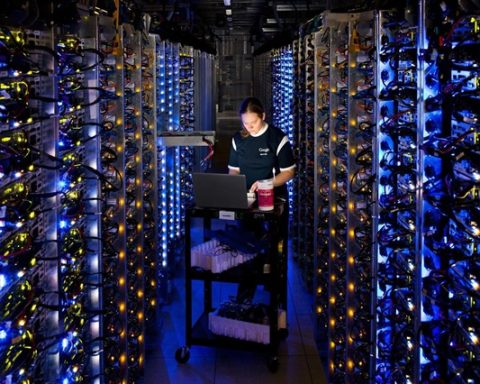
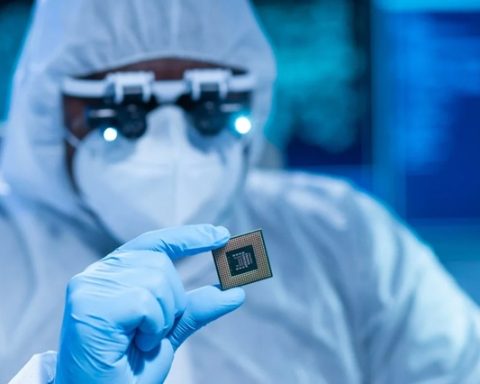
Malaysia’s multibillion-dollar data-centre expansion is creating a broader opportunity for the country to capture more of the artificial intelligence supply chain, with companies and industry leaders looking beyond server facilities towards chips, cooling systems, power infrastructure and specialised hardware.
“The race for AI applications and also participation in the building of AI is on, not so much data centres, but on the hardware,” InvestPenang CEO Loo Lee Lian told The Business Times. Malaysia Semiconductor Industry Association president Wong Siew Hai similarly sees potential in the country’s established electrical and electronics base, which spans chips, power systems, sensors and other components.
An early indication of this shift is emerging in the infrastructure needed to operate AI data centres. In July, US-based Vertiv, which provides power and cooling infrastructure for data centres, established manufacturing operations in Johor as AI-related demand expanded across the region. Andrew Whall, vice-president of operations and service operations, Asia, at Vertiv, said the company was probably among the first data-centre infrastructure manufacturers in Johor supporting AI growth.
Producing equipment closer to customers can significantly reduce lead times, Whall said, while Johor’s established manufacturing ecosystem provides the workforce and industrial support needed for such operations. The expansion illustrates how the data-centre boom could create opportunities beyond the server halls themselves.
Yong Kai Ping, CEO of Malaysia Semiconductor IC Design Park, said Malaysia could capture considerably more value if supporting equipment and systems were sourced locally, ideally reaching 30 per cent. That could include networking equipment, power-management systems, cooling systems and supporting electronics rather than the graphics processing units supplied by companies such as Nvidia.
Yet the presence of data centres alone does not guarantee that Malaysian companies will enter their supply chains. Wong said the opportunity would depend on servers being procured locally so multinational corporations could engage Malaysian supporting companies. Without that, he said, the spillover would remain largely concentrated in land, building construction, utilities and general maintenance.
Building the capabilities required for higher-value manufacturing will take time. Malaysian suppliers could potentially develop chips, power systems, sensors and other components, but Wong said companies would need to strengthen their capabilities and meet global qualification requirements.
Malaysian technology startups are also seeking opportunities further up the technology stack. Kuala Lumpur-based nanoSkunkWorkX is developing a thin-film interface intended to improve heat and current management in AI chip packaging. Co-founder and CEO Iqbal Shamsul said Malaysia’s advantage extended beyond chip assembly, pointing to industrial capabilities accumulated across the semiconductor, oil and gas and aerospace sectors.
He also identified gaps in applied research, pilot and qualification infrastructure and long-term deep-tech capital. “The gap is how quickly we can connect research, industry, qualification and capital to turn an invention into a global manufacturing process,” he said.
The global AI investment cycle is simultaneously increasing demand for memory, networking and power semiconductors and advanced packaging, according to RHB Research senior economist Chin Yee Sian. Malaysia was the world’s sixth-largest semiconductor exporter in 2023, with integrated circuits accounting for 56 per cent of its E&E exports, compared with 35 per cent in 2016.
However, the transition towards higher-value AI technologies remains incomplete. Wong said advanced-packaging capabilities in Malaysia were still concentrated mainly among multinational corporations, even when manufacturing occurred locally. In Penang, automated test-equipment companies that traditionally focused on legacy semiconductors are increasingly targeting AI chips, while Malaysia is also seeking to develop capabilities in integrated-circuit design and advanced packaging. Companies such as SkyeChip are developing locally designed AI processors.
The opportunity extends beyond hardware. Agmo founder and CEO Tan Aik Keong said businesses were moving from basic questions about ChatGPT towards examining how AI could be integrated into enterprise processes, data and systems to improve efficiency and earnings. He compared data centres with shopping malls, saying they require “tenants” in the form of AI software applications.
Greater computing capacity within Malaysia could support AI deployments in sectors where data residency, security, latency and regulation are important, including financial services, healthcare and government. But Tan warned that if Malaysia supplies the servers, electricity and engineering services while models, platforms, applications and recurring software revenues remain elsewhere, the country would capture only part of the value.
The broader test will therefore extend beyond infrastructure. Tsubasa Nakazawa, managing director of Kintone Southeast Asia, said Malaysia’s AI push would ultimately be judged by whether investment changes how businesses operate and create value. A Kintone survey of 252 Malaysian SMEs found that 34.5 per cent still used spreadsheets for core operations, while 34.9 per cent used more than three software tools daily and 30.5 per cent relied on more than five WhatsApp groups for work.
The scale of infrastructure investment adds further pressure to extract wider economic value. Kenanga Research said national utility provider Tenaga Nasional had a 7,500 megawatt pipeline across 56 data-centre projects as at end-2025, while Johor has tightened approvals for lower-tier facilities amid concerns over water consumption.
As Agmo’s Tan put it: “Data centres are the foundation, not the final product.” The larger opportunity lies in what Malaysia can build above that infrastructure, including AI platforms, applications, intellectual property and products capable of being exported across the region.