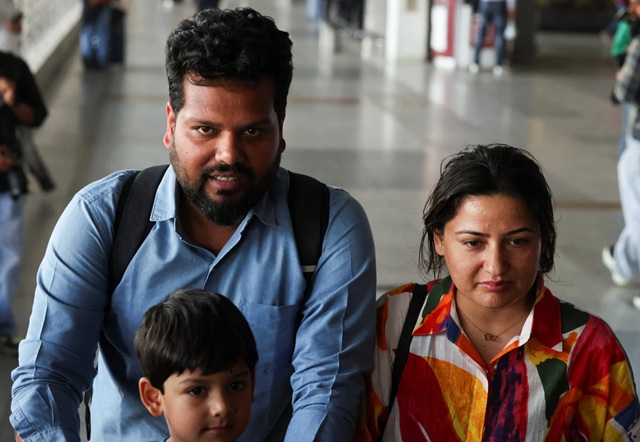
As missile alerts flash across smartphones in cities like Dubai and Doha, millions of Indian expatriates across the Gulf are confronting a new and unsettling reality: the region they once considered safe from major conflicts is no longer insulated from war. For Dubai-based political analyst Yashwant Deshmukh, the routine has become disturbingly familiar. When a warning appears on his phone, he steps away from the windows, waits for confirmation that the missile has been intercepted, and then resumes work. “It has become a drill,” he said.
The ongoing war involving Iran has shaken one of the Gulf region’s long-standing assumptions—that major commercial hubs such as Dubai, Abu Dhabi, Doha, and Manama would remain untouched by regional conflicts. According to reporting highlighted by the South China Morning Post, the recent wave of missile and drone strikes has dismantled that perception. Analysts say the current crisis differs from earlier Gulf conflicts in 1991 and 2003 because it directly threatens the urban centers where millions of foreign workers live and work.
Experts warn that the conflict represents a fundamental shift in regional security dynamics. Uday Chandra, a professor at Ashoka University in India’s Haryana state who was recently based in Qatar, said the strikes signal the collapse of the belief that the Gulf Cooperation Council countries would remain insulated from crises in the Persian Gulf. The GCC, formed in 1981, includes Bahrain, Kuwait, Oman, Qatar, Saudi Arabia, and the United Arab Emirates, and has long served as a major economic hub for migrant workers from across South Asia.
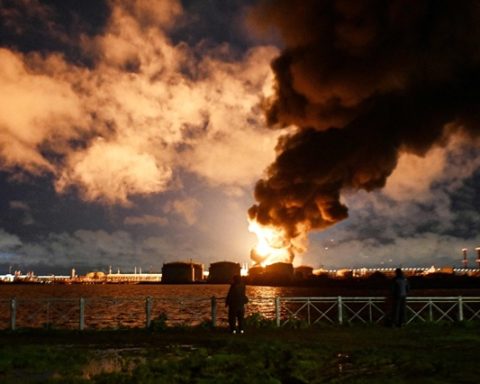
Fear and uncertainty are increasingly visible across expatriate communities. Social media posts from Indian workers show videos of drone strikes and fires, including an incident in Dubai’s Creek Harbour district where a building caught fire after a drone attack. Although authorities managed to evacuate residents and no casualties were reported, the event heightened anxiety. In Bahrain, officials released footage of a large blaze at a fuel facility following Iranian attacks, further fueling concerns about the expanding reach of the conflict.
For many Indian workers, the stakes are particularly high. Roughly 9 million Indians live across Gulf countries, forming the largest expatriate community in the region. The southern Indian state of Kerala alone has around 3 million citizens working in the Gulf—about 10 percent of its population. Remittances from these workers account for roughly one-fifth of Kerala’s regional economy, making Gulf employment a critical financial lifeline for millions of families.
Analysts warn that prolonged conflict could disrupt these vital money flows. Harsh Ramaswamy, an independent political commentator in India, said that sectors such as hospitality, construction, and service industries—where many migrants work—would be especially vulnerable if instability persists. Blue-collar workers, including laborers, drivers, and hotel staff, face the greatest risk because they typically have limited savings and little flexibility to absorb higher travel costs, lost wages, or sudden unemployment.
Travel disruptions have already complicated evacuation efforts. Flight cancellations and airspace closures have stranded tens of thousands of travelers in Gulf airline hubs, while ticket prices have surged. Indian opposition leaders and activists have urged the government to accelerate repatriation operations for citizens caught in the crisis. India’s Foreign Minister S. Jaishankar told parliament that more than 67,000 Indians had returned through contingency flights, though that number represents only a small fraction of the total Indian population in the Gulf.
Despite the uncertainty, analysts believe many workers may eventually return once stability resumes. The economic opportunities available in the Gulf remain difficult to replicate elsewhere. However, the longer the conflict continues, the more it could alter long-term migration patterns and financial flows across South Asia.
The consequences could extend beyond India. Workers from Pakistan, Bangladesh, Nepal, and Sri Lanka also rely heavily on Gulf employment, with foreign nationals making up more than half the population in several GCC countries. Remittances from the Gulf contribute about 1 percent of India’s GDP, between 3 and 5 percent for Pakistan, Bangladesh, and Sri Lanka, and nearly 10 percent for Nepal, according to research from Capital Economics.
Economists say a prolonged war could weaken demand for migrant labor and reduce remittance flows at a time when rising energy prices are already straining many South Asian economies. While a total collapse of remittances is unlikely, even a moderate decline could widen economic deficits across the region.
For decades, the Gulf represented a place where ordinary workers from South Asia could build better lives and support their families back home. Now, as missiles and drones strike closer to the cities that anchor expatriate life, millions of families are questioning whether that promise of stability still holds.